
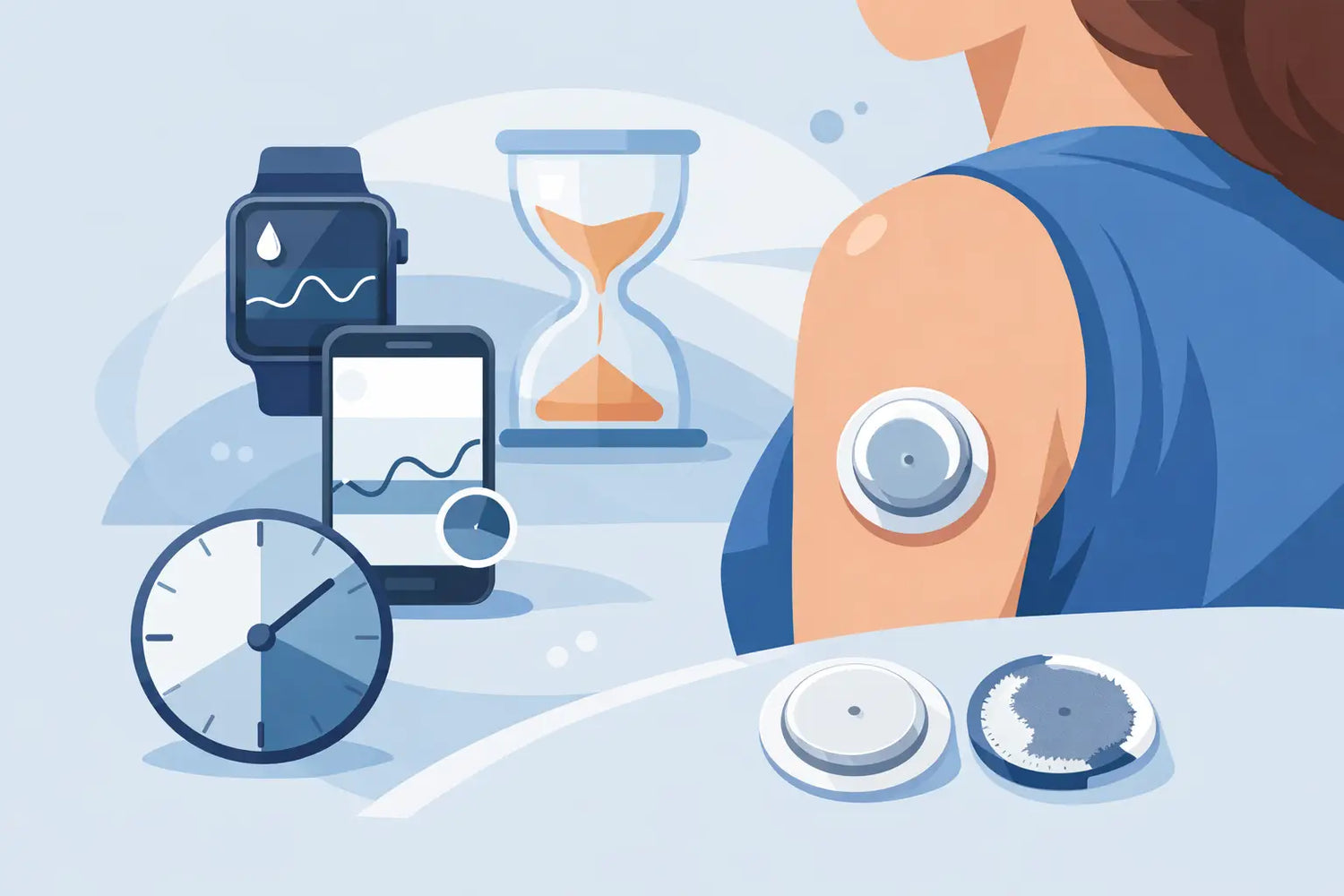
If your sensor is rated for 10 to 14 days but the overpatch starts lifting on day 3, the real question is not just how long do CGM patches last. It is how long they stay secure on your skin, through showers, workouts, sleep, and everyday friction. For most users, a quality CGM patch should last as long as the sensor wear cycle or close to it. In practice, wear time depends on the patch material, your skin prep, placement, sweat level, and how much daily movement that area sees.
How long do CGM patches last in real life?
Most CGM patches are designed to stay on for several days up to the full life of the sensor. That usually means anywhere from 7 to 14 days, depending on your device and the patch itself. A Dexcom G7 user may expect a shorter cycle than someone wearing a Libre 3 or Dexcom G6, simply because the sensor schedule is different.
That said, published wear claims and real-life wear are not always identical. A patch may be labeled waterproof and long-lasting, but adhesive performance still changes based on body chemistry, humidity, friction from clothing, and how well the patch was applied. A patch on the back of the arm during summer training will usually face more stress than one applied during cooler weather with minimal activity.
The practical benchmark is simple. A well-made patch should hold firmly through normal daily use, including showering, hand washing around the area, and moderate exercise. If it starts peeling within a day or two under ordinary conditions, either the adhesive is underperforming or the application setup needs adjustment.
Why CGM patch wear time varies so much
Adhesion is not one variable. It is a system. The patch adhesive, the backing material, the shape of the patch, the body location, and the condition of your skin all affect how long it lasts.
Skin prep is one of the biggest factors. Oils, lotion, sunscreen, and even trace moisture reduce how well adhesive bonds to the skin. If you apply a patch right after showering without fully drying the area, or after using body lotion, the bond starts weaker. The same goes for alcohol that has not fully evaporated. Clean skin matters, but fully dry skin matters just as much.
Placement also changes outcomes. Areas that flex constantly, rub against waistbands, or catch on sleeves break down adhesive faster. The back of the arm is popular for a reason, but even there, the exact spot matters. A patch placed where triceps movement is high or shirt seams hit repeatedly may lift earlier than one applied a little more strategically.
Sweat and heat can either soften adhesive or challenge the edges over time. Active users, especially those training outdoors or in hot climates, often need stronger adhesion support than someone with a lower sweat load. Swimming, long showers, and steam exposure can also shorten wear time, even with waterproof materials.
Then there is skin chemistry. Some people naturally hold adhesive well. Others find that most tapes and patches begin lifting early no matter what they do. That does not mean they are doing something wrong. It means they may need a patch with better edge integrity, skin prep support, or a more consistent replacement rhythm.
A realistic wear-time range by device cycle
The easiest way to think about patch longevity is to line it up with the device schedule. For Libre 2, Libre 3, and Dexcom G6 users, the target is usually up to 10 days or more, depending on the sensor cycle. For Dexcom G7 users, the target is often closer to the shorter sensor window. Omnipod users may replace more frequently based on pod wear.
A patch does not always need to outlast the maximum sensor window to be doing its job well. If it provides secure adhesion during the highest-risk period, especially the first several days when edge lifting can turn into full detachment, it is still adding value. But for many repeat users, the best outcome is straightforward: one patch, one device cycle, minimal maintenance.
Signs your patch is near the end of its useful life
A patch can still be attached and no longer be performing well. The first sign is usually edge lift. Once the edges curl, water, lint, and friction get underneath more easily. From there, the patch tends to degrade quickly.
Another sign is stretching or softening of the material. If the patch starts to feel loose, gummy, or overly saturated after repeated water exposure, it may not have enough structural hold left to protect the sensor site. Visible wrinkling around the adhesive border can also mean the bond is breaking down.
Skin discomfort matters too. If a patch becomes itchy, traps moisture, or starts irritating the area late in the wear cycle, replacement may be the better move even if it is technically still attached. Longer wear is not always better if skin integrity is being compromised.
How to make CGM patches last longer
Getting better wear time usually comes down to application discipline more than hacks. Start with clean skin that is fully dry and free of lotion or oil. If you use an alcohol wipe, let it dry completely before applying anything adhesive.
Apply the patch with firm, even pressure. Pay extra attention to the edges, because that is where most failures begin. Once applied, give the adhesive time to set before exposing it to sweat or water. If possible, avoid a workout or shower immediately after application.
Hair can also reduce adhesion. On areas with noticeable hair, trimming may help the patch sit flatter and bond more evenly. That said, aggressive shaving right before application can irritate the skin and create a different problem. For sensitive skin, timing and technique matter.
If you consistently struggle with early lift, skin prep products can help improve hold. For some users, alcohol-free prep is the better choice because it supports adhesion without adding unnecessary dryness or sting. The goal is not just stronger stick. It is reliable wear with less skin stress over repeated cycles.
When a patch should be replaced early
Sometimes replacing the patch is the right decision even if the sensor is still active. If a large section has lifted, if the patch is catching on clothing, or if moisture is trapped underneath, waiting usually makes the situation worse. A partially detached patch rarely recovers once daily movement gets involved.
You should also replace early if the skin underneath becomes irritated or the area feels compromised. Adhesion products should support device wear, not create a second issue that lasts longer than the sensor session itself.
For people who reorder regularly, this is part of routine management, not overuse. CGM patch performance is tied to real-life wear conditions, and some weeks are harder on adhesive than others. Travel, heat, workouts, and water exposure all change the equation.
What to look for if your patches do not last
If your current patch is falling short, focus on construction details rather than marketing claims. The best-performing options tend to combine strong but skin-conscious adhesive, flexible material that moves with the body, and a cut that fits the device without putting unnecessary tension around the edges.
Water resistance matters, but so does breathability. A patch that seals too aggressively can create moisture buildup, while one that is too light may lift too soon. There is always a trade-off between staying power and skin comfort, which is why material quality matters more than a generic promise of extra strength.
For repeat CGM users, consistency is the real standard. You should not have to wonder every cycle whether the patch will survive a normal week. OHMRX approaches CGM accessories the way they should be approached - as routine-use essentials that need to perform reliably, not novelty add-ons.
So, how long do CGM patches last?
For most people, a high-quality CGM patch lasts between 7 and 14 days, with the best ones aligning closely to the full sensor wear cycle. But the honest answer is that wear time depends on your device schedule, skin prep, activity level, environment, and the patch design itself.
If you want better results, think less about the advertised maximum and more about repeatable performance. A patch that consistently holds through your actual routine is the right patch, even if your routine includes sweat, showers, travel, and long workdays. The best setup is the one that keeps your sensor secure without making your skin pay for it.



Leave a comment
This site is protected by hCaptcha and the hCaptcha Privacy Policy and Terms of Service apply.