
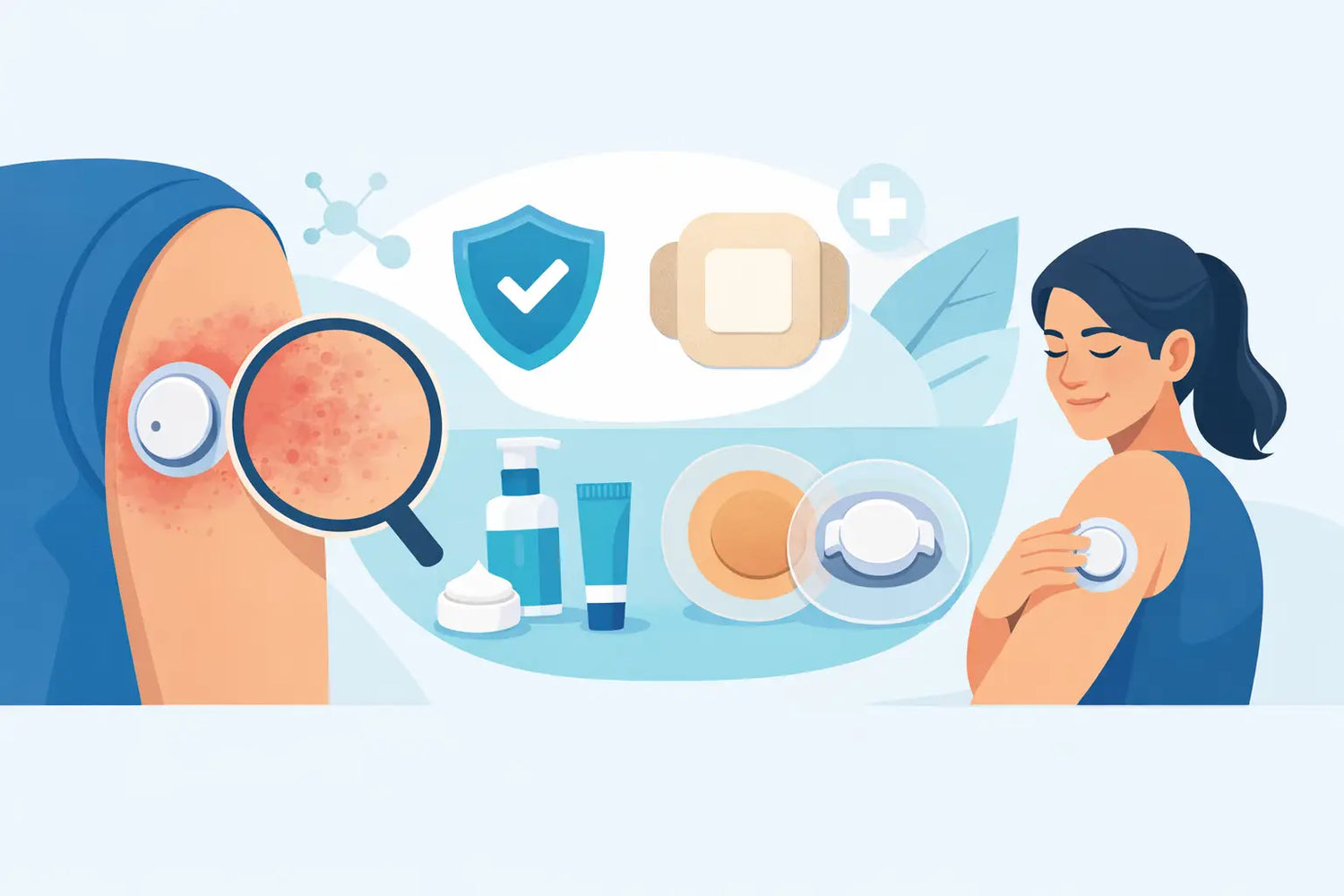
If your sensor site starts itching on day two, or the skin looks angry when you remove it, you are not dealing with a minor inconvenience. For many CGM and pod users, sensor adhesive allergy solutions are the difference between staying consistent with therapy and dreading every change day. The goal is not just to make a device stick longer. It is to protect skin without compromising sensor performance.
Why sensor adhesives trigger skin reactions
Most people describe the problem as an allergy, but the cause is not always the same. Sometimes it is true allergic contact dermatitis, where the immune system reacts to a component in the adhesive. Other times it is irritant dermatitis caused by friction, moisture, trapped sweat, repeated removal, or harsh prep products. The symptoms can look similar - redness, burning, itching, rash, or even small blisters - but the solution may differ.
That distinction matters because more adhesion is not always better. A stronger patch can solve edge lift and still make skin irritation worse if the issue is heat, moisture, or sensitivity to the adhesive layer itself. In real life, users often need a system, not a single fix.
Sensor adhesive allergy solutions start with identifying the pattern
Before changing everything at once, look at timing and location. If the rash appears only where the original device adhesive touches the skin, the sensor adhesive itself may be the issue. If irritation shows up under an overpatch, along the edges, or after exercise, sweat and occlusion may be contributing. If every site becomes more reactive over time, repeated skin stripping could be part of the problem.
It also helps to think about what changed. A new sensor model, a different body location, hotter weather, heavier workouts, or a more aggressive skin prep wipe can all shift how your skin responds. Many people assume the device suddenly became the problem when the trigger is actually the combination of adhesive, moisture, and friction.
Build a skin-first routine before the device goes on
The best sensor adhesive allergy solutions usually begin before application. Skin should be clean and fully dry, but not over-processed. Soap residue, body lotion, and oil can interfere with adhesion. At the same time, repeated use of alcohol-heavy products can leave skin dry and reactive, especially for people applying a sensor every 10 to 14 days.
Gentle cleansing tends to work better than aggressive scrubbing. Once the site is dry, some users do well with a skin barrier film applied in a thin, even layer and allowed to dry completely before sensor placement. This can reduce direct contact between the skin and adhesive. The trade-off is that barrier films can sometimes affect how well a device sticks, so placement technique matters.
If your skin is highly reactive, a patch test is worth the extra step. Try a small amount of barrier product or patch material on a separate area of skin for a day or two. That is not a guarantee, but it is a practical way to catch obvious problems before committing to a full wear cycle.
When barrier methods help, and when they do not
Barrier strategies are one of the most common sensor adhesive allergy solutions, but they need to be used carefully. Some people use barrier wipes or sprays. Others use a thin dressing underneath the sensor with a small opening cut for the cannula or insertion point, depending on the device and manufacturer guidance. The purpose is simple: reduce skin exposure to the adhesive that is causing the reaction.
This can work well for users whose main issue is contact with the adhesive layer. It may work less well if the skin is reacting to pressure, trapped moisture, or repeated occlusion. A barrier also adds another layer into the system, which can affect flexibility, wear time, and the way the device sits on the body. If a sensor starts lifting early because of the barrier setup, irritation can actually get worse as edges rub the skin.
That is why thin, skin-conscious materials matter. Bulkier is not always safer. For active users, a lower-profile solution often performs better over several days because it moves less and traps less moisture.
Overpatches can help protect skin if you choose the right one
An overpatch does not replace the sensor adhesive underneath, but it can reduce edge lift, friction, and accidental tugging. That can be helpful if irritation gets worse when the device shifts during workouts, sleep, or clothing changes. A well-designed overpatch spreads tension across a larger area instead of letting the sensor adhesive take all the stress.
The catch is straightforward: some overpatches are more skin-friendly than others. If the material is too aggressive, too occlusive, or poorly shaped for movement, it can create a new irritation problem. For sensitive users, the best patch is usually one that balances secure hold with breathable wear and clean removal.
This is where product design matters more than marketing language. Skin-safe adhesive systems, alcohol-free prep options, and patches engineered for device compatibility can make a measurable difference in routine use. OHMRX focuses on that kind of practical performance because repeat wear changes what matters. A patch that feels fine for one day may not be the right patch for ten.
Sweat, heat, and friction make reactions worse
A lot of adhesive reactions are amplified by environment. Summer weather, long runs, hot showers, and high-friction areas like the upper arm or abdomen can turn mild sensitivity into a full rash. Moisture weakens adhesive at the edges, and once lifting begins, rubbing increases. That cycle often ends with both poor wear time and inflamed skin.
If this sounds familiar, site selection matters. Rotating to a lower-friction area can help. So can giving the adhesive enough set time before exercise or swimming. Pressing a patch down correctly at application, rather than constantly re-smoothing the edges later, often reduces irritation because the skin is not repeatedly disturbed.
Clothing choices can help too. Waistbands, tight sleeves, and rough seams add mechanical stress. It seems minor until you wear a sensor around the clock. Small improvements in friction control can meaningfully improve comfort.
Removal is part of the solution
People often focus on application and forget that removal is one of the biggest drivers of skin damage over time. If the skin is already compromised, each fast pull strips more of the outer barrier and makes the next wear cycle harder. That is one reason irritation can seem to escalate month after month.
Slow removal is usually better. Supporting the skin with one hand while peeling the adhesive back low and close to the surface can reduce trauma. Adhesive remover products can help in some cases, but sensitive users should be selective because added ingredients can create a second irritation issue. After removal, the site needs time to recover. Rotating locations is not optional for reactive skin. It is basic maintenance.
If the area stays red, painful, or broken for days, pause before placing the next sensor nearby. Reusing the same general spot too soon is a common reason mild irritation becomes chronic.
When to talk to a clinician
Some skin reactions are manageable with better products and better technique. Others need medical input. If you are seeing blistering, open skin, severe itching, spreading rash, or signs of infection, home troubleshooting is not enough. A dermatologist or prescribing clinician can help determine whether this is allergic contact dermatitis, irritation, infection, or a separate skin condition.
In some cases, clinicians recommend specific barrier strategies, alternative site protocols, or prescription treatment for inflamed skin between wear cycles. If you suspect a true adhesive allergy, formal patch testing can sometimes identify the likely trigger. That does not always produce a perfect workaround, but it can make product decisions more precise.
The most effective approach is usually layered
The most reliable sensor adhesive allergy solutions are rarely one-step fixes. They usually combine gentler skin prep, a breathable barrier when appropriate, a well-matched overpatch, smart site rotation, and lower-trauma removal. For one user, the key change is switching to alcohol-free prep. For another, it is reducing sweat buildup and friction. For someone with a true adhesive allergy, the answer may involve clinician-guided workarounds rather than trial and error alone.
That can feel frustrating, but it is also practical. Skin is individual, wear conditions vary, and no patch performs the same on every body. A good routine is not the one with the most products. It is the one that protects your skin well enough to keep using your device with confidence.
If your current setup leaves you counting down to removal day, take that as useful data. Your skin is telling you the system needs adjustment, and with the right approach, it usually can be.


Leave a comment
This site is protected by hCaptcha and the hCaptcha Privacy Policy and Terms of Service apply.