
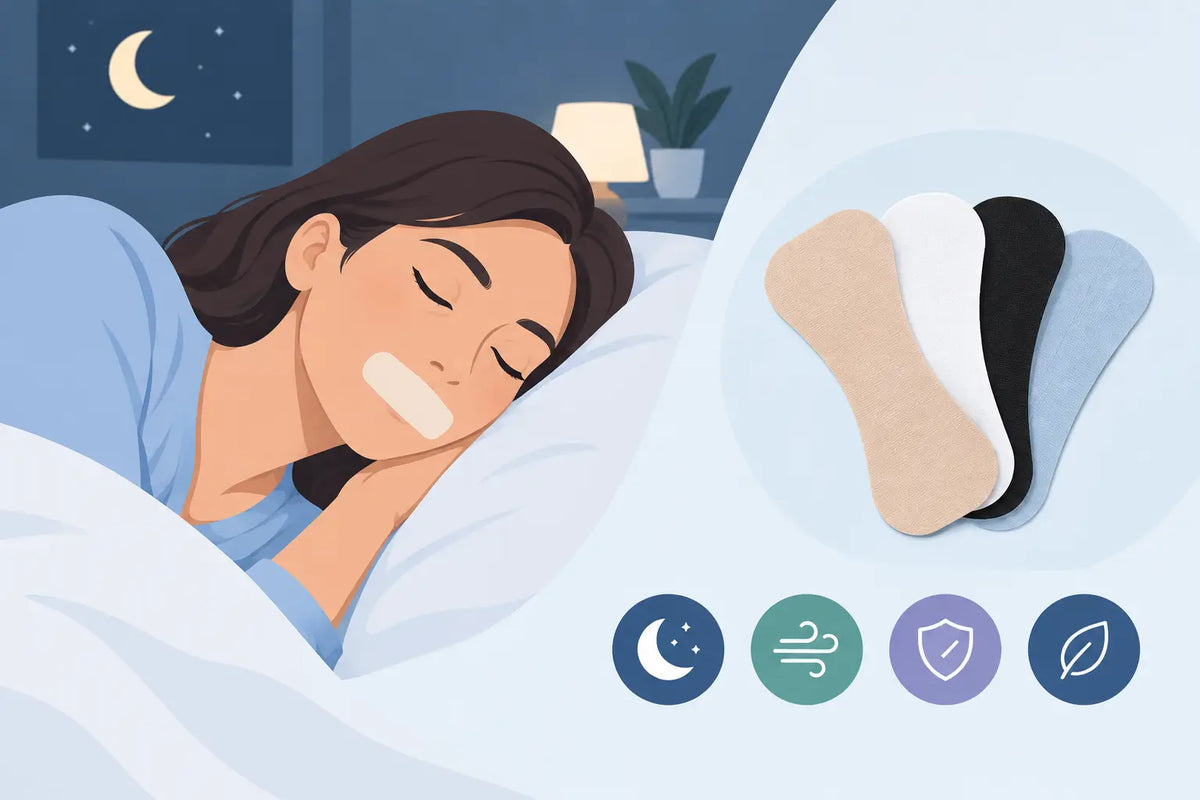
A strip of tape should not make bedtime feel like a clinical procedure. The right product is simple to apply, stays in place comfortably, and removes without leaving your lips or surrounding skin irritated. Knowing how to choose mouth tape starts with one principle: it should support an established nasal-breathing routine, not force one when your body cannot breathe freely through your nose.
Mouth tape is commonly used by adults who wake with a dry mouth, notice open-mouth breathing at night, or want a more consistent sleep routine. It is not a treatment for sleep apnea, chronic congestion, or other breathing conditions. A well-designed option accounts for comfort and skin safety while giving you enough hold for real-life sleep movement.
Start With a Nasal Breathing Check
Before comparing materials, assess whether mouth tape is appropriate for you. You should be able to breathe easily and comfortably through your nose while awake. If you are congested from allergies, a cold, a deviated septum, or another nasal issue, mouth tape is not the right tool for that night.
Do not use mouth tape if you have untreated or suspected sleep apnea, significant breathing difficulties, severe nasal obstruction, or a condition that makes it hard to remove the tape independently. Snoring, gasping, witnessed pauses in breathing, morning headaches, and persistent daytime sleepiness deserve a conversation with a qualified healthcare professional, not a stronger adhesive.
Alcohol, sedating medications, and sleep aids can also change how safely you respond during the night. If you are unsure whether mouth tape fits your health situation, ask your clinician or dentist before adding it to your routine.
How to Choose Mouth Tape by Material and Adhesive
The material determines much of the experience. Look for tape made specifically for the lips and facial skin, rather than repurposing athletic tape, packing tape, or a general first-aid adhesive. Those alternatives are not engineered for this application and may be too aggressive, uncomfortable, or difficult to remove.
A flexible, skin-friendly material is usually the practical choice. It should move naturally with small facial movements instead of feeling rigid across the mouth. Breathability also matters. While the tape is intended to encourage closed-mouth positioning, a breathable construction can feel less occlusive against the skin during a full night of use.
Adhesive strength is a balance, not a competition. Too little hold may cause the strip to lift after a few hours, especially for side sleepers or people with facial hair. Too much hold raises the chance of irritation, discomfort, and residue at removal. Choose a gentle medical-grade adhesive designed for sensitive skin when possible, particularly if you already react to bandages, skincare products, or CGM adhesives.
For most people, the best mouth tape stays put through normal movement but peels away slowly without pulling. That is real-world performance: secure enough for sleep, gentle enough for daily use.
Choose a Shape That Matches Your Comfort Level
Mouth tape comes in full-coverage strips, smaller vertical strips, and shapes that leave the corners of the mouth less restricted. There is no universal best design. The right format depends on your comfort, sleep position, and confidence with the routine.
A vertical strip can be a reasonable starting point for someone who wants a less restrictive feel. It encourages lip closure while leaving more of the mouth uncovered. Some people prefer it because it is easy to remove and can feel less intimidating during the adjustment period.
A wider strip provides more surface contact and may offer a more reliable hold for active sleepers. However, wider coverage is not automatically better. If it creates anxiety, tugs at the skin, or feels difficult to remove, it is not a good fit. Choose the smallest effective design that you can use consistently and comfortably.
Consider your sleeping position as well. Back sleepers may find that a light hold is sufficient. Side and stomach sleepers often put more friction on the tape against a pillow, so a design with dependable edge adhesion can make a meaningful difference.
Prioritize Skin Compatibility
The skin around the mouth is thin and frequently exposed to shaving, skincare ingredients, food, and saliva. Even a quality adhesive can perform poorly on damp or oily skin. Preparation is part of choosing a product because it tells you whether the tape will work within your normal routine.
Apply mouth tape to clean, fully dry skin. Avoid heavy lip balm, facial oils, and moisturizer directly around the lips immediately before application, as these can weaken adhesion. If you use retinoids, exfoliating acids, or acne treatments near the mouth, be especially cautious. Active skincare can make the area more sensitive and prone to irritation.
A patch test is worth the extra step, especially for people who have experienced adhesive sensitivity with bandages, medical devices, or cosmetic products. Test a small piece on nearby skin for a short period before overnight use. Redness that fades quickly after removal may be minor irritation, but burning, itching, swelling, welts, or persistent redness are signs to stop using the product.
Men with facial hair should be realistic about adhesion. Tape sticks most reliably to clean skin, so a full beard or heavy stubble may limit performance. Do not compensate by choosing an excessively aggressive adhesive. A gentler product that works with your grooming routine is the more sustainable option.
Look for Practical Details That Support Consistency
Mouth tape is a nightly-use product, so small design details matter. Individually wrapped strips can be useful for travel, keeping the adhesive clean, and maintaining a consistent bedtime routine. A release liner that peels away easily is another small feature that reduces frustration when you are tired.
Consider the tape's size, too. It should fit your mouth without extending far onto areas that crease heavily or become irritated. A product that is easy to position in low light is more likely to become part of your routine. If application takes several attempts each night, adherence will fade long before the box is empty.
Scent-free and latex-free options are sensible for people with known sensitivities. Clear product information is also a quality signal. Look for a manufacturer that identifies the intended use, materials, adhesive approach, and basic safety guidance rather than relying on vague claims about dramatic sleep transformations.
Set Realistic Expectations for Results
Mouth tape may help some nasal breathers reduce dry-mouth discomfort and reinforce a closed-mouth sleep habit. That does not mean it will solve every sleep concern. Sleep quality is shaped by nasal airflow, sleep schedule, stress, room temperature, caffeine, alcohol, medical conditions, and more.
Give yourself a low-pressure trial. Start on a night when you are not congested and do not need to be up unusually early. Apply the tape before you are fully asleep, stay awake for a few minutes, and confirm that you can breathe comfortably through your nose and remove it easily. If it feels wrong, take it off. A sleep tool should increase confidence, not create tension around bedtime.
Track practical outcomes rather than chasing a perfect wearable score. Are you waking with less dry mouth? Does the tape remain comfortable? Is your skin calm in the morning? Those are useful signs that the product and format suit your routine.
A Better Standard for Nightly Use
The best choice is not the strongest, widest, or most heavily marketed tape. It is a purpose-designed, skin-conscious option that supports comfortable nasal breathing without overcomplicating your evening. At OHMRX, that practical standard matters: no shortcuts, no gimmicks, and no reason to ignore the signals your body gives you.
If your nasal breathing is clear, your skin tolerates the adhesive, and the tape feels easy to remove, you have a foundation for a consistent routine. If any part of the experience feels unsafe or uncomfortable, pause and address the cause before trying to make the tape work harder.


Leave a comment
This site is protected by hCaptcha and the hCaptcha Privacy Policy and Terms of Service apply.