

A Dexcom sensor usually does not fall off because one big thing went wrong. It is usually a stack of smaller issues - skin that was still damp, a placement area with too much friction, lotion left behind, heavy sweat, or adhesive that never got a fair start. If you are trying to figure out how to keep Dexcom on, the goal is not a hack. It is a repeatable routine that gives the adhesive the best chance to last the full wear period.
For most people, better adhesion comes down to three variables: skin prep, placement, and reinforcement. Get those right, and day 8 looks a lot more like day 2.
How to keep Dexcom on starts before insertion
The first few minutes matter more than most people think. Dexcom adhesive performs best on clean, dry, product-free skin. That means no body lotion, sunscreen, body oil, or soap residue where the sensor will sit. Even products labeled gentle or moisturizing can leave enough film to reduce grip.
Wash the area with plain soap and water if needed, then dry it completely. If you use an alcohol wipe, let the skin air dry all the way before insertion. If the site still feels cool or tacky, it is too soon. Applying a sensor over damp skin is one of the fastest ways to shorten wear time.
If you know your skin runs oily or you sweat heavily, prep matters even more. In those cases, a skin-safe prep step can help create a cleaner bonding surface, but it should not leave a slippery residue. The principle is simple: better contact between adhesive and skin usually means better hold.
Temperature also plays a role. Very humid bathrooms, post-workout skin, or applying right after a hot shower can all work against adhesion. It is often better to insert at a time when your skin is cool and dry rather than rushed and freshly steamed.
Choose a placement area that can actually last
Some Dexcom failures are really placement failures. A technically approved area can still be a poor choice if it rubs against waistbands, bra straps, backpack straps, or tight sleeves all day. Friction weakens edges first, and once an edge lifts, water and lint start doing the rest.
Good placement is not just about what is allowed. It is about what stays protected during real life. Think about how you sleep, where your clothes fit tightly, whether you carry bags on one shoulder, and where you sweat the most. An area that looks fine standing in front of a mirror may not be ideal once you factor in exercise, work uniforms, or side sleeping.
For active users, a flatter surface with less bending and less direct rubbing tends to perform better. If one site consistently peels early, that does not mean you are bad at insertion. It usually means that specific location is not a good match for your routine.
Apply pressure, then give the adhesive time to set
After insertion, gentle pressure around the adhesive helps improve contact. You do not need to press aggressively, but you do want the adhesive fully seated against the skin. Pay attention to the outer edges, since that is where peeling usually starts.
Then give it time. The adhesive bond strengthens as it settles. If you can avoid a workout, swimming, or a long hot shower right away, do it. Waiting even several hours before heavy sweat or soaking can make a difference.
This is where many people accidentally sabotage a new sensor. The insertion goes well, but then the site gets exposed to heat, moisture, and friction before the adhesive has stabilized. Good adhesion is not only about application technique. It is also about what happens in the next part of the day.
The case for an overpatch if your Dexcom lifts early
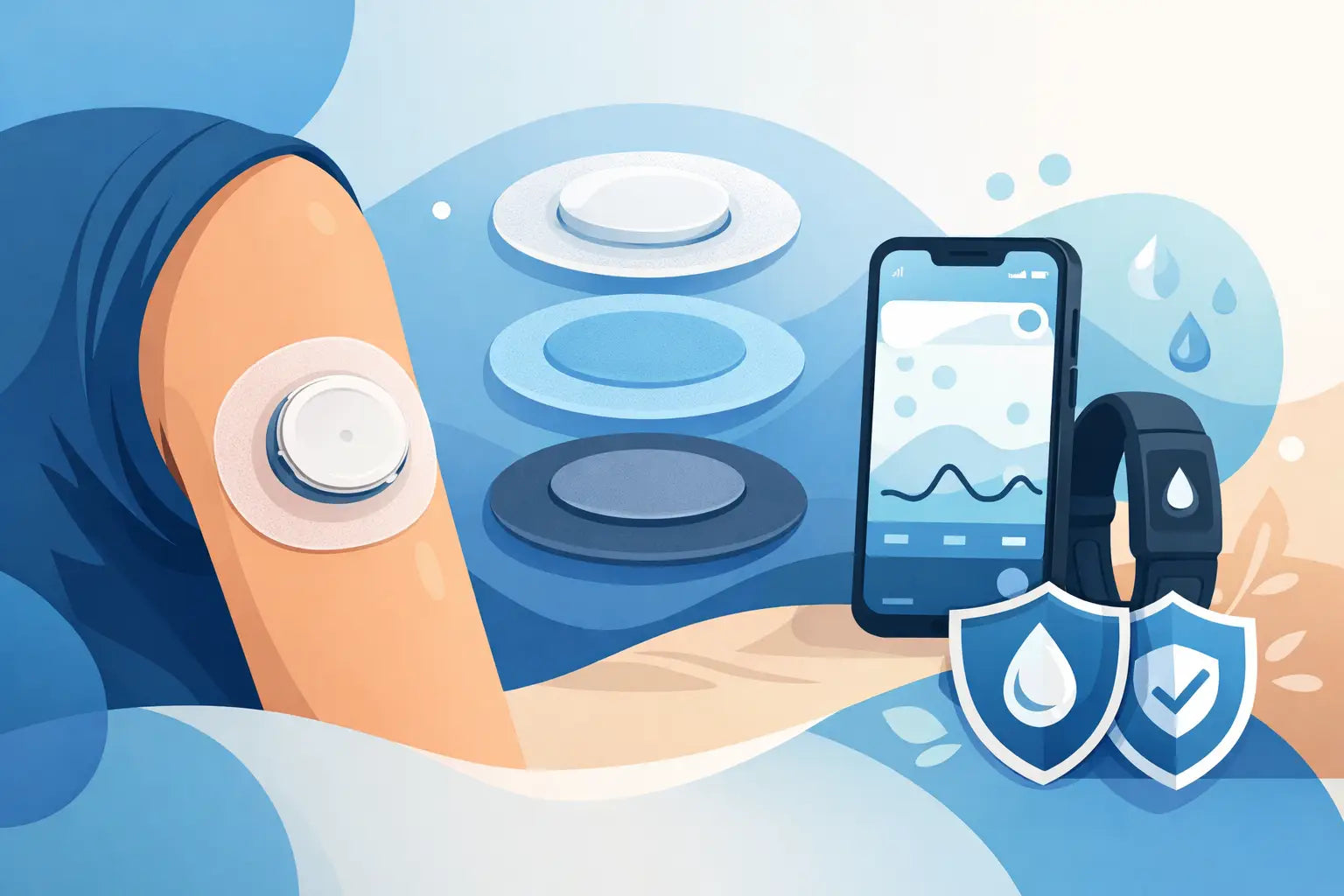
If your sensor regularly starts peeling before the session ends, an overpatch is often the most practical fix. This is especially true if you exercise often, live in a hot climate, shower more than once a day, or simply have skin that does not hold standard adhesive well.
A well-designed CGM patch adds mechanical support around the sensor without interfering with function. It protects the edges, reduces direct friction, and gives the device a second layer of staying power when daily life gets messy. Waterproof performance matters here, but skin compatibility matters just as much. A patch that holds like concrete but irritates your skin is not a real solution.
For some users, the best time to apply an overpatch is immediately after insertion. For others, it makes sense to wait until the Dexcom adhesive starts showing minor edge wear. It depends on your skin, activity level, and how predictable your lifting pattern is. If you already know you are hard on sensors, applying support from day 1 is usually the safer play.
Sweat, showers, and workouts are where adhesion gets tested
If you want to know how to keep Dexcom on during normal daily wear, think about moisture management. Water alone is not always the problem. Repeated wet-dry cycles are. So are heat and sweat trapped under clothing.
After a shower, pat the site dry instead of rubbing it. If the area stays damp under a towel or sleeve, give it a minute to air dry. After workouts, do the same. Sweat left around lifting edges can weaken the bond over time.
High-friction exercise can also stress the site more than people expect. Rowing, weight training, running vests, compression tops, and repetitive arm movement can all create enough shear force to loosen adhesive. In those cases, reinforcement is less about babying the device and more about matching your gear to your routine.
Swimming adds another variable. Chlorine, salt water, sunscreen, and toweling off can all work against adhesion. If you swim often, patch support becomes less optional and more part of standard wear management.
If your skin is sensitive, balance hold with skin safety
Strong adhesion is only useful if your skin tolerates it. Some Dexcom users need extra support but also react easily to adhesives, aggressive removal, or repeated site wear. That changes the strategy.
If you have sensitive skin, avoid layering random products just because they worked for someone else online. More steps do not always mean better results. They can increase irritation, create residue, or make the adhesive behave unpredictably. A simpler, skin-conscious routine is usually more sustainable over repeated wear cycles.
Rotation matters too. Even if one spot gives excellent hold, using it too often can leave skin stressed and less cooperative next time. Healthy skin tends to hold adhesive better than skin that is already irritated.
When it is time to remove an overpatch or sensor, go slowly. Fast removal can strip skin, especially after a full wear period. If your skin barrier gets damaged, your next sensor may struggle before it even starts.
Common reasons Dexcom falls off early
Early lifting is usually not random. The most common causes are applying to damp skin, using a site with too much friction, exposing the sensor to sweat or water too soon, and relying on the built-in adhesive alone when your routine clearly demands more support.
Another common issue is edge picking. Sometimes it is unconscious - adjusting clothes, checking the site, or peeling at a lifted corner. Once the perimeter starts to fail, the rest of the adhesive has to work much harder.
There is also a simple reality here: some people need reinforcement every cycle. That is not user error. Skin chemistry, climate, activity level, and wear habits vary. A repeatable patch routine is often the most efficient answer.
Build a routine you can repeat every sensor cycle
The best approach is the one you can actually maintain every 10 days. Clean, dry skin. Thoughtful placement. Pressure after application. A little time before sweat and water exposure. Reinforcement when your lifestyle calls for it. That is not complicated, but it is disciplined.
For people who wear CGMs continuously, consistency matters more than one-off fixes. You do not need ten adhesion tricks. You need a system that works under weekday showers, gym sessions, summer heat, sleep movement, and normal wear. That is why many experienced users keep their prep and patch supplies stocked instead of treating each sensor cycle like a fresh experiment.
If your Dexcom has been falling off early, do not assume the answer is to try something extreme. Start by improving the conditions around adhesion. Better prep, smarter placement, and the right patch support solve most of the problem without turning sensor wear into a project. OHMRX builds this category around that exact standard - practical, skin-conscious support designed for real use.
A Dexcom should fit into your life, not require constant rescue. The more reliable your routine becomes, the less you have to think about it.

Leave a comment
This site is protected by hCaptcha and the hCaptcha Privacy Policy and Terms of Service apply.