

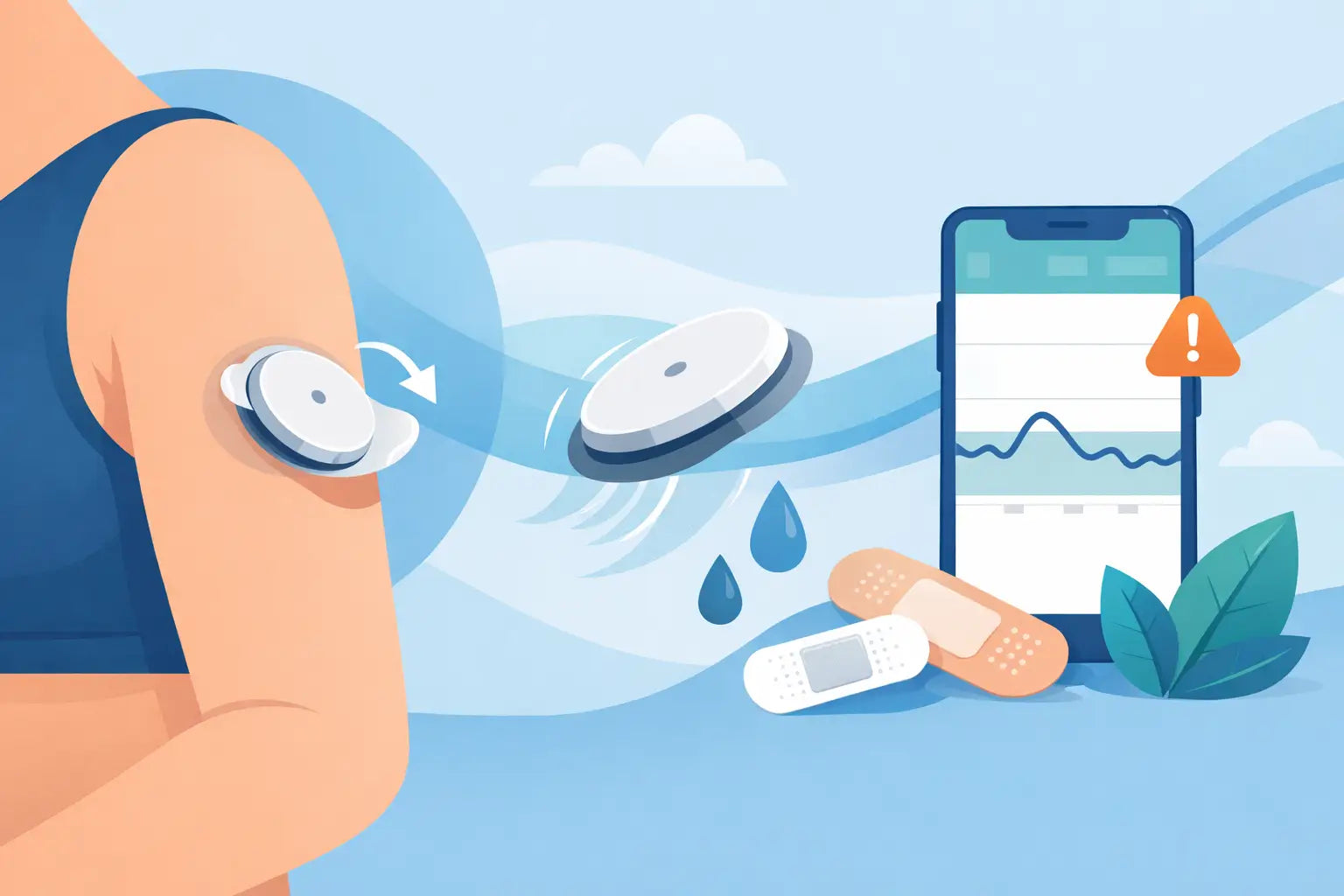
A CGM patch usually fails before the sensor does for one of three reasons: skin prep was rushed, placement was slightly off, or the adhesive never got a fair chance to bond. If you're looking for how to apply CGM patch products so they stay put through showers, workouts, sleep, and daily movement, the process matters more than most people think.
A good patch application is less about force and more about control. Clean skin, dry edges, accurate alignment, and a few seconds of pressure can make the difference between a patch that lifts on day two and one that holds through your full wear cycle. For people wearing Dexcom, Libre, or Omnipod-compatible overpatches on a repeat schedule, getting this right saves time, reduces waste, and helps the device feel more dependable in real life.
How to apply CGM patch without wasting a sensor
Before you touch the patch, make sure the sensor itself is already inserted and secure. A CGM overpatch is designed to support the device, not fix a poor sensor placement. If the sensor is loose, poorly seated, or already lifting, adding a patch on top may not solve the problem.
Start by checking the skin around the device. The area should be clean, completely dry, and free of lotion, oil, sunscreen, or sweat. Even a small amount of residue can interfere with adhesion. If you just showered, worked out, or used a body wipe, give your skin a few extra minutes to fully dry.
If you use a skin prep wipe, choose one that is compatible with sensitive skin and let it dry down before applying the patch. Wet prep under adhesive can reduce hold instead of improving it. The goal is a stable surface, not a sticky mess.
Next, take a close look at body hair in the area. Thick hair can prevent full contact between the patch and skin, especially around the outer edges where lifting usually begins. If needed, trim or shave the area carefully ahead of time. Do not shave immediately before application if your skin gets irritated easily. Freshly irritated skin plus strong adhesive can be a rough combination.
Prepare the area before the patch touches skin
The best application window is when your body is cool and dry. If you apply a patch right after a hot shower, a workout, or time outdoors in heat, sweat and skin moisture can compromise the adhesive before it has set. Many users get better results by applying in the evening or at a calm point in the day when skin temperature is lower.
It also helps to think about friction. Waistbands, bra straps, backpack straps, and side-sleeping pressure can all work against adhesion. Some sensor sites are technically valid but harder to protect in daily use. If your patch regularly peels early, the issue may not be the adhesive alone. Placement and movement patterns matter.
Before peeling the backing, test the patch position over the sensor. Line it up visually so the cutout or center opening sits correctly around the transmitter or pod shape. This dry run takes a few seconds and reduces the chance of sticking the patch down at the wrong angle.
Step-by-step: how to apply cgm patch correctly
Peel part of the backing first rather than removing everything at once. This gives you more control. Hold the patch by the non-adhesive edges and position the center opening around the device.
Once aligned, anchor the first section gently onto the skin. Then continue peeling the remaining backing while smoothing the patch outward from the center. Try not to stretch the material as you apply it. Stretching can create tension, and tension often leads to edge lift later.
As the patch goes down, press in sections instead of rubbing aggressively. Focus on even contact all the way around the sensor. Wrinkles, air pockets, and folded edges are weak points. If you notice one early, smooth it immediately before the adhesive fully sets.
After the patch is fully placed, use firm hand pressure for 10 to 30 seconds. Body heat helps activate many medical-grade adhesives. Press especially around the perimeter, since edge security is what determines long wear in the shower, during exercise, and overnight.
Then leave it alone. Avoid testing the edges, repositioning it, or pressing repeatedly every few minutes. Once adhesive is placed, too much handling can work against a clean bond.
Common mistakes that cause early lifting
The biggest mistake is applying over damp or recently moisturized skin. Adhesive needs direct contact with a dry surface. A patch may seem attached at first, then begin curling at the edges within hours.
The second common issue is stretching the patch during application. People do this without realizing it, especially when trying to make the patch look flat. But a stretched patch tends to pull back on itself later, which weakens the edge seal.
Another problem is misalignment. If the patch goes down off-center, one side may carry more tension or have less skin contact. That can be enough to shorten wear time, particularly on high-movement areas like the back of the arm.
Finally, some users apply a patch and immediately shower, swim, or exercise. Adhesive often needs time to settle. If possible, give the patch several hours before heavy moisture exposure. A 6 to 12 hour buffer is often more forgiving than applying right before activity.
What to do if you have sensitive skin
Skin-safe application is just as important as long wear. If your skin tends to react to adhesives, start with a clean, calm site and avoid stacking multiple products unless you know your skin tolerates them well. More products do not always mean better performance.
A barrier wipe can help some people, but it depends on the formulation and your skin type. For others, a simpler routine works best: clean skin, dry skin, careful placement. If you have a history of redness, itching, or adhesive irritation, patch testing on a small area may help before committing to a full wear cycle.
Removal habits also affect the next application. Pulling a patch off quickly can irritate skin and make future adhesion harder. A slow removal, ideally after loosening the adhesive with warm water or an adhesive remover if approved for your routine, is usually the better option.
Getting better wear through workouts, showers, and sleep
A well-applied patch should support active daily use, but real-world conditions still matter. Sweat, friction, and repeated water exposure all put stress on the adhesive. That does not mean you need to live carefully around your sensor. It means the application has to account for actual use.
For workouts, apply the patch well before training rather than right before. For showers, avoid scrubbing directly over the patch, especially at the edges. Pat the area dry instead of rubbing with a towel. For sleep, pay attention to recurring pressure points. If one side always lifts, your sleep position may be part of the pattern.
If an edge starts to lift slightly, avoid peeling it back further to inspect it. Pressing it down with clean, dry fingers may help if the lift is minor and recent. But once lint, moisture, or body oil gets under the adhesive, that section usually will not fully recover.
Choosing the right routine matters as much as the patch
People often ask whether one patch works for everyone. The honest answer is no. Skin type, climate, activity level, sensor model, and wear location all influence results. Someone with dry skin in an office setting may have an easier wear cycle than someone doing hot outdoor training every day.
That is why repeat users tend to do best with a consistent routine. Same prep steps, similar timing, careful placement, and realistic expectations. Precision beats improvisation. Brands like OHMRX build around that real-life use case because CGM wear is not a one-time event. It is a cycle, and the small details add up over months of use.
If your current method is hit or miss, change one variable at a time. Apply on cooler skin. Let prep dry longer. Avoid stretching the patch. Give the adhesive more time before water exposure. Small corrections are usually more useful than a complete reset.
A CGM patch should make your device easier to live with, not harder to manage. When the application is clean, skin-safe, and repeatable, you get what you actually need: more secure wear, fewer interruptions, and one less thing to think about during the week.


Leave a comment
This site is protected by hCaptcha and the hCaptcha Privacy Policy and Terms of Service apply.