
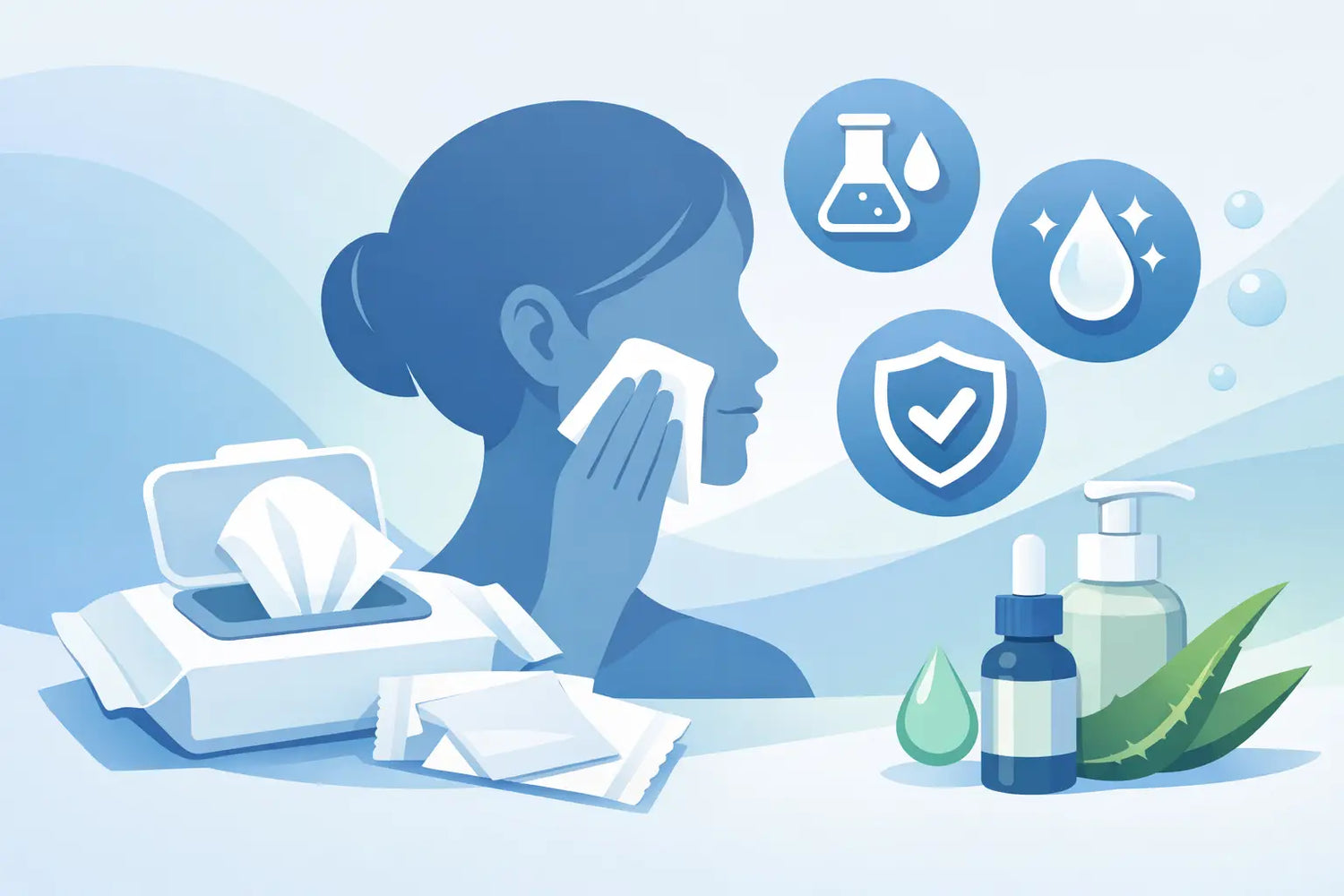
If your sensor patch starts lifting at the edges by day three, the problem is not always the patch. Skin prep matters. Alcohol free skin prep wipes are designed to clean the application area, create a protective film, and support better adhesion without the dryness or sting that alcohol can cause.
For CGM users, Omnipod wearers, and anyone applying medical adhesives on a routine schedule, that difference is practical, not cosmetic. Better skin prep can mean fewer early patch failures, less irritation around the edges, and more confidence during workouts, showers, sleep, and normal daily wear.
What alcohol free skin prep wipes actually do
Alcohol free skin prep wipes sit in a useful middle ground between bare skin and full adhesive accessories. They are not just cleaning wipes, and they are not a replacement for the adhesive on your patch or device. Their job is to prepare the skin surface so adhesives can perform more consistently while also reducing direct friction between adhesive and skin.
Most formulas leave behind a light protective barrier after the wipe dries. That barrier can help in two ways. First, it can reduce skin stripping and irritation when you apply or remove adhesive products. Second, it can create a more uniform surface, which often helps patches adhere better, especially for people with skin that is sensitive, dry, or prone to minor disruption from repeat wear.
That matters when you are applying devices on a regular cycle. If you wear a Dexcom, Libre, or Omnipod, skin is not getting months to recover between applications. It is being asked to hold adhesive again and again, often in similar body areas. Small improvements in prep can have a real impact over time.
Why alcohol free matters
Alcohol has a place in medical settings, but it is not always the best choice for routine adhesive prep at home. Repeated alcohol exposure can dry the skin, increase stinging on already sensitive areas, and sometimes leave skin less comfortable under a patch that needs to stay in place for days.
Alcohol free skin prep wipes are often a better fit for repeat users because they prioritize skin tolerance along with adhesion support. That does not mean every person will respond the same way. Some people with very oily skin still prefer a separate cleansing step before using a barrier wipe. Others find that skipping alcohol is what finally reduces the redness and discomfort they have been dealing with after every sensor change.
The trade-off is simple. If your skin runs oily, sweaty, or lotion-heavy, you may need to be more careful about cleaning the area thoroughly before applying an alcohol-free prep product. The wipe helps create a better surface, but it cannot compensate for residue from body oils, sunscreen, or moisturizer.
Who benefits most from alcohol free skin prep wipes
The clearest use case is repeat adhesive wear. CGM users, insulin pump users, and anyone wearing support patches or medical tape on a regular schedule tend to benefit most because their skin deals with constant contact, removal, and reapplication.
They also make sense for people with sensitive skin, especially if alcohol-based prep leaves a burning sensation or noticeable dryness. If you have ever removed a sensor and seen a square or oval of irritated skin that lasts longer than the sensor wear itself, a gentler prep routine is worth considering.
Active users are another strong fit. Sweat, motion, friction from clothing, and repeated water exposure all challenge adhesive performance. A proper skin prep step does not make a patch indestructible, but it can improve the conditions the adhesive has to work with.
How alcohol free skin prep wipes support patch performance
Good adhesion starts with consistency. Patches fail early when the skin surface is uneven, damp, oily, or irritated before application. Even a high-quality overpatch can struggle if it is being applied over skin that was not prepped well.
A properly used prep wipe helps by creating a cleaner and more controlled base. Once dry, the barrier film can reduce micro-movement between skin and adhesive. That is especially useful around the edges of a patch, where lifting usually starts. If the edge catches on clothing, towels, or bedding, wear time can drop fast.
This is one reason skin prep is often part of a smarter routine, not a standalone fix. If you combine clean dry skin, careful placement, proper pressure during application, and a patch designed for your device and wear conditions, you are stacking the odds in your favor.
How to use alcohol free skin prep wipes correctly
Technique matters more than most people think. Start with skin that is clean and fully dry. If there is lotion, sunscreen, oil, or adhesive residue on the site, remove that first. Then apply the wipe to the target area using a gentle, even motion.
Do not rush the next step. Let the area dry completely before placing your sensor, pod, or overpatch. If the surface still feels wet or tacky in the wrong way, applying adhesive too early can reduce performance rather than improve it.
Placement matters too. Use the wipe where the adhesive will actually sit, not just in the center of the area. For larger overpatches, prep the full footprint. For smaller device adhesives, keep the prep targeted so you are not unnecessarily exposing surrounding skin.
If you are testing alcohol free skin prep wipes for the first time, it is reasonable to try them on one site first rather than changing your whole routine at once. Skin response, sweat level, climate, and activity level all affect results.
When a skin prep wipe helps, and when it will not
A prep wipe can improve outcomes, but it is not a cure-all. If your patch keeps failing because the site is constantly rubbing under waistbands, sports bras, or backpack straps, the bigger issue may be placement. If you apply right after a hot shower or workout, trapped moisture may be the problem. If you are seeing severe irritation, it may be related to the adhesive itself rather than the absence of skin prep.
It also will not fix poor patch design or a patch that is simply not suited to your body, climate, or wear schedule. Some users need stronger edge security, more stretch, or a different shape around the sensor housing. Others need to rotate sites more aggressively to avoid overusing the same skin.
That is why clinically informed routine building matters. Products work best when they are matched to real wear conditions, not used as one-step solutions for every issue.
Choosing alcohol free skin prep wipes for daily use
Not all prep wipes are equally practical for repeat wear. For everyday adhesive routines, the most useful options are easy to apply, quick to dry, and gentle enough to use on an ongoing cycle. A wipe that supports adhesion but leaves heavy residue or feels uncomfortable under a patch is not a good long-term tool.
Look for a product designed specifically for skin barrier and adhesive prep, not just general cleansing. The difference matters. A true prep wipe should support both skin protection and adhesive performance in a way that fits medical-adjacent daily use. OHMRX PREP wipes were developed specifically for this kind of repeat wear — gentle enough for routine use, but effective enough to support consistent adhesion.
This is where a disciplined product standard matters. For a brand like OHMRX, the point is not novelty. It is dependable performance in real life - repeat sensor changes, active days, shower exposure, and skin that needs to hold up over time.
A smarter routine for repeat wear
If you reorder patches every 10 to 14 days, your skin prep product is not an occasional extra. It is part of the system. Treating application day as a repeatable process usually leads to better outcomes than troubleshooting after a patch starts peeling.
That process can stay simple. Clean the site well. Let it dry fully. Use the prep wipe where the adhesive will sit. Allow the film to dry. Apply the device and patch carefully, then press firmly and evenly. Small habits like this are what keep wear time more predictable.
The goal is not perfect skin or perfect adhesion every single time. The goal is fewer failures, less irritation, and a routine you can trust without overthinking it. If alcohol has been making your skin prep feel harsher than it needs to be, switching to an alcohol-free option is a practical place to start.

Leave a comment
This site is protected by hCaptcha and the hCaptcha Privacy Policy and Terms of Service apply.