

You apply a new sensor, press it down exactly as directed, and then by day three the edge starts lifting after a shower or workout. If you have ever asked why do CGM sensors fall off, the short answer is that adhesion is doing a hard job in a difficult environment. A CGM has to stay attached through sweat, motion, friction, body oil, temperature changes, and normal daily life - all while sitting on skin that is constantly renewing itself.
That means sensor failure is not always about doing something wrong. Sometimes it is technique. Sometimes it is skin chemistry. Sometimes it is simply that the adhesive included with the sensor is designed for average conditions, while real life is often more demanding than average.
Why do CGM sensors fall off so often?
Most CGM sensors fall off for the same few reasons, but they rarely happen in isolation. Usually it is a stack of small factors: slightly damp skin, a placement area that bends a lot, a hot day, a tight shirt, and one gym session too many. The adhesive gives up gradually, then all at once.
The first issue is skin preparation. Lotions, sunscreen, body oils, and even soap residue can interfere with adhesion. Skin may look clean and still have enough residue to weaken the bond. If you apply a sensor too soon after showering, the surface may also be hydrated or warm, which can reduce how well the adhesive sets.
The second issue is movement. Sensors placed on an area that twists, stretches, or rubs against clothing are more likely to lift at the edges. The upper arm is common because it is approved for many systems, but it is also a high-contact area. Door frames, backpack straps, sleeves, and sleep position can all work against adhesion.
Sweat is another major factor. During exercise or in hot weather, moisture can break down adhesive over time. The same is true for frequent swimming, long showers, and humid environments. Waterproof does not always mean unaffected by moisture for 10 to 14 straight days.
Then there is simple wear time. CGM adhesives are engineered to last for a defined period, but the farther you get into the wear cycle, the more likely edge lift becomes. This is especially true if the adhesive starts to peel early and then catches on clothing or towels.
Skin type matters more than most people realize
Some people naturally hold sensors well. Others do everything right and still deal with lifting. That difference often comes down to skin type.
Oily skin can reduce initial stick. Very dry skin can create flaking that weakens adhesion underneath. Sensitive skin adds another complication because aggressive prep products or stronger adhesives may improve hold but also increase irritation. If your skin gets red, itchy, or reactive, the best adhesive solution is not always the strongest one. It has to be strong enough to hold and gentle enough to tolerate repeatedly.
Body hair also plays a role. Adhesive bonds best to clean, dry, relatively smooth skin. If a sensor is attached over hair, the contact is less consistent, and the patch can loosen earlier. But shaving immediately before application can irritate the skin and create its own problems. For many users, careful trimming works better than a close shave.
Placement can make or break wear time
If you keep losing sensors in the same area, the location may be the problem more than the product. Good placement is not just about what is technically allowed. It is also about what your body does all day.
A better site is usually flat, clean, and less exposed to repeated friction. A worse site is one that folds when you sit, gets compressed during sleep, or rubs against waistbands, bra straps, or athletic gear. A spot that works well for one person may fail for another because routines differ. Side sleepers, runners, manual workers, and parents carrying toddlers all create different stress on a sensor.
If you notice a pattern, trust it. Repeated early lifting in one area is useful information. Rotating to a lower-friction site within approved placement guidance often improves wear time immediately.
Common application mistakes
A lot of adhesion issues start in the first five minutes. The adhesive needs a clean surface, firm contact, and time to settle.
Applying right after a shower is a frequent mistake because skin may still be warm or slightly moist. Using moisturizer on the same day can also interfere, even if it was applied hours earlier. Another common issue is not pressing the adhesive down firmly around the sensor after insertion. Some users also resume activity too quickly. Heavy sweating or swimming soon after application can prevent a strong initial bond from forming.
Temperature matters too. Very cold skin or a cold sensor adhesive may not stick as effectively. In practice, room-temperature products and dry, calm skin usually perform better than rushed application in a steamy bathroom.
Why sensors fall off early during exercise and summer
Heat and activity amplify every weak point in adhesion. Sweat adds moisture. Movement adds mechanical stress. Clothing adds friction. If you train regularly, work outdoors, or live in a humid climate, the standard sensor adhesive may be enough sometimes and not enough consistently.
That does not mean the sensor is defective. It means your conditions are tougher than baseline use. This is where overpatches and skin prep products become less of an optional extra and more of a routine support tool.
A well-designed overpatch helps distribute stress beyond the small adhesive footprint of the sensor itself. Instead of the edges of the sensor adhesive taking all the force, the patch adds a wider anchor point. For active users, that difference is often what gets a device through the full wear cycle.
How to keep a CGM sensor from falling off
If you are troubleshooting why do CGM sensors fall off, the most effective fix is usually a process change, not a dramatic workaround. Start with the basics and build from there.
Clean the site thoroughly and make sure it is fully dry. Avoid lotion, oil, and sunscreen anywhere near the area. If body hair is an issue, trim it ahead of time rather than shaving immediately before application. Choose a location with less rubbing and less flex if possible.
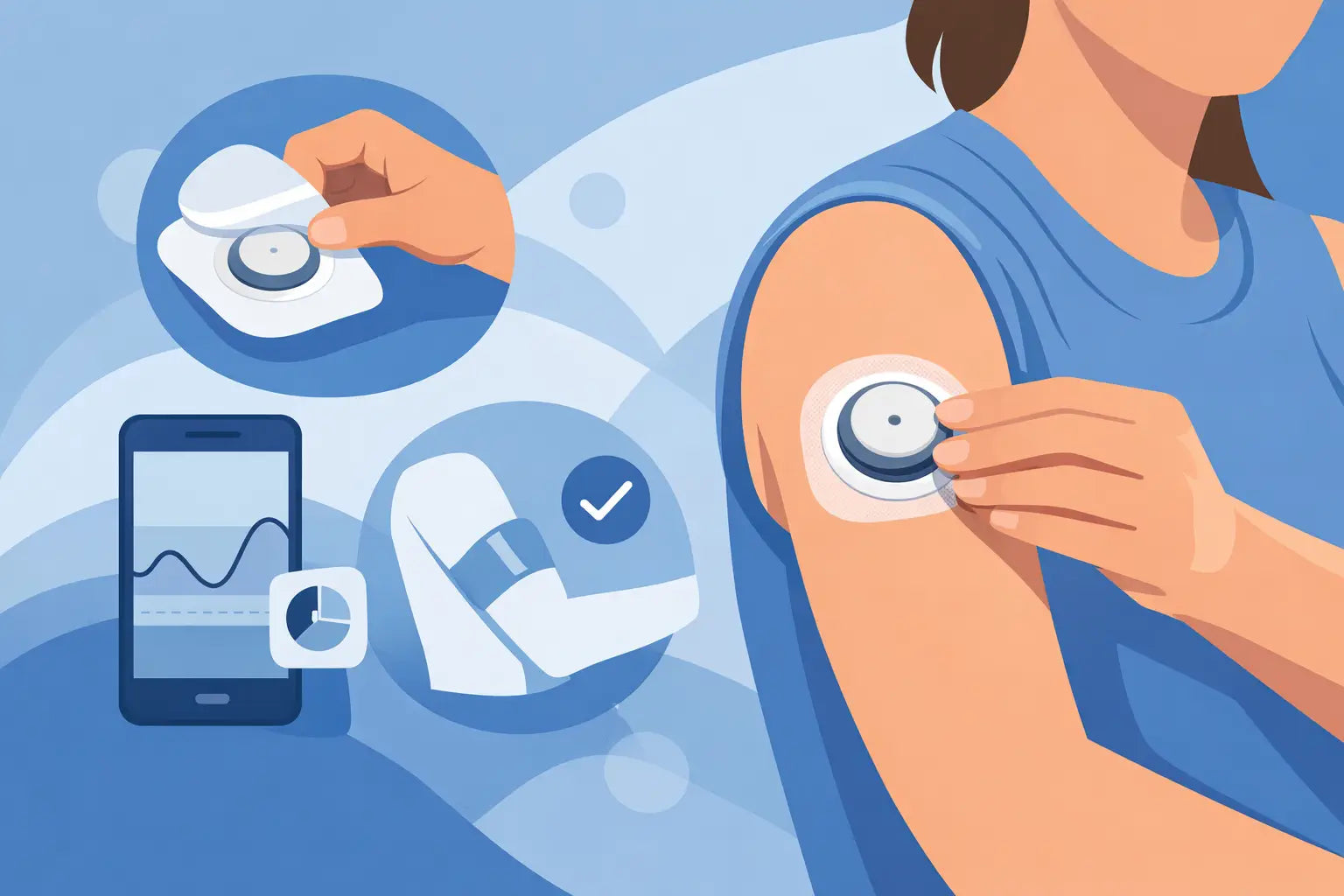
After applying the sensor, press around the adhesive firmly to improve contact. Give it time before showering, swimming, or working out. If you already know you sweat heavily or your sensors tend to lift early, add an overpatch from day one rather than waiting for the edges to peel.
Skin prep can help, but it depends on your skin. Some users benefit from a protective barrier or adhesive-support wipe. Others with very sensitive skin may need a simpler routine. Stronger hold is not always better if it leads to irritation that makes the next application harder.
When an overpatch is the right call
An overpatch is especially useful if your sensor starts lifting before the intended wear period, if you exercise most days, or if you have already lost a sensor to friction or water exposure. It is also practical for users who do not want to keep checking the edges or limiting activity to protect a device.
The key is choosing a patch designed for the specific device shape and daily conditions, with skin-safe adhesive and enough durability for real wear. For many Libre, Dexcom, and Omnipod users, this is not about adding something extra. It is about giving the device the support it should have had for their routine in the first place.
OHMRX approaches this problem the way it should be approached - as an engineering and skin-performance issue, not a cosmetic accessory choice. That distinction matters when a product is staying on your body for days at a time.
When falling off points to a bigger issue
If sensors keep failing despite careful prep, better placement, and patch support, it may be worth looking beyond adhesion. Persistent sweating under the adhesive, recurrent skin reactions, or repeated failures in approved sites may point to a fit issue with your routine or a need for clinician guidance. A sensor that does not stay on is not just inconvenient. It interrupts data continuity and can reduce confidence in the system overall.
There is also a practical difference between edge lift and full failure. A slightly peeling edge may be manageable with a support patch. A sensor that is loose at the center or catches repeatedly may not be salvageable. Knowing when to reinforce and when to replace saves frustration.
Most people who struggle with adhesion do not need a perfect hack. They need a repeatable routine. Clean skin, smart placement, enough dry-down time, and the right patch support usually outperform trial and error. If your sensor has been falling off early, that is not a personal failure. It is a signal that your setup needs to match your actual life, not ideal conditions on a package insert.

Leave a comment
This site is protected by hCaptcha and the hCaptcha Privacy Policy and Terms of Service apply.