
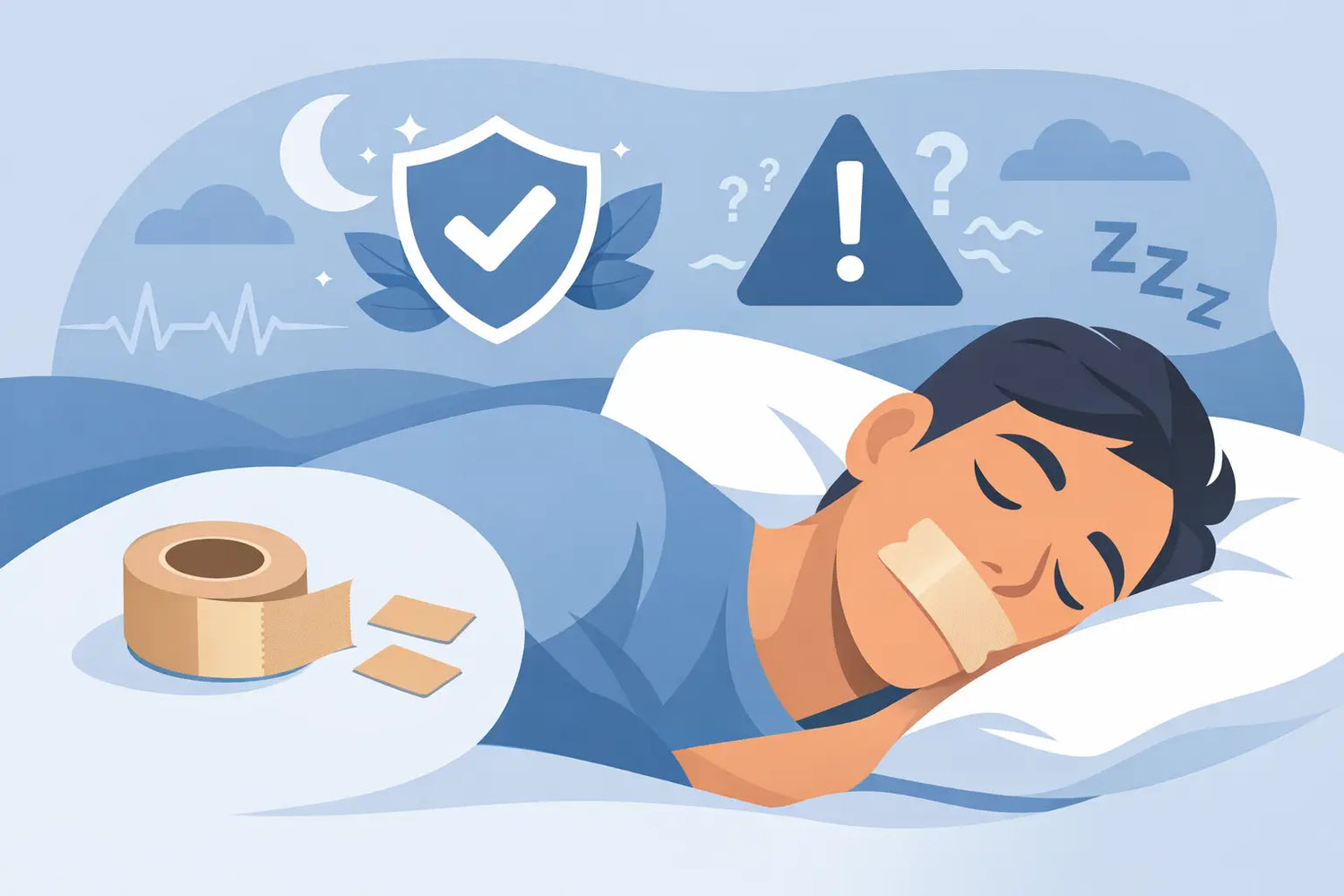
A lot of sleep trends sound harmless until you try them with a stuffy nose, sensitive skin, or an undiagnosed breathing issue. That is why “is mouth tape safe” is the right question to ask before you put anything over your lips overnight.
The short answer is that mouth tape can be safe for some adults, but not for everyone, and not in every situation. Safety depends on how you breathe, whether your nose stays clear through the night, your skin tolerance, and whether you have any signs of sleep-disordered breathing. Used carefully, it can support the habit of nasal breathing during sleep. Used casually, it can create problems that people often miss.
Is mouth tape safe for most adults?
For a healthy adult who can breathe comfortably through the nose, has no major sleep breathing symptoms, and uses a skin-safe product as directed, mouth tape is generally low risk. The key point is that it is meant to encourage nasal breathing, not force breathing through an obstructed airway.
That distinction matters. If your nose is congested from allergies, a cold, a deviated septum, or chronic sinus issues, taping your mouth does not solve the root problem. It can make sleep feel more uncomfortable, increase anxiety around breathing, or lead you to remove it in the middle of the night.
Mouth tape is also not a treatment for sleep apnea. Some people assume that quieter breathing or less dry mouth means the problem is fixed. It does not. If you snore heavily, gasp, choke in sleep, wake with headaches, or feel unusually tired despite a full night in bed, those are signs to get evaluated rather than self-experimenting.
When mouth tape may be reasonable
Mouth tape tends to make the most sense for adults who already breathe well through the nose but want help staying that way overnight. Some people report experiencing less morning dry mouth, fewer cracked lips, and a more comfortable sleep environment when they are not breathing through the mouth all night.
It may also fit into a broader sleep routine if you are addressing the basics at the same time - nasal hygiene, humidity, consistent sleep timing, and a bedroom setup that does not work against easy breathing. In other words, it works best as a support tool, not a shortcut.
A well-designed product also matters. Skin safety, adhesive quality, and easy removal are not cosmetic details. They are part of the safety profile.
Who should not use mouth tape without medical guidance
This is where the answer to is mouth tape safe becomes more conditional.
If you have suspected or diagnosed obstructive sleep apnea, significant snoring, chronic nasal blockage, severe seasonal allergies, asthma that is not well controlled, or a history of nighttime panic around breathing, you should talk to a clinician before using it. The same goes for anyone with facial hair patterns that prevent proper placement, active skin irritation around the mouth, or a history of adhesive reactions.
Children are a separate category and should not be treated like smaller adults in this case. Mouth taping for kids should not be started casually at home without guidance from a pediatric clinician who understands airway and sleep issues.
You should also avoid using mouth tape if you are sick, congested, nauseated, have been drinking heavily, or are taking anything that makes you less aware or harder to wake. Those scenarios reduce your margin for error.
The main risks people overlook
The biggest safety issue is simple: blocked or unreliable nasal breathing. If your nose closes up overnight and your mouth is taped, you may wake up uncomfortable or anxious. For some people that is a brief nuisance. For others, it can be a real problem.
Skin irritation is the next common issue. The lips and surrounding skin are delicate. Harsh adhesive, strong pull, or repeated nightly use can lead to redness, peeling, tenderness, or even broken skin. That risk goes up if you use random household tape instead of a product designed for skin contact.
There is also a false-confidence problem. People sometimes use mouth tape because they are tired, snoring, or waking up with dry mouth. Those symptoms can overlap with sleep apnea or other airway issues. If the tape makes you feel like you are “doing something,” it can delay proper evaluation.
Finally, comfort matters more than people think. If you feel trapped, panicky, or hyper-aware of the tape, it is not a good fit. Sleep support tools should reduce friction in your routine, not add it.
How to assess whether mouth tape is safe for you
Start with the most basic test: can you sit quietly for several minutes during the day with your mouth closed and breathe easily through your nose? If that feels strained, noisy, or incomplete, overnight use is probably not the place to start.
Next, consider your sleep symptoms. Occasional mouth breathing is different from loud nightly snoring, frequent waking, choking sensations, or daytime fatigue that never fully lifts. If those symptoms are present, the safer move is medical evaluation first.
Then look at your skin. If you react easily to bandages, adhesive patches, or cosmetic tape, patch testing matters. A product can be marketed as gentle and still not be right for your skin.
One practical standard is this: you should be able to remove the tape easily, breathe comfortably through your nose before bed, and stop immediately if anything feels off. Safety starts to drop when people ignore those checkpoints.
How to use mouth tape more safely
If you decide to try it, keep the process controlled.
Choose a skin-safe tape intended for overnight mouth use rather than improvising with household adhesive. Apply it to clean, dry skin without heavy lip balm or skincare products under the adhesive, since that can affect hold and removal. Test it for a short period while awake before using it overnight. That gives you a chance to notice skin irritation, discomfort, or anxiety without adding sleep to the equation.
Your first night should not be on a day when you are congested, exhausted, or recovering from a cold. You want a normal baseline. If your nose feels even partly blocked, skip it.
It also helps to support the habit of nasal breathing before bed. A saline rinse, shower steam, or addressing bedroom dryness can matter more than the tape itself. The goal is to create conditions where nasal breathing is easy, not forced.
If you wake up feeling short of breath, panicked, itchy, or irritated, stop. If your skin becomes red or raw, stop. If your partner notices loud snoring, gasping, or pauses in breathing, stop and get evaluated.
Is mouth tape safe if you snore?
Sometimes, but snoring changes the conversation.
Light snoring from mouth breathing may improve when the mouth stays closed. But snoring can also be a sign of a narrowed or unstable airway, and mouth tape does not correct that. If your snoring is loud or consistent, it may be worth discussing with a clinician to rule out conditions like sleep apnea.
This is one of the clearest trade-offs with mouth tape. It may help a narrow problem, like uncomplicated mouth breathing during sleep. It is not designed to diagnose or treat a broader airway disorder.
Is mouth tape safe for sensitive skin?
It can be, but product quality matters a lot.
The area around the mouth moves constantly and has thinner skin than many other parts of the body. A poorly designed adhesive can leave irritation behind even if the breathing side of things goes smoothly. If you have eczema, perioral dermatitis, recent retinoid use, or frequent adhesive sensitivity, your risk is higher.
Look for a product built for skin contact, not just stickiness. Gentle removal matters as much as hold. Clinically informed brands in this category tend to focus on skin compatibility and real-world overnight wear, which is the right standard to use.
What a good candidate looks like
The safest user is usually an adult with reliable nasal breathing, no major sleep apnea symptoms, no active congestion, and skin that tolerates adhesives reasonably well. They approach mouth tape as a small behavior support, not a cure-all.
That mindset matters. The best wellness tools are engineered to fit real life, but they still need the right use case. Mouth tape is no different.
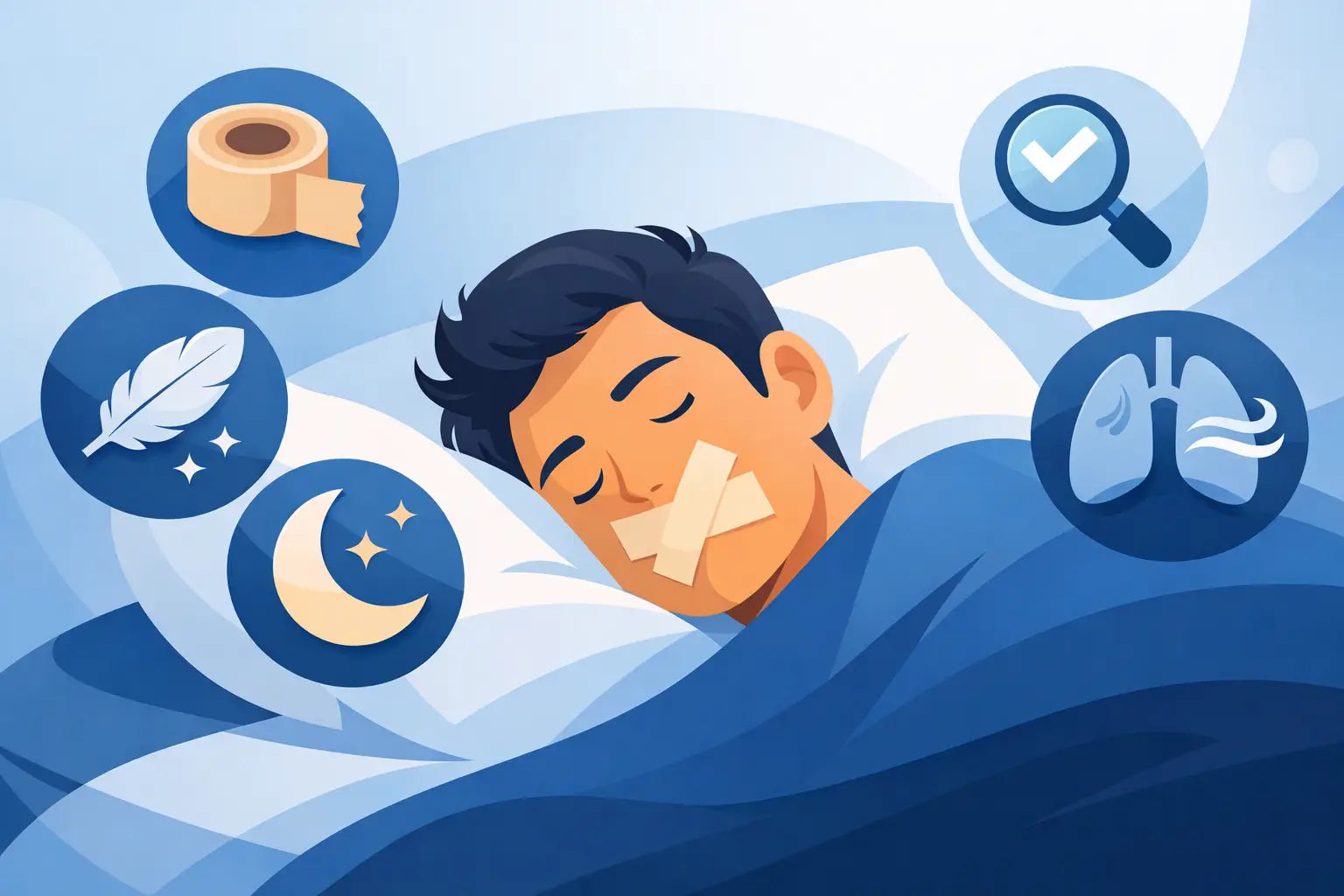
If you are curious, start conservatively and pay attention to what your body tells you. And if your sleep symptoms are bigger than dry mouth or occasional mouth breathing, the smartest move is to get the airway question answered first. comfortable sleep starts with clear breathing, not guesswork.

Leave a comment
This site is protected by hCaptcha and the hCaptcha Privacy Policy and Terms of Service apply.