
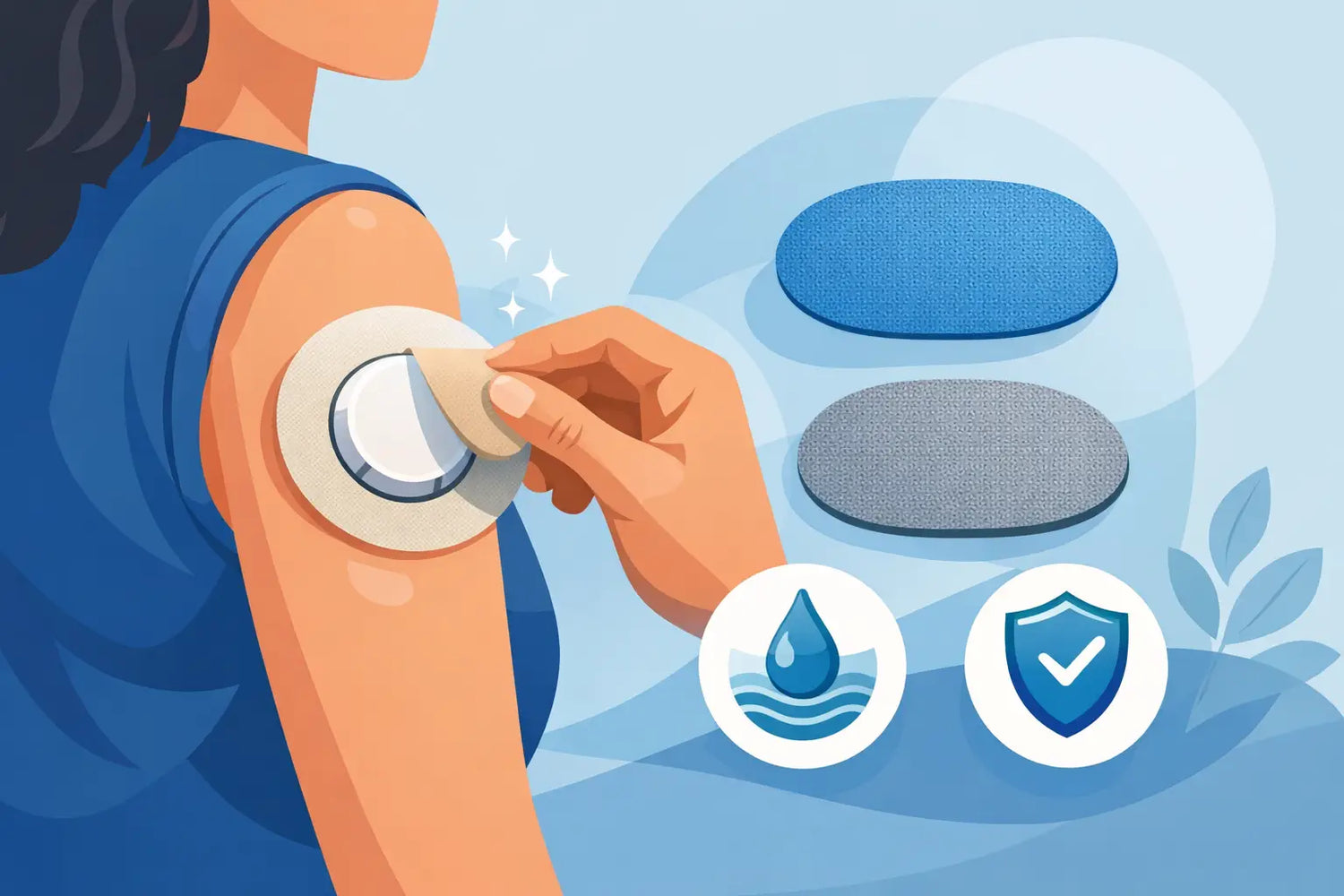
A sensor that starts lifting on day three is more than an annoyance. It can catch on clothing, loosen during exercise, and make the rest of your wear cycle feel uncertain. If you are looking for a lingo sensor patch cover, the goal is simple: keep the sensor secure without making your skin pay for it.
That sounds straightforward, but patch performance depends on more than adhesive strength alone. The best cover has to handle sweat, showers, friction, and everyday movement while still feeling comfortable enough for continuous wear. For Lingo users, that balance matters because a patch is not just a backup accessory. It becomes part of the device experience.
Why a lingo sensor patch cover matters
Lingo is designed for continuous wear, which means the patch protecting it has to perform under real-life conditions. That includes workouts, sleep, daily clothing changes, and repeated exposure to water. A weak cover may start peeling at the edges early. An overly aggressive one may leave the skin irritated by the time the sensor cycle ends.
This is where people often run into the trade-off. A patch can hold exceptionally well but feel harsh on sensitive skin. Another can feel gentle but lose adhesion too soon in humid weather or after exercise. The right choice depends on your wear habits, your skin, and how much friction your sensor area sees during the day.
For many users, patch buying also becomes routine. If you wear sensors continuously, this is not a one-time decision. You want a patch cover you can reorder with confidence, use consistently, and trust across different conditions.
What a good patch cover should actually do
A lingo sensor patch cover should stabilize the device without interfering with comfort or wearability. That means the patch needs enough adhesive surface area to anchor well around the sensor, while still allowing the center design to work with the device rather than against it.
Material matters more than many people expect. A patch that is too stiff can start lifting when the arm bends or when fabric rubs against it. A more flexible patch tends to move with the body, which reduces edge stress over time. That flexibility is especially useful for people who train regularly, sleep on their side, or wear fitted sleeves.
Water resistance is another practical requirement, not a premium feature. A patch cover should hold through showers, sweat, and everyday humidity. That does not mean every waterproof patch performs the same way. Some maintain their hold well after getting wet but begin peeling once repeatedly exposed to heat and friction. Others dry quickly and stay stable longer. Real performance shows up over several days, not just the first shower.
Then there is skin safety. If you have ever removed a patch and seen redness, itching, or peeling skin underneath, you already know why adhesive formulation matters. A cover should be designed for extended wear, not short-term bandage use. That distinction can make a major difference over repeated sensor cycles.
Fit matters more than generic sizing suggests
Not every CGM-style overpatch works equally well across devices. A lingo sensor patch cover should fit the sensor shape and footprint in a way that supports adhesion instead of creating extra tension points.
When the cut is off, even slightly, the patch may place uneven pressure around the device or leave exposed edges that catch more easily. A proper fit helps the patch sit flat, which improves both comfort and durability. It also tends to look cleaner on the skin, and that matters more than it may seem when you are wearing a device continuously in visible areas.
There is also the issue of center coverage. Some users prefer a design that surrounds the sensor without covering the middle. Others like full coverage for extra reinforcement. Neither approach is automatically better. If you want easier access to the sensor area and less direct pull during removal, an open-center design may make more sense. If your main priority is maximum hold during high activity, a full-cover patch may be worth considering. It depends on your routine.
Skin prep changes the outcome
Even a strong patch can fail early if it is applied poorly. Oils, lotion, sweat, and leftover soap residue all reduce adhesion. The skin should be clean and fully dry before application. If you tend to apply a patch after a shower, give the skin enough time to cool and dry completely. Warm, damp skin is not the best surface for a long-wear adhesive.
Application pressure also matters. Pressing the patch down firmly, especially around the edges, helps activate the adhesive and create a better bond. After that, it helps to avoid immediate sweating or water exposure for a period of time so the patch has a chance to set.
Sensitive skin adds another layer. Some users do better with alcohol-free prep products or barrier-friendly routines that reduce irritation without compromising hold. Others need to avoid applying patches to areas where the skin is already dry, inflamed, or recovering from the last wear cycle. Strong adhesion is useful, but not if it leads to repeated skin breakdown.
How activity level affects patch choice
A patch that works well for desk work and light daily movement may not hold the same way during long runs, weight training, swimming, or outdoor heat. This is why product reviews can seem contradictory. One person says a patch lasts the full cycle with no issue. Another says the corners lifted in two days. Both can be true.
The difference is often environment and activity. Sweat volume, skin type, climate, and clothing friction all affect wear time. If you train hard or spend time in humid conditions, you may need a more durable adhesive profile than someone with a lower-friction routine. If your skin is reactive, you may decide that slightly less hold is worth the trade for better comfort.
That is the practical mindset to bring to patch selection. Not which option sounds strongest on paper, but which one matches how you actually live.
Signs a patch cover is working well
A good patch usually disappears into the background. It stays put, feels stable, and does not ask for constant checking throughout the day. You are not trimming edges, pressing corners back down, or planning outfits around whether your sensor might catch on a sleeve.
The skin underneath should also look reasonably calm at removal. Mild adhesive marks can happen, especially with long wear, but persistent redness, itching, or skin stripping is a sign the product or routine may need to change. Long-term wearability is not just about making one patch last. It is about being able to repeat the process every cycle without accumulating irritation.
Visual wear gives useful clues too. If the patch frays quickly, rolls at the edges, or traps too much moisture, it may not be built for extended daily use. A well-engineered patch generally keeps its shape, maintains edge integrity, and remains comfortable even as the days add up.
Choosing a lingo sensor patch cover for repeat use
Because sensor wear is ongoing, consistency matters. You are not just testing whether a patch can survive one busy weekend. You are choosing a product that may become part of your regular reorder cycle.
That shifts the decision. Price matters, but so does reliability from one batch to the next. So does skin tolerance over time. So does ease of application when you are replacing sensors regularly and do not want a complicated process every 10 to 14 days.
This is where clinically informed design tends to stand out. Practical details like adhesive stability, flexible material, waterproof performance, and skin-conscious construction are not marketing extras. They are what determine whether a patch works in real life. Brands such as OHMRX have built around that reality by focusing on daily-use performance instead of novelty.
The best choice is the one you can trust repeatedly
There is no single patch cover that fits every Lingo user the same way. Some people need maximum hold for high-output routines. Others need a gentler adhesive that respects sensitive skin. Most want both, and that is where product quality really gets tested.
A good lingo sensor patch cover should feel engineered, not improvised. It should support the full wear cycle, hold up in normal life, and make device use feel less fragile. When you find one that does that consistently, you stop thinking about the patch and get back to the reason you are wearing the sensor in the first place.



Leave a comment
This site is protected by hCaptcha and the hCaptcha Privacy Policy and Terms of Service apply.