
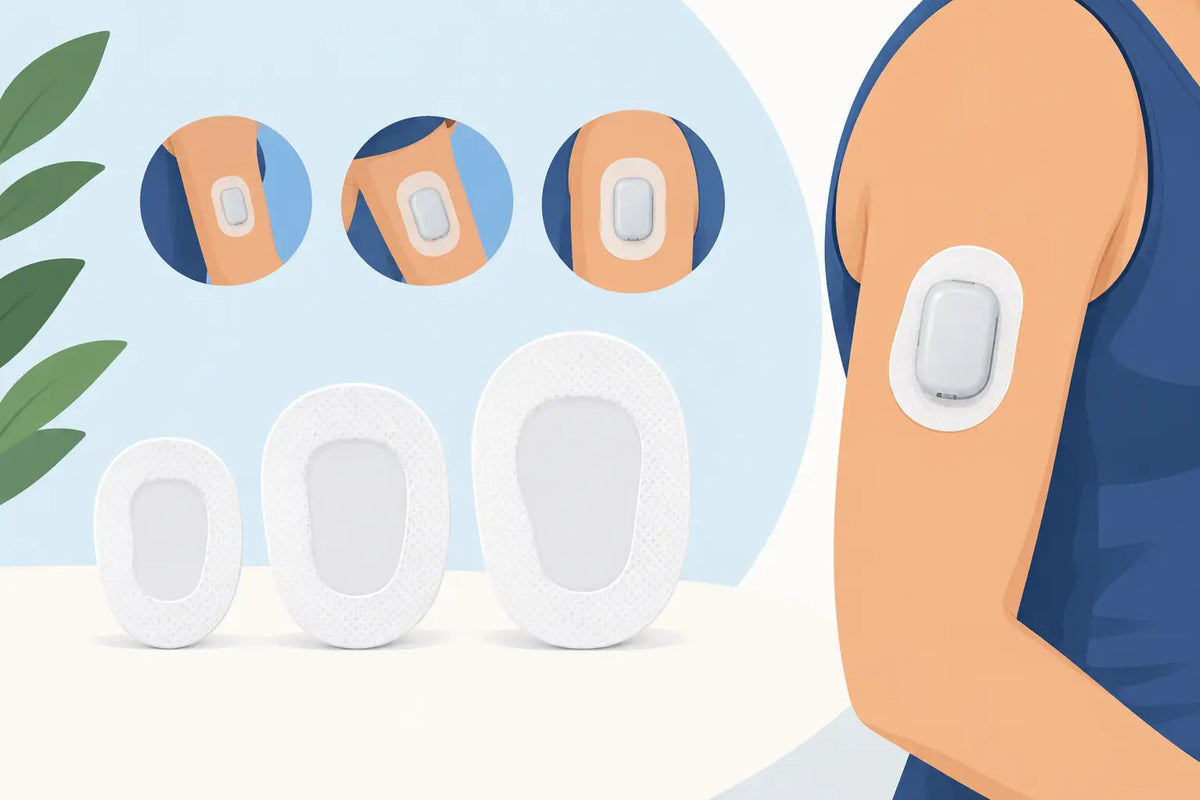
An Omnipod overpatch should feel like backup, not like another device to manage. The right size gives the Pod adhesive more staying power without pulling at sensitive skin, catching on clothing, or crowding the cannula area. This Omnipod overpatch sizing guide explains what a proper fit looks like and how to choose confidently for a full three-day wear cycle.
What an Omnipod overpatch is designed to do
An overpatch is an adhesive layer placed over or around the Pod to reinforce the Pod's original adhesive. It does not replace proper site preparation, and it should never interfere with the Pod's insertion, cannula, vents, or communication.
For many people, the Pod's built-in adhesive performs well for routine wear. An overpatch can be useful when sweat, swimming, frequent showers, friction from clothing, workouts, humid weather, or oily skin make edge lifting more likely. It can also provide practical reassurance if you have had a Pod peel early in the past.
The goal is not to use the largest patch possible. The goal is to create stable coverage around the Pod with enough adhesive contact on clean skin to support it through normal movement.
Omnipod overpatch sizing guide: what a good fit looks like
A correctly sized Omnipod overpatch should match the shape and footprint of your specific Pod style. The Pod itself needs to remain positioned exactly as intended, while the patch extends beyond its existing adhesive border onto healthy, dry skin.
Look for an overpatch with a center opening or a Pod-specific shape that is designed for your device. That opening should sit around the Pod without forcing the patch to bunch, stretch tightly over hard edges, or cover functional areas. The adhesive portion should create an even border around the Pod rather than leaving only narrow strips of adhesive on one or two sides.
A useful rule of thumb is to choose enough surrounding adhesive to reinforce the device, but not so much that the patch reaches into a crease, joint, waistband, or another high-friction area. More surface area can improve hold, but a larger patch may be less comfortable on a small or highly mobile site.
The border matters more than overall patch size
When comparing overpatches, focus on the usable adhesive border around the Pod. A patch can look large on a product page but provide limited support if its center opening is oversized or if its shape does not follow the Pod's profile.
An effective border lies flat on the skin with no gaps at the corners. It should support the Pod's original adhesive from several directions, especially at the edges most exposed to clothing or movement. If the patch only touches skin in a few thin sections, it is more likely to lift during wear.
Avoid a patch that is too small
An undersized patch may overlap the Pod unevenly or leave too little adhesive surface on the skin. It can pull at the Pod adhesive rather than reinforce it, particularly when the patch gets wet or catches on a sleeve.
Signs that your patch is too small include curled edges shortly after application, visible tension across the Pod, patch material pulling away at the corners, or limited adhesive contact beyond the device. A patch should lie relaxed, not look stretched into place.
Avoid a patch that is too large for the site
An oversized patch is not automatically more secure. On the abdomen, upper arm, thigh, or lower back, a wide patch may cross a bend line or rub against clothing. That repeated friction can make the outer edges lift, even if the center remains secure.
If you have sensitive skin, a larger adhesive footprint also means more skin is exposed to adhesive. Choose the coverage you need for your activity level and usual wear conditions, not the maximum size available.
Match the patch to your Pod model and patch design
Not every Omnipod patch is interchangeable. Pod models can differ in dimensions and contours, and overpatches may be made as a frame-style design, a shaped full-cover design, or a more universal adhesive format. Confirm that the patch is specifically labeled for your Omnipod model before opening a pack.
A frame-style patch generally surrounds the Pod, allowing the device body to remain uncovered while reinforcing its adhesive perimeter. This can be a practical choice for people who want targeted support and less adhesive on the skin.
A shaped overpatch may provide broader coverage around the device and can be useful for high-sweat or high-movement days. The trade-off is a larger contact area and a greater need for precise placement. If your skin is prone to irritation, start with a skin-conscious adhesive and a fit that does not extend unnecessarily beyond the device site.
Do not trim a patch near the Pod after it has been applied. Cutting can create edges that lift more easily and may bring scissors too close to the device. If a patch needs substantial modification to fit, it is the wrong shape or size for that Pod and site.
Size the patch for your placement site
The best Omnipod overpatch size can vary by where you wear your Pod. A patch that sits perfectly flat on the abdomen may wrinkle on the back of the arm or near the thigh, where skin moves more during daily activity.
On the abdomen, a broader shape may work well when it can sit on a relatively flat area away from waistbands. On the arm, look for a flexible patch that follows the contour without bridging across a bend or rubbing under a sleeve. Thigh placement may call for careful attention to clothing friction and movement during walking. For the lower back, consider how sitting, twisting, and waistband contact may affect the edges.
Before applying, hold the backing-covered patch over the Pod site and check its outer edge. If it will land in a deep crease, directly under a waistband, or over irritated skin, choose another approved Pod location or a different patch shape. Never move or reposition an inserted Pod just to accommodate an overpatch.
Apply the right size patch correctly
Even the right patch size can fail if it is applied over lotion, sweat, or skin prep residue that has not dried. Clean, dry skin and a calm application process make a measurable difference.
For reliable placement, follow this sequence:
1. Apply the Pod according to its instructions and make sure its adhesive is fully pressed into place.
2. If using a skin prep product, allow it to dry completely before applying the overpatch.
3. Center the overpatch opening around the Pod without pulling the material tight.
4. Press from the middle outward, smoothing the adhesive onto the skin and removing wrinkles as you go.
5. Hold gentle pressure around the border for several seconds, then avoid heavy sweating or water exposure immediately after application when possible.
The patch should look even from all sides. If it is wrinkled, folded, or pulling hard against the Pod, remove it and use a fresh patch rather than trying to force it flat. Repositioning an adhesive patch after it has contacted skin usually reduces its hold.
When to choose more coverage
A standard Pod-specific overpatch is often enough for everyday wear. Consider a design with broader adhesive support if you regularly swim, train intensely, work outdoors in heat, shower frequently, or notice the Pod's adhesive lifting before the end of its wear period.
More coverage is also reasonable when your Pod site is exposed to recurring friction, such as a sleeve seam or sports gear. Still, persistent early lifting is not always a sizing issue. Moisture, body hair, skin oils, site location, and application technique can all affect adhesion.
If you develop itching, burning, a spreading rash, broken skin, or significant redness under an adhesive, remove the patch and follow guidance from your healthcare professional. Overpatches are intended to support device wear, not to be used over compromised skin.
Build overpatch fit into your Pod routine
Because Pod changes are part of a repeating routine, it helps to evaluate patch fit over several wear cycles instead of judging it from one day. Notice where edges begin to lift, whether a specific site causes rubbing, and how your skin looks after removal. Those details tell you whether you need a different size, shape, placement approach, or skin-prep routine.
A well-sized, waterproof, skin-conscious overpatch from OHMRX should support your schedule without becoming the center of it. Choose the shape that lies flat, leaves the Pod functioning as intended, and gives you enough confidence to move through the next three days normally.



Leave a comment
This site is protected by hCaptcha and the hCaptcha Privacy Policy and Terms of Service apply.