
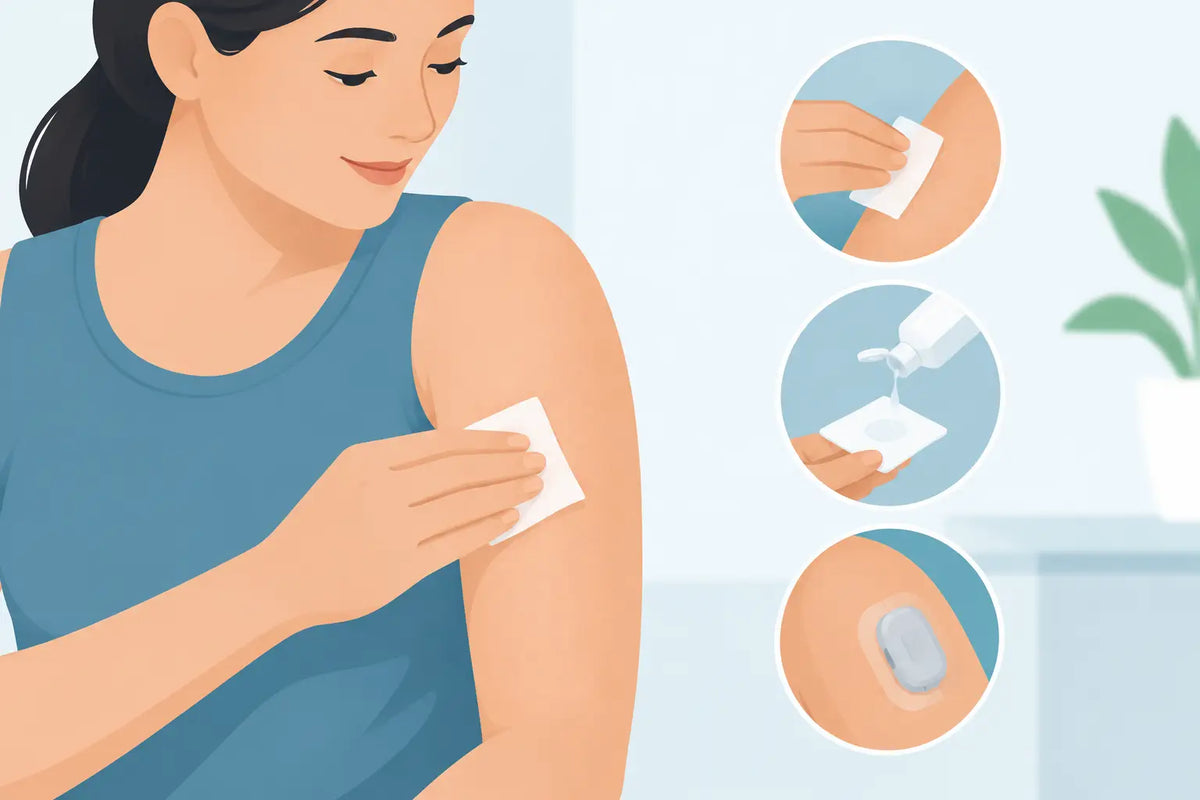
A patch that lifts at the edges rarely starts failing in the middle of the day. Most adhesion problems begin before the sensor, pump, or overpatch ever touches the skin. Learning how to apply skin prep correctly creates a cleaner, drier surface and gives your CGM or Omnipod patch a more reliable foundation for real life - workouts, showers, sleep, heat, and everyday movement.
Skin prep is a small step, but it is not a one-size-fits-all ritual. Your skin type, device placement, hair growth, sweat level, and the manufacturer’s instructions for your specific device all matter. The goal is simple: prepare the site without leaving behind moisture, oil, or products that interfere with adhesion.
What Skin Prep Does Before a CGM or Patch
For most device users, skin prep means cleaning the application area before inserting a sensor or applying an overpatch. Alcohol-free skin prep wipes can remove everyday surface oils, sweat, lotion residue, and debris without adding another harsh step to an already frequent routine.
A properly prepared site supports the adhesive already built into your device or patch. It does not make an adhesive invincible, and it cannot correct a patch that is the wrong size, applied over a skin fold, or exposed to constant friction from clothing. It does, however, reduce avoidable causes of early lifting.
There is a useful distinction here. A cleansing wipe removes residue. A skin barrier film creates a protective layer. An adhesive enhancer is designed to increase tack. These products can be used in different routines, but they are not interchangeable. Use only products appropriate for your skin and follow the instructions provided by your CGM or insulin pump manufacturer, especially around insertion sites.
How to Apply Skin Prep Step by Step
Choose a site that is intact, dry, and comfortable. Avoid skin that is irritated, sunburned, bruised, freshly shaved, or actively healing. If your usual placement area has become sensitive, rotate to an approved alternative site according to your device instructions.
1. Start with clean hands and clean skin
Wash your hands first. Then make sure the intended application area is free from body lotion, sunscreen, body oil, deodorant overspray, and residual adhesive from a prior patch. Even products labeled lightweight or non-greasy can affect how an adhesive bonds.
If the site is visibly dirty or you have been exercising, wash it gently with mild soap and water, then dry it thoroughly. Do not assume a wipe can compensate for damp skin. Adhesive applied over moisture may hold at first, then loosen as body heat and movement build.
2. Use one skin prep wipe with controlled pressure
Open the wipe immediately before use. Wipe the entire area where the device adhesive and any overpatch will sit, using light, even passes. Include slightly beyond the planned patch edge, since oils can transfer as you press the patch down.
There is no need to scrub aggressively. Over-cleaning can leave skin red or sensitized, particularly for people changing CGMs every 10 to 14 days. The right technique is deliberate, not abrasive: enough contact to clear the surface, without irritating it.
If you use a separate barrier film or adhesive product, check its directions before layering it with skin prep. Some products need time to dry between applications, and some device makers specify where they should not be placed. More layers do not automatically mean better wear.
3. Let the area air-dry completely
This is the step most likely to be rushed. After wiping, allow the skin to air-dry fully. Do not fan it with the wrapper, blow on it, or touch it to test for dryness. Those shortcuts can transfer moisture, bacteria, or skin oils back onto the site.
Drying time varies with room temperature, humidity, and how much product remains on the skin. A few extra seconds is usually worth it. The surface should feel clean and dry, not tacky, wet, or slippery.
4. Apply your device without touching the adhesive
Once the site is dry, insert the sensor or apply the device according to its instructions. Handle adhesive surfaces by their tabs or backing whenever possible. Fingerprints carry natural oils that can weaken the bond before wear even begins.
After application, press around the adhesive border with clean, dry fingers. Use firm, steady pressure rather than rubbing hard. Pay close attention to the outer edges, where lifting often begins. Avoid pressing directly on a sensor housing or pump component in a way that could affect placement.
5. Add an overpatch when your routine calls for one
An overpatch can provide additional coverage around compatible CGM and Omnipod devices, especially for people who sweat often, swim, train, work outdoors, or find that clothing catches device edges. Apply it only after the underlying device is secure and in the position recommended by the manufacturer.
Center the opening carefully and lower the patch gradually. Pulling a patch tight during application may create tension that causes the edges to lift later. Instead, let it rest naturally against the skin, then smooth it outward from the center to remove wrinkles.
Timing Matters More Than Most People Think
The best time to apply skin prep is immediately before device placement, after the site has been cleaned and dried. Applying it too far in advance leaves time for sweat, skincare products, or clothing friction to affect the area again.
Try to avoid applying a fresh device immediately after a hot shower, sauna session, or intense workout. Warm skin may still be damp, and post-exercise sweat can interfere with adhesion. If that is the only time your schedule allows, give your skin enough time to cool and dry completely before beginning.
For many people, a consistent change-day routine is the most dependable approach. Set out the sensor or pod, skin prep wipe, overpatch, and disposal materials before starting. This reduces the chance of touching adhesive while searching for supplies halfway through the process.
Common Skin Prep Mistakes That Shorten Wear Time
A clean site is not always a well-prepared site. Applying a patch over lotion residue is a frequent issue, including lotion used hours earlier. Another is placing a device on an area that bends or rubs constantly, such as directly beneath a waistband or near a bag strap.
Hair can also affect adhesion. If the area has dense hair, trimming may be more skin-friendly than close shaving. Fresh shaving can create tiny breaks in the skin and increase sting or irritation when products are applied. If you do shave, allow the skin time to recover before applying your device when possible.
Do not reuse a wipe, and do not use one that has dried out in an opened packet. Do not apply an overpatch over peeling adhesive and expect it to reset the original bond. If the device adhesive has already lifted significantly, follow your device manufacturer’s guidance rather than forcing it back into place.
Finally, do not treat worsening redness, itching, burning, swelling, or blistering as a normal part of wearing a device. Remove the source of irritation as directed by your manufacturer and speak with a healthcare professional, pharmacist, or dermatologist if symptoms persist or are severe.
Building a Skin-Conscious Device Routine
Reliable adhesion and skin comfort need to work together. A stronger hold is not useful if your routine leaves your skin increasingly irritated between sensor cycles. Rotate approved sites, take note of patterns, and keep your prep method consistent enough that you can identify what is helping or causing problems.
For some users, one alcohol-free cleansing step and a well-fitted patch are enough. Others may need a manufacturer-approved barrier product, different placement, or more recovery time between sites. That is not a failure of your routine. It is practical adjustment based on your skin and how you live.
OHMRX skin prep wipes are designed for the everyday reality of device wear: a simple, alcohol-free cleaning step before you apply. Keep them with your change-day supplies, give the site time to dry, and let careful preparation do the quiet work of helping your device stay where it belongs.



Leave a comment
This site is protected by hCaptcha and the hCaptcha Privacy Policy and Terms of Service apply.