
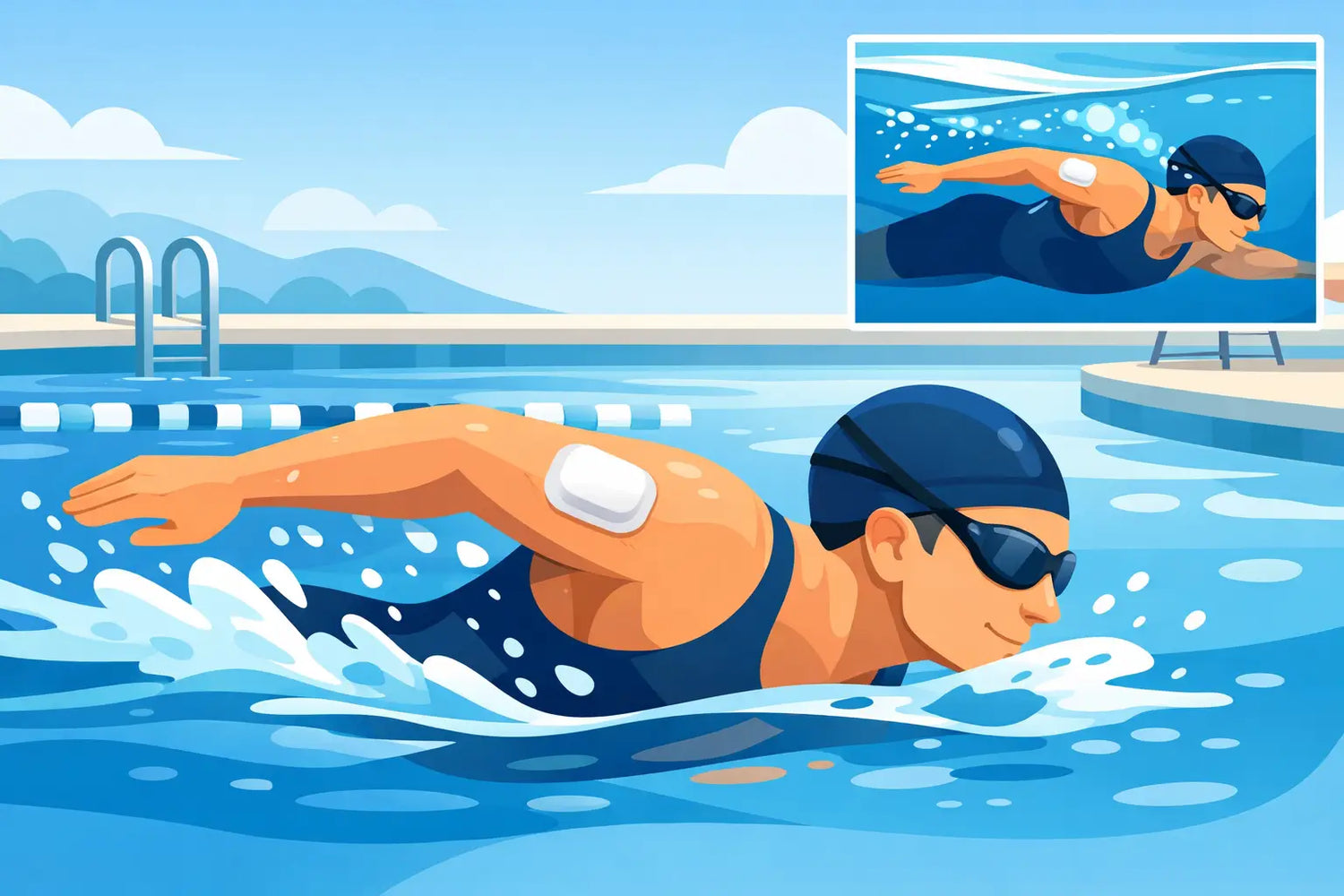
Pool water exposes every weak point in an adhesive. A pod that feels secure on dry skin can start to lift after laps, sunscreen, humidity, and repeated towel-offs. That is why choosing the right omnipod patch for swimming is less about looks and more about engineering - how well it handles water, friction, skin movement, and multi-day wear.
For Omnipod users, swimming creates a specific kind of stress test. The pod itself is built to tolerate water, but the adhesive around it does not always perform the same way for every body, climate, or activity level. Some people can swim for an hour with no issue. Others notice edge lift after one pool session. The difference usually comes down to skin prep, patch design, and whether the adhesive matches the conditions.
What an Omnipod patch for swimming needs to do
A swimming patch has one job that sounds simple but is not: keep the pod stable without making your skin miserable. That means the adhesive has to resist water exposure while still flexing with the body. A patch that is too rigid may hold at first, then peel at the corners when your shoulder, abdomen, or arm moves through the water. A patch that is too soft may feel comfortable but lose grip early.
The best omnipod patch for swimming usually balances four factors: water resistance, edge security, skin safety, and comfort over several days. Edge security matters more than most people expect. Once one corner starts to lift, water gets underneath, towel friction catches it, and the patch can fail faster than the rest of the adhesive ever would on its own.
Skin response matters just as much. Stronger is not always better if the adhesive leaves the skin irritated, especially for users who wear pods continuously and replace support patches on a repeat schedule. If you swim regularly, you need an option that performs in water without turning every pod change into a skin recovery period.
The real reasons patches fail in water
Most people assume the problem is the pool. Sometimes it is. More often, the issue starts before you ever get in.
Skin prep is the first variable. Lotion, body oil, sunscreen residue, or even a little sweat can lower adhesion right from the start. If the patch is applied over skin that is not fully clean and dry, water just speeds up a failure that was already likely.
Placement is another common factor. Sites with constant stretch, waistband pressure, or frequent rubbing from swimsuit straps tend to break down faster. An arm site may perform well for one swimmer and poorly for another depending on stroke mechanics, body hair, and how often that area gets direct friction.
Then there is timing. Applying a patch and jumping into the water right away can reduce how well the adhesive sets. Many users get better wear when they apply the patch several hours before swimming, giving the adhesive time to bond properly.
Finally, there is the simple fact that not all adhesives are built for the same use case. A general overpatch may be acceptable for normal daily wear but struggle with chlorine, salt water, sweat, and repeated immersion.
How to choose the right omnipod patch for swimming
Start with material performance, not marketing language. You want a patch specifically designed for waterproof wear and active use. Look for a construction that stays flexible on the skin and keeps its edges down after repeated contact with water.
Shape also matters. A patch that distributes hold around the pod can improve stability, especially during swimming, where drag and arm rotation can tug at the site. The cut should secure the surrounding area without interfering with pod function or making removal unnecessarily harsh.
Adhesive quality should be skin-conscious, especially for users with sensitive skin or frequent wear cycles. If you change pods every few days and use support patches often, skin compatibility is not a bonus feature. It is part of long-term usability.
It also helps to choose a patch from a brand that treats these products like medical-adjacent essentials rather than generic accessories. That usually shows up in the details: better material consistency, cleaner cut quality, skin-safe standards, and product design aimed at daily device wear instead of occasional use.
Application matters as much as the patch
Even a strong waterproof patch can underperform if the application is rushed. Clean the area thoroughly and make sure it is fully dry. If you use skin prep, choose one that does not leave an oily film. For many users, alcohol-free prep can be a better fit when skin sensitivity is part of the picture.
Once the patch is placed, press it down firmly, especially around the edges. Body heat helps adhesive bond, so a few extra seconds of pressure can make a difference. If possible, apply the patch well before your swim rather than right before getting in the water.
After swimming, do not aggressively towel the site. Pat it dry. Rubbing is one of the fastest ways to catch a lifting edge. If you are at the beach or pool all day, check the patch between swims rather than waiting until the end of the day when a small issue may already be a full peel.
Pool, ocean, and workout swimming are not the same
Swimming is not one uniform condition. Chlorinated pool sessions, lap training, ocean swimming, and water park days all stress adhesives differently.
Pools usually mean repeated immersion and predictable water exposure, but chlorine can still dry the skin and affect adhesion over time. Ocean swimming adds salt, sand, and more body movement from waves. Sand is especially hard on adhesive edges because it creates friction and contamination at the border of the patch. Recreational swim days often involve the most variables of all - sunscreen reapplied several times, heat, sweat, changing in and out of dry clothes, and towels used repeatedly.
If your patch performs well in a quick pool session but fails on vacation, that does not necessarily mean the product is poor. It may mean the conditions changed enough that your routine needs to change too.
When a waterproof patch is worth using every cycle
Some Omnipod users only add a patch for travel, beach days, or swim practice. Others wear one every cycle because it reduces stress and helps protect the pod from daily friction even outside the water.
That choice usually comes down to your personal wear pattern. If you have had pods loosen early, if you sweat heavily, or if your schedule includes regular swimming, using a support patch from day one is often the more reliable approach. It is easier to maintain adhesion than to rescue it once the original adhesive has started to fail.
For repeat users, consistency matters. A patch that works on swim days and normal days simplifies the routine. That is part of the value in products designed for real-life wear cycles, not just occasional backup use.
What to expect from wear time
No honest brand should promise identical results for every swimmer. Skin type, body location, climate, activity level, and swim frequency all affect performance. One person may get full pod wear with multiple swims. Another may need more careful prep or a different site to get the same result.
The good news is that patch performance is usually predictable once you identify your variables. If you know your abdomen lifts sooner than your arm, or sunscreen near the site causes problems, you can adjust. Reliable wear is often less about finding a magic product and more about pairing the right patch with the right routine.
For users who want a clinically informed option, OHMRX focuses on waterproof adhesion, skin-conscious materials, and practical device support built for everyday use rather than one-off fixes.
A better standard for swim confidence
An omnipod patch for swimming should do more than survive the pool. It should reduce distraction, protect the device during movement, and fit into a repeatable routine you can trust. When the patch is well designed and the application is done right, swimming becomes one less thing to plan around.
That is the standard worth looking for - not hype, not overpromises, just dependable hold when real life includes water.



Leave a comment
This site is protected by hCaptcha and the hCaptcha Privacy Policy and Terms of Service apply.