
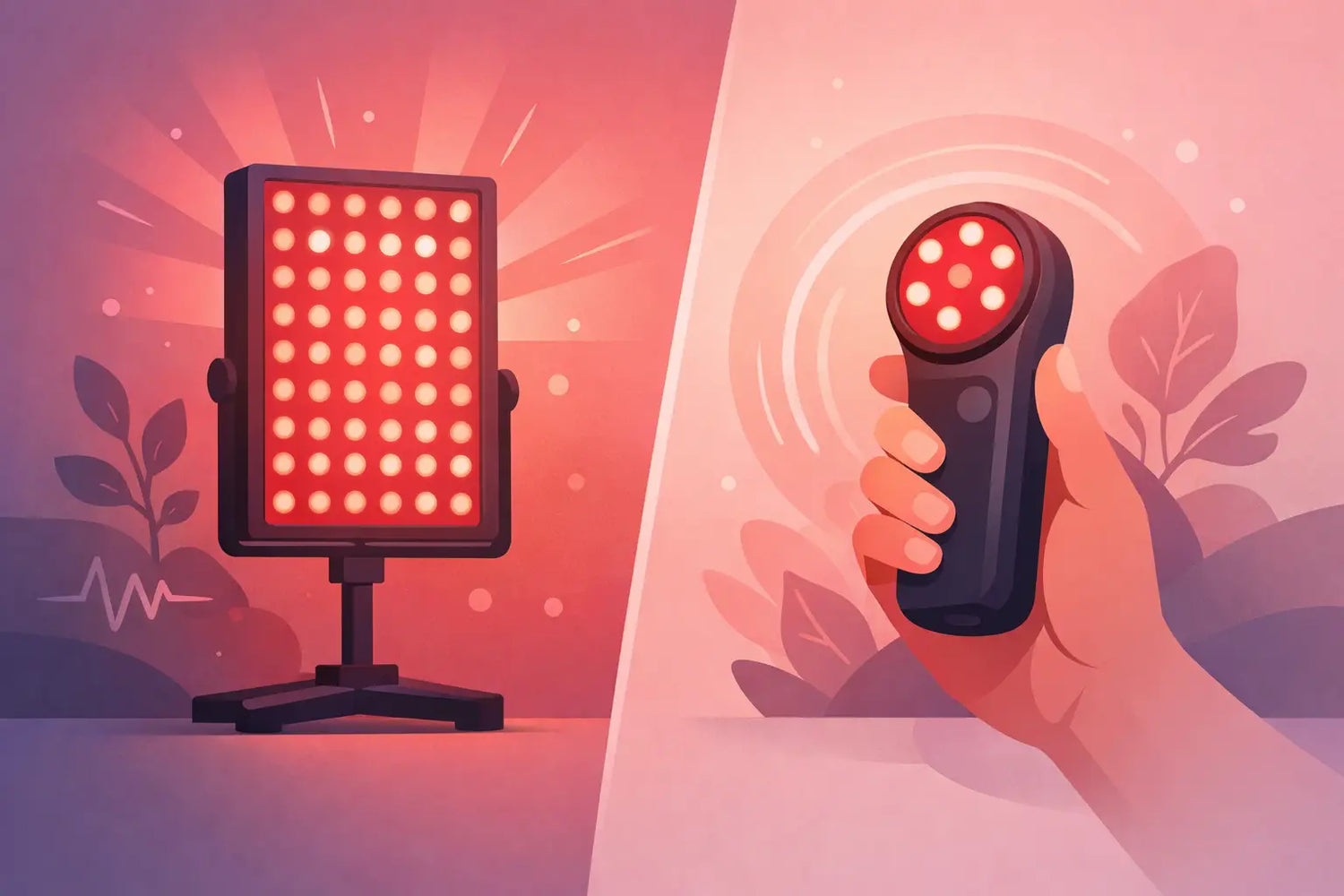
A red light device that sits unused on a shelf is the wrong device, even if the specs look great. When people compare panel red light vs handheld options, the real question is less about which one is "better" and more about which one you will actually use consistently enough to matter.
That decision usually comes down to treatment area, session length, setup, and how your routine works in real life. If you want broad coverage with minimal effort, a panel often makes sense. If you need precision, portability, or a lower-commitment entry point, a handheld can be the better fit.
Panel red light vs handheld: the core difference
Both formats deliver red light and, in many cases, near-infrared light. The main distinction is the size of the treatment area and how you use the device.
A panel is built for larger coverage. You place it on a stand, table, or mounting setup and position your body in front of it. That makes it practical for treating broad zones like the back, legs, chest, or full face and neck in one session.
A handheld is built for targeted use. You hold it over a smaller area, usually for shorter, more focused sessions. That makes it useful for a specific joint, a small patch of skin, or a single area that needs attention without committing to a full setup.
Neither format is automatically superior. Coverage and convenience are traded differently in each one.
When a panel makes more sense
If your goal is to support larger body areas, a panel usually wins on efficiency. You can sit or stand in front of it and cover more surface area in less time. For someone using red light as part of a recovery routine after training, or as a daily wellness habit for muscle groups and circulation support, that matters.
Panels also reduce the friction of treatment. You do not need to hold the device the entire time. That sounds minor until you are trying to stay consistent for weeks. Hands-free use tends to be easier to repeat, especially if you plan to use red light while reading, stretching, or winding down in the evening.
There is also a practical advantage for people who want one device to serve multiple goals. A panel can be used for facial skin support one day and lower-body recovery the next. That flexibility can make the higher footprint feel justified.
The trade-off is obvious. Panels take up more space, cost more, and are less portable. If you live in a smaller apartment, travel often, or do not want equipment visible in your bedroom or office, a panel may feel like too much device for your routine.
When a handheld is the better choice
A handheld works well when your use case is narrow and specific. If you are focused on one spot at a time, like a knee, shoulder, wrist, jawline, or small facial area, the precision is helpful. You do not need broad coverage if the treatment area is small.
Handhelds also tend to be easier to store and easier to bring with you. For people who value portability or want a red light device that can move between home, work, and travel, that can outweigh the smaller treatment area.
They are also a more approachable starting point for people who are curious but not ready to commit to a larger setup. A handheld can fit into a simple routine without changing your space or adding another piece of equipment that needs a permanent place.
The limitation is time and effort. Because the coverage area is smaller, treating multiple body parts can become tedious. If you are trying to use a handheld on your face, neck, shoulders, and legs, the session can stretch longer than most people realistically want.
Coverage changes everything
The most important factor in panel red light vs handheld decisions is coverage. It affects session efficiency, comfort, and long-term consistency.
For facial use only, both options can work depending on the treatment area and the device design. But once you move beyond the face, coverage starts to matter more. A panel can handle larger muscle groups or bilateral areas more naturally. A handheld may require repeated repositioning, which increases time and reduces ease of use.
That is where many buyers misjudge their needs. They think they are buying for one issue, but a few weeks later they want to use the device more broadly. If you suspect that may happen, a panel gives you more room to expand your routine.
On the other hand, if you know you prefer short, focused sessions and do not want to stand or sit in front of a larger device, a handheld may lead to better adherence simply because it feels less involved.
Power, distance, and real-world use
People often assume a larger device always means better performance. Not exactly. Output, wavelength configuration, treatment distance, and session protocol all matter. A well-designed handheld can be effective for targeted use, while a poorly used panel can become an expensive habit with inconsistent technique.
What matters most is whether the device is engineered for repeatable use and whether you can follow the intended distance and session timing. Panels often create a more standardized experience because positioning is simpler across a larger area. Handhelds require more user control, which is not bad, but it does leave more room for inconsistent use.
For everyday consumers, this is less about chasing the highest numbers and more about choosing a format you can use correctly, regularly, and without guesswork. No shortcuts, no gimmicks.
Space, storage, and routine fit
A red light device has to fit your home and your schedule. That sounds basic, but it is often the deciding factor.
A panel is best for people who do not mind a dedicated setup. If you have a home gym, recovery corner, or a predictable morning or evening routine, a panel can integrate well. It becomes part of the environment, which can improve consistency.
A handheld is better for flexible routines. It can go in a drawer, travel bag, or bedside table. If your schedule changes often or you prefer tools that disappear when not in use, a handheld is easier to live with.
This matters more than many spec sheets suggest. The right device is the one that works with your day, not against it.
Cost is not just the purchase price
Panels usually have a higher upfront cost. Handhelds are often more budget-friendly at entry level. But the better value depends on how you plan to use the device.
If you need broad coverage and buy a handheld because it is cheaper, you may end up frustrated by the time commitment. In that case, the lower price does not translate to better value. If you only need occasional, targeted sessions, paying more for a panel may be unnecessary.
A clinically informed purchase starts with matching the tool to the job. Spending less on the wrong format is still the wrong choice.
Which one is better for skin vs recovery?
For smaller skin-focused areas, especially targeted facial use, a handheld can make sense. It gives you close control over placement and can be easy to work into a short routine. For broader facial, neck, or chest coverage, a panel is usually more efficient.
For recovery support across larger muscle groups, a panel generally has the advantage. Treating quads, hamstrings, back, or shoulders with a handheld can be done, but it takes more time and patience. If your priority is post-workout use or regular whole-area treatment, a panel is usually the more practical format.
There are exceptions. Someone with one recurring trouble spot may get exactly what they need from a handheld. Someone interested in general wellness and multiple use cases may quickly outgrow it.
The best choice depends on how specific your need is
If your needs are broad, a panel is usually the stronger long-term choice. If your needs are precise, a handheld is often the smarter one. That is the simplest way to frame it.
OHMRX approaches red light the same way it approaches every daily-use wellness tool - engineered for real life, not just product pages. The format should support a routine you can maintain, whether that means broad, hands-free sessions or a compact device for targeted use.
A panel is often the right fit for people building a more complete recovery or wellness setup at home. A handheld is often right for people who want focused treatment, easier storage, and less friction getting started.
The helpful test is this: picture where the device will live, when you will use it, and how many areas you actually want to treat each week. If the answer feels simple with one format and inconvenient with the other, you probably have your decision.



Leave a comment
This site is protected by hCaptcha and the hCaptcha Privacy Policy and Terms of Service apply.