
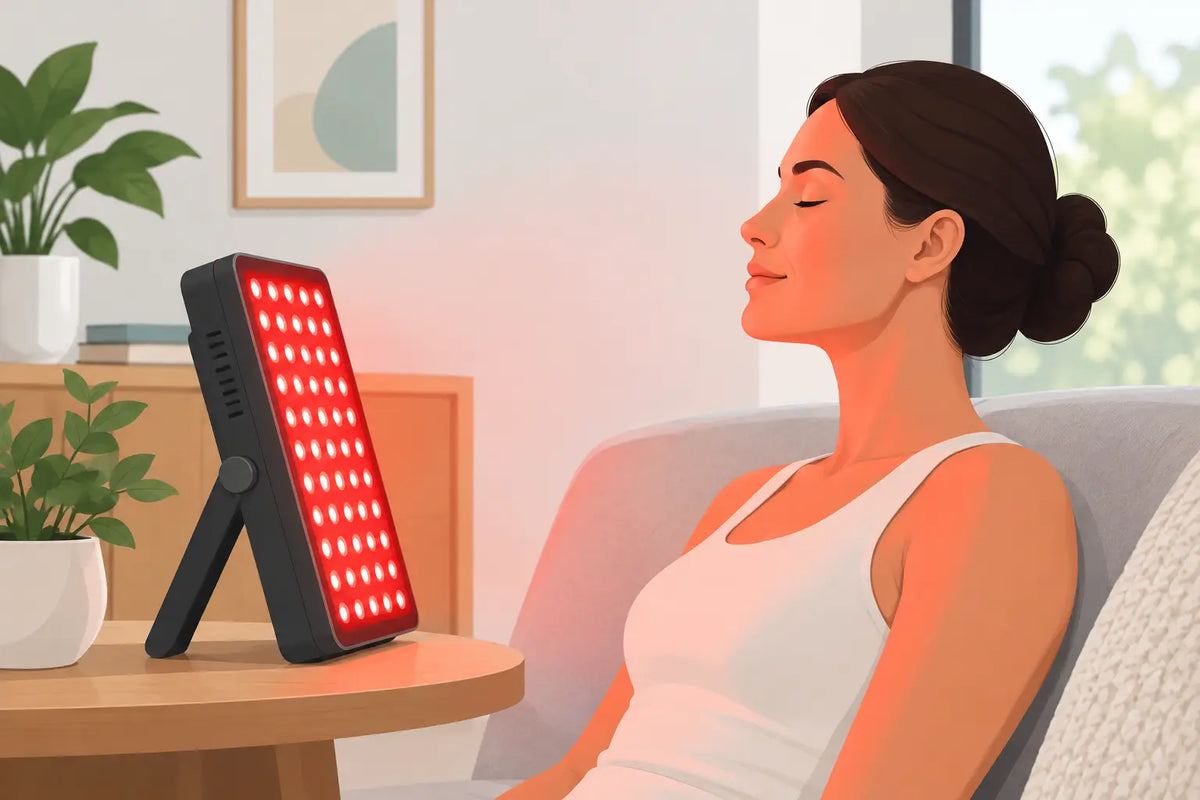
A useful red light review should do more than repeat terms like "clinical-grade" or show a bright panel in a polished home gym. The real question is whether a device delivers sensible specifications, fits your routine, and can be used consistently without adding friction to daily life. Red light therapy is not a shortcut. It is a tool that works best when the design, dose, and user expectations are aligned.
For recovery-focused users, the right device may be a high-output panel that covers large muscle groups efficiently. For someone focused on facial skin support or a small, persistent area, portability and treatment precision may matter more. The better purchase is not always the largest device or the one with the longest feature list. It is the one you will use correctly and regularly.
What a Red Light Review Should Measure
Start with the information that affects real-world performance: wavelengths, irradiance, treatment area, controls, safety design, and build quality. These details are more useful than generic promises about energy, circulation, or rejuvenation.
Wavelengths: Red and Near-Infrared Have Different Roles
Most home devices use red light in roughly the 630 to 660 nanometer range and near-infrared light in roughly the 810 to 850 nanometer range. Red light is visible and is commonly selected for more surface-level applications, including skin-focused routines. Near-infrared light is invisible to the eye and is generally used when users want light to reach deeper tissue, such as areas involved in post-exercise recovery.
A device that includes both ranges can make sense for users who want one system for multiple routines. That does not automatically make it better for every person. If your goal is narrow and localized, a targeted device with the appropriate wavelength mix may be the more practical option.
Be cautious with devices that list a long string of wavelength numbers without explaining their output or purpose. More wavelengths are not automatically more effective. Clear specifications and a sensible treatment plan matter more than spec-sheet clutter.
Irradiance and Dose: Output Must Be Usable
Irradiance describes how much light power reaches a surface, usually measured in milliwatts per square centimeter (mW/cm²). This figure helps determine how long a session may need to be. Dose is often expressed in joules per square centimeter (J/cm²), combining output and time.
Neither number should be viewed in isolation. A high irradiance figure measured directly against a device can fall meaningfully at a typical treatment distance. A credible manufacturer should identify the distance used for its measurements and provide realistic guidance for session length. If those details are missing, it is difficult to compare products fairly.
More intensity is not always the answer. Higher output can shorten treatment time, but it can also make positioning, heat management, and eye comfort more relevant. The goal is an appropriate dose for your intended use, not the maximum number printed on a product page.
Evidence Matters, but So Do Expectations
Red and near-infrared light therapy is often called photobiomodulation. Research continues to examine how specific light wavelengths may support cellular processes, circulation, temporary muscle recovery, and skin appearance. The quality and consistency of results can vary based on the condition being studied, the dose used, the device, and the treatment schedule.
That is why responsible red light therapy should not be framed as a cure for disease, an alternative to medical care, or a replacement for sleep, nutrition, rehabilitation, or prescribed treatment. A home device may be a useful addition to a well-built wellness routine, but its role should stay proportional to the evidence.
A trustworthy brand speaks clearly about what its device is designed to do and avoids overpromising. Claims such as guaranteed healing, dramatic fat loss, or treatment for serious medical conditions should be treated with caution. No shortcuts, no gimmicks - just clear specifications, safe use instructions, and reasonable expectations.
Panel, Portable Device, or Targeted Light?
Device format determines whether a red light therapy routine survives beyond the first week. Large panels are designed for broad coverage. They can be practical for athletes, people managing multiple areas after training, or anyone who wants to treat larger regions such as the back, legs, or shoulders in one session. Their trade-off is obvious: they require more space, usually cost more, and work best when set up in a dedicated location.
Portable devices are easier to keep near a desk, sofa, or bedside. They are well suited to smaller treatment areas and travel, but sessions may take longer if you are trying to cover a large portion of the body. A smaller device is not inherently less capable. It simply serves a different use case.
Targeted lights can be helpful for users who want precision and low setup burden. If your routine involves one area at a time, a focused device may encourage better consistency than a panel that stays in its box. OHMRX approaches this category as an everyday-use decision: the right device should be engineered for real routines, not just impressive product photography.
Safety Features Are Part of the Product
Red light therapy is generally noninvasive, but responsible use still matters. A quality device should include straightforward timing controls, stable construction, clear distance guidance, and instructions that explain when eye protection is recommended. Near-infrared light is invisible, so users should not assume that a dim-looking device has minimal output.
Avoid staring directly into LEDs, particularly at close range. Follow the manufacturer’s guidance for eye protection and treatment distance. If you have a diagnosed eye condition, speak with an eye care professional before beginning a routine.
It is also wise to check with a qualified clinician before use if you are pregnant, have an active medical condition, are undergoing cancer treatment, or use medications that can cause photosensitivity. Certain acne medications, antibiotics, diuretics, and topical products can increase sensitivity to light. A red light device should not be used over suspicious lesions or as a substitute for evaluating new or worsening symptoms.
Heat is another practical consideration. LEDs should not feel painfully hot during normal use. Mild warmth may be expected depending on the device and distance, but discomfort is a signal to increase distance, reduce session time, or stop and reassess.
Build a Routine You Can Repeat
Consistency typically matters more than occasional marathon sessions. Start with the manufacturer’s recommended duration and distance rather than creating an aggressive schedule on day one. Track how your skin and body respond over several weeks, especially if you are using light therapy alongside workouts, skin care products, or physical therapy.
For skin-focused use, begin with clean, dry skin unless the device instructions state otherwise. For recovery routines, use the device at a time you can repeat, such as after training or during an evening wind-down. A timer, an accessible outlet, and a predictable location are often more valuable than extra app features.
Keep the device clean and inspect cords, mounts, and housing regularly. This is a wellness device that may be used near skin repeatedly, so material quality, sanitation, and durability are not minor details. They are part of long-term value.
How to Judge Value Beyond the Price
A lower price can be reasonable when a device is small, portable, and designed for focused use. A larger investment can be justified when you need broad coverage, more efficient sessions, durable mounting options, and transparent performance data. The mistake is comparing a compact targeted device to a full-size panel as though they are interchangeable.
Before choosing, confirm the treatment area, wavelength range, irradiance measurement distance, session controls, warranty terms, and safety instructions. Then consider your actual space and schedule. A well-built device that supports a 10-minute routine three or four times a week may provide more practical value than a larger system that is inconvenient to set up.
Choose the device that gives you a clear protocol you can follow with confidence. The most credible red light therapy routine is rarely dramatic - it is measured, comfortable, and repeatable enough to become part of real life.


Leave a comment
This site is protected by hCaptcha and the hCaptcha Privacy Policy and Terms of Service apply.