
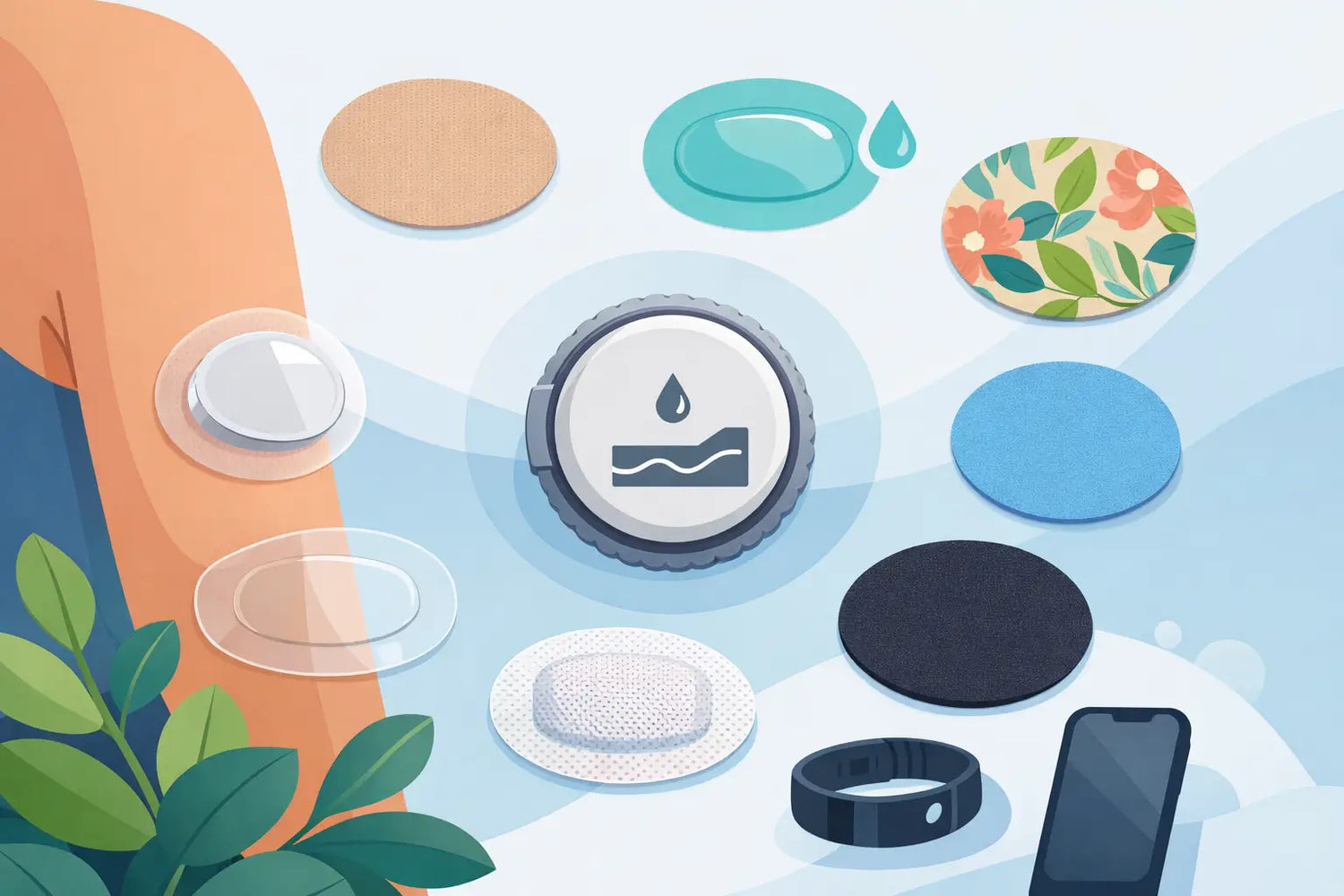
If your Dexcom G7 starts lifting on day 3 instead of day 10, the issue is rarely the sensor. It is usually the adhesive system around it. That is why people searching for the best Dexcom G7 patch alternatives are not looking for extras. They are trying to keep a medical device secure through showers, workouts, sleep, heat, and normal daily friction.
The right overpatch can make the difference between a sensor that finishes its wear cycle and one that peels early. But not every patch is built for the same skin, climate, or routine. Some prioritize aggressive hold. Others are better for sensitive skin. Some look clean and low-profile, while others trade aesthetics for maximum reinforcement.
What makes the best Dexcom G7 patch alternatives worth considering
A good Dexcom G7 alternative patch should do four things well. It should stay on through moisture and movement, protect the sensor edges from catching on clothing, feel comfortable against the skin, and remove without causing unnecessary irritation. Those basics sound simple, but performance varies a lot between patch materials and adhesive formulas.
Shape matters more than many buyers expect. The G7 is smaller than earlier Dexcom sensors, so oversized or poorly cut patches can bunch, lift, or leave extra exposed adhesive around the edges. A cleaner fit usually means fewer failure points. Breathability also matters. A patch that holds well for two days but traps sweat and irritates skin by day five is not a strong long-wear option.
For many users, the best choice depends less on marketing claims and more on routine. If you swim, train hard, work outdoors, or live in humidity, you may need stronger adhesion than someone with a mostly climate-controlled day. If your skin reacts easily, the best patch may be the one with slightly less grip but better skin tolerance over repeated wear cycles.
7 best Dexcom G7 patch alternatives to compare
1. Waterproof fabric overpatches
This is the category most people land on for a reason. A well-made waterproof fabric patch gives a balanced combination of flexibility, hold, and comfort. It moves with the body instead of pulling against the sensor every time you stretch or sleep on your side.
The strongest versions use medical-grade adhesive and a fabric top layer that resists fraying after showers and exercise. These are often the most practical everyday option because they support the full sensor cycle without feeling overly rigid. If you want one solution that works for workdays, sleep, and moderate activity, this type is usually the benchmark.
2. Transparent film patches
Film-style patches appeal to users who want the lowest-profile look possible. They sit flatter than fabric and can feel less noticeable under fitted clothing. For some users, especially those wearing the G7 on the arm, that cleaner finish matters.
The trade-off is durability. Transparent films can peel at the edges sooner if applied over lotion, body oil, or uneven skin texture. They can also wrinkle more easily during placement. For low-sweat conditions and short sleeves, they can work well. For heavy activity or repeated water exposure, they are often less forgiving than fabric-based options.
3. Heavy-duty athletic patches
These patches are designed for users who know standard adhesion is not enough. Think high-output workouts, long-distance training, hot climates, and repeated contact with water. Athletic-style patches typically use more aggressive adhesive and thicker reinforcement around the sensor.
That extra hold can be useful, but it comes with a trade-off. Stronger adhesive raises the chance of skin irritation, especially with repeat use on similar application zones. If your sensor regularly lifts early, this category is worth considering. If your skin is reactive, caution matters more than hold strength alone.
4. Sensitive-skin patches
Sensitive-skin options are not just weaker versions of standard patches. The better ones are engineered to reduce friction, use gentler adhesive systems, and limit skin trauma during removal. For people who get redness, itching, or edge burn from standard overpatches, this can be the difference between consistent wear and constant trial and error.
The compromise is predictable. Gentler adhesion may not hold as long in sweat-heavy conditions unless application is excellent and the skin is fully prepped. Still, for many users, a patch you can tolerate for 10 days is better than a stronger one you have to remove after three.
5. Pre-cut CGM-specific patches
Generic adhesive dressings can work in a pinch, but pre-cut patches made specifically for the G7 usually perform better. They are shaped to fit around the sensor with less excess material, which reduces bunching and edge lift. Precision matters when a device sits on a curved, mobile area like the upper arm.
This category is especially useful if you care about easy application. A patch that lines up quickly and consistently is less likely to trap wrinkles or stick to itself during placement. In daily use, that convenience often matters as much as raw adhesive strength.
6. Underpatch and overpatch systems
Some users do best with a two-part approach. An underpatch creates a skin barrier between the adhesive-sensitive area and the sensor or tape, while an overpatch adds retention on top. This setup can help people who need both protection and stronger wear security.
It is not the simplest route. Layering increases application time and can create more bulk. But if you have both adhesion failure and skin sensitivity, single-layer solutions may not be enough. In those cases, a system approach is often more effective than switching from one standard patch brand to another.
7. Skin-prep-supported patch systems
This is less about a patch type and more about patch performance. Some of the best Dexcom G7 patch alternatives work significantly better when paired with alcohol-free skin prep or adhesive barrier support. A patch that seems average on unprepared skin can become highly reliable when the application surface is dry, clean, and properly primed.
That matters if you have already tried multiple patches and still get edge lift. The failure may be in the prep, not the patch. For users building a repeat routine every 10 days, small gains in prep consistency can improve wear time more than changing to the most aggressive adhesive on the market.
How to choose the best Dexcom G7 patch alternatives for your routine
Start with your actual failure point. If patches peel after showers, look for waterproof fabric construction and stronger edge adhesion. If they fail during workouts, prioritize sweat resistance and flexibility. If removal leaves irritated skin, shift your focus to gentler adhesive systems and cleaner release.
It also helps to think in terms of wear cycle, not first impression. A patch can look perfect on day 1 and still underperform by day 6. Long-term comfort, edge integrity, and skin response matter more than how invisible it appears right after application.
Placement technique is part of product performance. Clean, dry skin is essential. Lotions, sunscreen, and residual soap all interfere with adhesion. Applying a patch while skin is still damp from a shower is one of the most common reasons for early lifting. Firm pressure after placement also improves bonding, especially around the outer edge.
If you reorder patches regularly, consistency matters more than experimentation. Once you find a patch system that works with your skin and schedule, repeatability becomes a benefit on its own. That is part of the value in clinically informed daily-use products like those from OHMRX - they are built for routine, not novelty.
Common trade-offs to expect
No patch is perfect for every user. The products with the strongest hold are often less forgiving on sensitive skin. The most breathable patches may not survive repeated pool use. The cleanest-looking transparent films can be harder to apply without wrinkles. That does not mean one option is bad. It means matching the patch to the use case matters.
Cost can also influence the decision. If you change sensors on a predictable schedule, patch pricing adds up over time. A slightly higher-priced patch that consistently lasts the full wear cycle may be a better value than a cheaper option that fails early and needs replacing.
For parents, athletes, and anyone with a physically demanding schedule, confidence has value too. A patch that lets you stop checking the sensor edge every few hours is doing more than sticking. It is reducing friction in daily management.
When an alternative patch is the right move
If your current G7 overpatch is lifting early, feels too rigid, irritates your skin, or simply does not match your lifestyle, trying an alternative makes sense. You do not need to wait for repeated sensor failures to justify a change. Better adhesion support is preventive, not cosmetic.
The strongest choice is usually the one that fits your skin, your activity level, and your normal week. Not the one with the loudest claims. A patch should feel engineered for real wear, not designed to win on packaging.
The best result is simple: your Dexcom G7 stays in place, your skin stays calm, and you spend less time thinking about the patch at all.


Leave a comment
This site is protected by hCaptcha and the hCaptcha Privacy Policy and Terms of Service apply.