
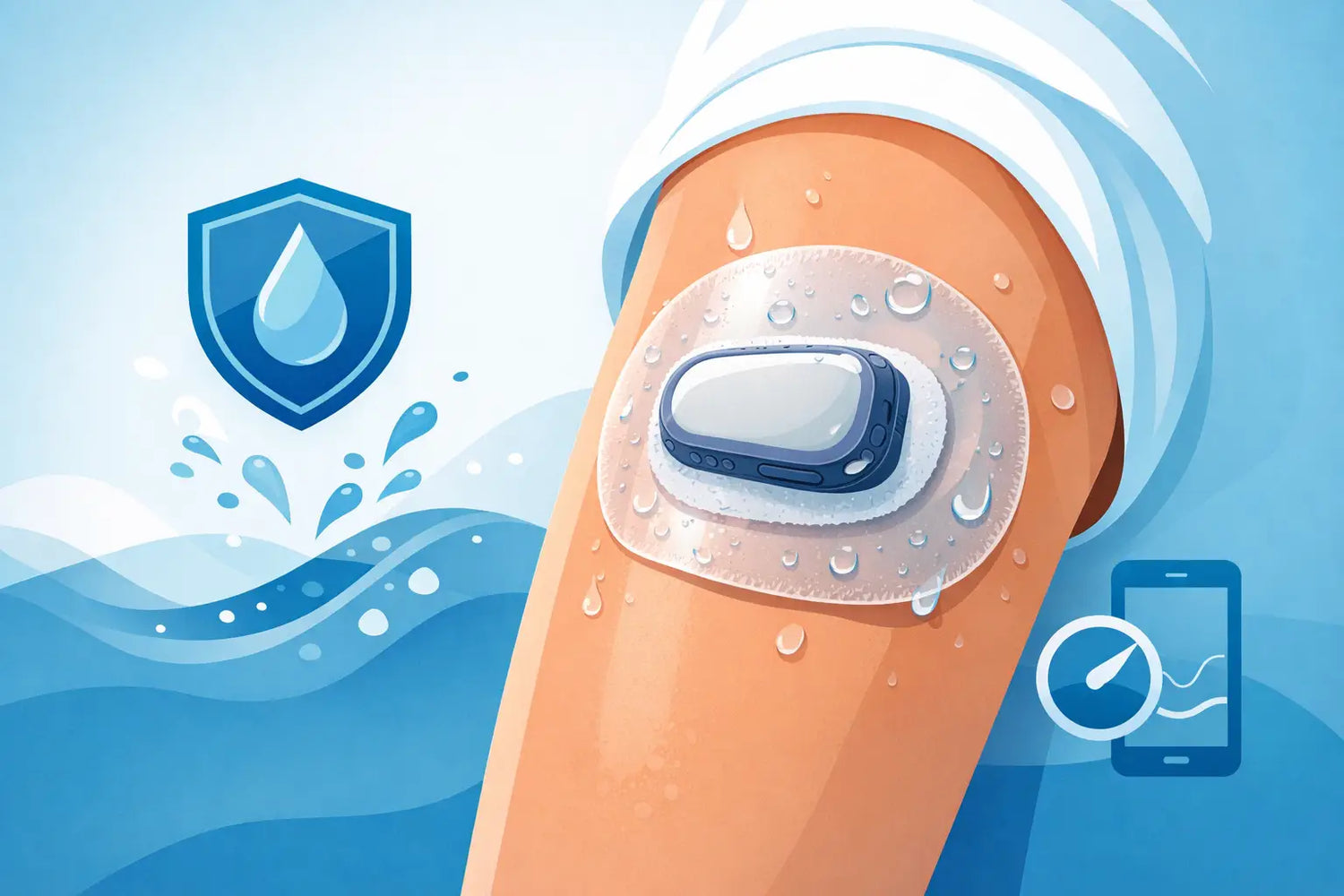
A Dexcom sensor usually fails at the worst time - after a hard workout, midway through a beach day, or two days before the session is supposed to end. In most cases, the sensor is fine. The problem is adhesion. A waterproof overpatch for Dexcom is not just an accessory. It is the part that helps keep your CGM secure through sweat, showers, sleep, and the friction of normal life.
For most users, that means balancing three things at once: staying attached, protecting sensitive skin, and avoiding anything that interferes with the sensor itself. The right patch should feel engineered for repeat wear cycles, not like a temporary fix you hope survives the week.
What a waterproof overpatch for Dexcom actually needs to do
"Waterproof" gets used loosely in this category, so it helps to be precise. A waterproof overpatch for Dexcom should hold up during regular water exposure like showering, swimming, humidity, and sweat-heavy activity. That does not mean the patch becomes immune to poor application, body oils, or constant friction from clothing.
A good overpatch works by creating dependable edge adhesion around the sensor while allowing the center area to accommodate movement. If the adhesive is too weak, the corners lift early and water starts working underneath. If it is too aggressive or poorly formulated, removal becomes uncomfortable and skin irritation becomes the next problem.
For Dexcom users, the best outcome is simple: the patch stays in place for the intended wear period without demanding constant maintenance. You should not need to reinforce it every other day with tape, scissors, or trial-and-error layering.
Why Dexcom users need different performance than standard bandages
A standard adhesive bandage is designed for short-term wound coverage. A CGM patch has a different job. It needs to stay stable for days across curved surfaces, high-motion areas, and repeated exposure to water and heat. It also has to work around a medical device that cannot be compressed, shifted, or covered incorrectly.
That difference matters. Dexcom users often place sensors on areas that flex constantly, like the abdomen or back of the arm. Those locations are exposed to shirts, waistbands, bra straps, gym equipment, bed sheets, and seatbelts. Even a strong adhesive can fail early if the patch design does not account for that kind of real-world friction.
This is why shape, stretch, and edge profile matter just as much as adhesive strength. A patch that looks secure on day one can still start peeling by day four if it pulls against the skin instead of moving with it.
The features worth paying attention to
When people shop for overpatches, they often focus on the word waterproof and stop there. In practice, a few other details determine whether the patch performs well over a full sensor cycle.
Skin-safe adhesive should be high on the list, especially for repeat users. Many CGM users are not buying once. They are reordering every 10 to 14 days, month after month. That makes skin compatibility a long-term issue, not a minor preference. An overpatch that holds well but leaves the skin inflamed is not a durable solution.
Cut and fit also matter. A Dexcom overpatch should frame the sensor cleanly without pulling on the transmitter or blocking critical areas. The fit should feel intentional, not generic. The cleaner the fit, the less likely you are to get edge lift from awkward tension points.
Breathability plays a role too. This sounds counterintuitive when talking about waterproofing, but the best-performing patches usually balance water resistance with enough airflow to reduce trapped moisture against the skin. Too much occlusion can soften the adhesive base over time and make wear less comfortable.
Finally, thickness affects both performance and comfort. A patch that is too thin may curl quickly. One that is too thick may catch on clothing or feel stiff during movement. The better designs tend to feel low-profile while still maintaining structural integrity around the edges.
When waterproof performance matters most
Some Dexcom users can get through a full session with the stock adhesive and no extra help. Others know by experience that extra reinforcement is not optional. It depends on your skin, climate, activity level, and where you wear the sensor.
If you exercise regularly, spend time outdoors in heat, swim, or shower more than once a day, patch performance becomes much more important. The same is true if your skin tends to run oily or if you use lotions and body products near the application site. All of those factors reduce adhesive stability.
There is also a practical side to this. A lost sensor is not only frustrating. It can disrupt your readings, cost time, create replacement hassle, and interrupt the consistency many users rely on. A strong overpatch helps reduce those avoidable failures.
How to make a waterproof overpatch for Dexcom last longer
Even a well-made patch can underperform if it is applied poorly. Adhesion starts before the patch ever touches the skin.
The site should be clean and fully dry. Any residue from lotion, sunscreen, sweat, or soap can weaken the bond. Many users do better when they apply after cleansing the area thoroughly and allowing the skin to return to a normal, dry state rather than rushing right after a shower.
Pressure matters more than people think. Once the overpatch is placed, firm pressure helps activate the adhesive and improve edge contact. That step is often skipped, but it makes a difference, especially around curved body areas.
Timing matters too. If possible, give the patch a little time to settle before intense sweating or full water exposure. Immediate stress on fresh adhesive is one of the easiest ways to shorten wear time.
For users with more demanding routines, skin prep can help, but only if it is compatible with both your skin and your sensor setup. The goal is not to add more products by default. It is to create a stable surface without increasing irritation risk.
Trade-offs to keep in mind
There is no single best patch for every Dexcom user. Stronger hold is not automatically better if your skin reacts to it. A softer adhesive may feel gentler but may not survive heavy summer training or pool time. It depends on what your day actually looks like.
The same goes for patch size. More coverage can improve security, but larger patches may feel more noticeable and can create more adhesive contact with sensitive skin. Smaller designs can feel cleaner and lighter, but they may offer less reinforcement if you are especially active.
This is where clinically informed product design matters. The right patch is not the one with the most aggressive marketing claim. It is the one that performs consistently under real use conditions while respecting skin integrity over repeated cycles.
What to look for if you reorder regularly
Repeat-purchase users should think beyond one sensor session. Over time, the quality of an overpatch shows up in small but important ways: fewer mid-cycle failures, less skin disruption, simpler application, and more predictable wear.
That is especially relevant for people building CGM use into a long-term routine. You want a patch that feels easy to keep on hand and easy to trust, not one that turns every application into a guess. Brands that focus on clinical standards, skin safety, and device-specific fit tend to serve that need better than generic adhesive products trying to cover every use case at once.
For that reason, many users prefer patches engineered specifically for CGMs rather than general sports tape or improvised waterproof coverings. Products built for Dexcom wear cycles usually account more carefully for transmitter shape, device placement, and removal comfort.
OHMRX approaches this category the way it should be approached - as an everyday performance product, not a novelty add-on. That distinction matters when you are buying for consistency.
Choosing with confidence
If you are comparing options, the best question is not just whether the patch is waterproof. Ask whether it is designed for repeated Dexcom wear in real conditions. That means workouts, showers, sleep, travel, heat, and normal movement over a full sensor cycle.
Look for a patch that combines secure adhesion, skin-conscious materials, clean fit, and low-profile comfort. If one of those is missing, the weak point usually shows up fast. Good CGM support products do not need hype. They need to work when your routine is busy and your device needs to stay exactly where it is.
A dependable waterproof overpatch for Dexcom should fade into the background of your day. That is usually the best sign you chose well.


Leave a comment
This site is protected by hCaptcha and the hCaptcha Privacy Policy and Terms of Service apply.