
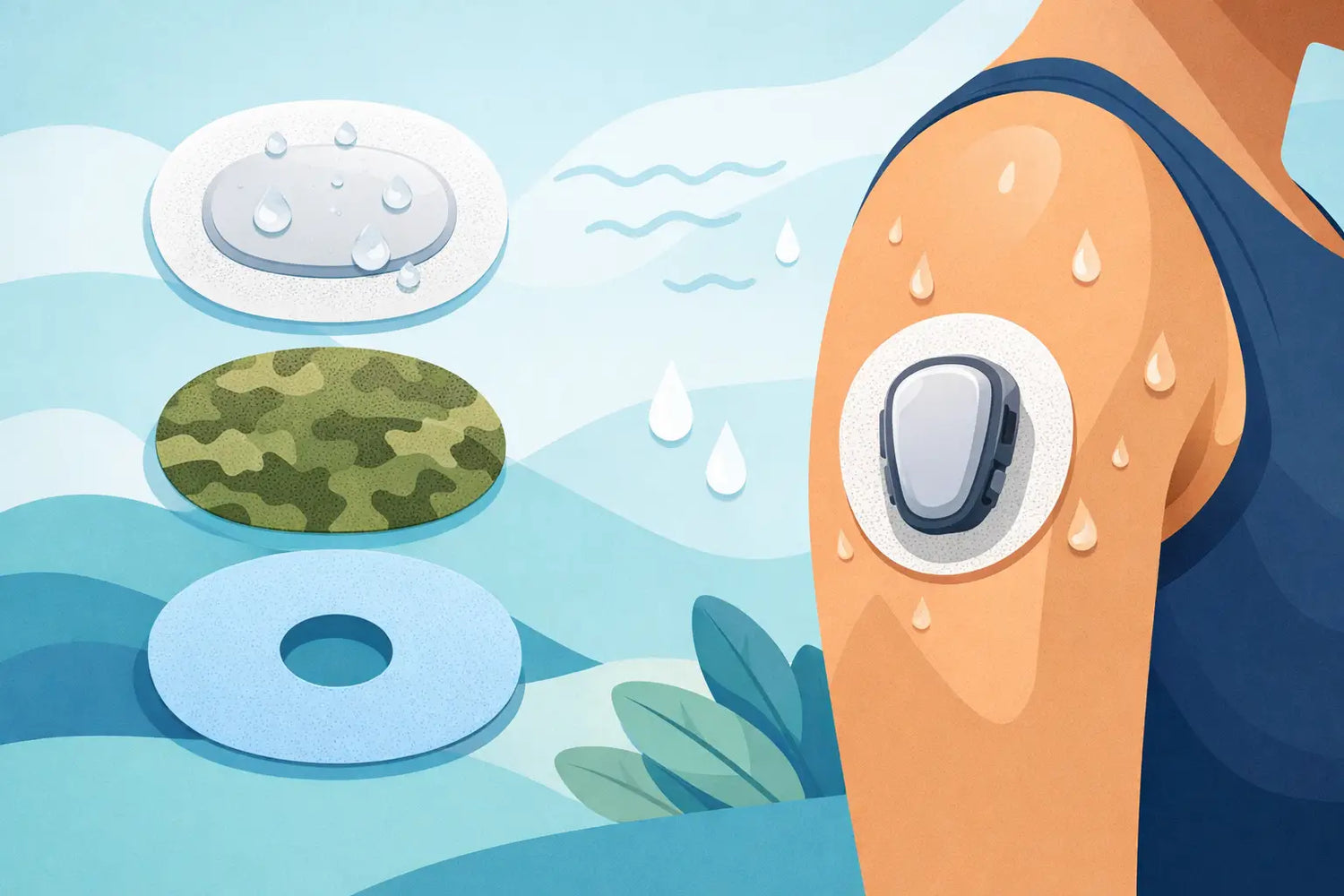
You usually find out your adhesive is failing at the worst possible time - halfway through a workout, after a hot shower, or when you catch the edge of your sensor on a shirt and notice it has already started to lift. If you need a dexcom patch for sweating, the goal is not just extra stick. It is consistent wear through heat, movement, and moisture without turning your skin into the trade-off.
Why sweating causes Dexcom adhesion problems
Sweat does not just make skin wet. It changes the surface the adhesive is trying to bond to, especially in high-friction areas like the back of the arm or abdomen. Add body heat, motion, and daily showering, and even a well-applied sensor can start peeling earlier than expected.
This is why some people assume they need the strongest adhesive possible, when the real issue is often a combination of skin prep, patch design, and placement. A patch that works well for a desk job in mild weather may not perform the same way during summer walks, gym sessions, or physically demanding work.
For Dexcom users, especially those on a repeat 10-day or similar wear cycle, small adhesion issues matter. One edge lifting on day three can become a full replacement problem by day six. A better patch setup reduces interruptions, protects the sensor, and makes the whole routine less demanding.
What to look for in a dexcom patch for sweating
The best dexcom patch for sweating is built around durability, but durability alone is not enough. A patch also has to stay comfortable against the skin and hold up under real-life conditions, not just in ideal application settings.
Material matters first. A patch needs to flex with movement instead of fighting it. If the adhesive layer is too rigid, it can start lifting at the perimeter as your skin stretches during exercise, sleep, or basic daily motion. A breathable, waterproof design usually performs better than a thick patch that traps moisture under the surface.
Cut and coverage matter too. A patch that fits the Dexcom profile cleanly helps distribute tension around the sensor instead of concentrating stress at one edge. That becomes more important when you sweat heavily, because moisture often starts weakening the adhesive from the corners inward.
Skin compatibility should be part of the decision, not an afterthought. Stronger adhesive can help in humid or active conditions, but if it causes irritation, redness, or stripping during removal, it may not be a good long-term solution. For repeat CGM users, wearability over time matters as much as initial hold.
Patch performance depends on your routine
Not every sweating problem is the same. Someone doing light daily activity in an air-conditioned environment may only need moderate reinforcement. Someone running outdoors, coaching sports, working construction, or living in a humid climate usually needs a patch engineered for much more demanding wear.
The amount you sweat is only one variable. How often you shower, whether you apply lotion, how much friction the site gets from clothing, and where the sensor is placed all affect performance. If your patch keeps failing, that does not always mean the product is poor. It can mean the setup does not match the routine.
This is where a more clinical, practical approach helps. Instead of asking which patch is the stickiest, ask which patch is designed for repeated wear in moisture-heavy conditions while staying skin-conscious. That question tends to lead to better results.
How to make a Dexcom patch last when sweating
A high-quality overpatch works best when the application is clean and controlled. If the skin is not fully dry or has residue from soap, body oil, sunscreen, or moisturizer, the adhesive is already starting at a disadvantage.
Begin with clean skin and give it a little time after showering. Applying right after bathing can seem convenient, but warm skin may still be slightly damp even if it feels dry. If you sweat easily, cool the area first and make sure the site is completely dry before placing the sensor and patch.
If you use a skin prep product, choose one that supports adhesion without creating heavy residue. Alcohol-free skin prep can be useful for some users because it helps prepare the surface while being gentler on skin that already deals with frequent adhesive contact. Let any prep dry fully before application.
Once the patch is on, press firmly around the full perimeter. The edges matter most. A secure seal at the border helps reduce moisture intrusion during workouts, showers, and hot-weather activity. Some users also get better results by applying the patch well before intense exercise rather than right before they start sweating.
Common mistakes that shorten wear time
The most common problem is applying the patch to skin that is clean-looking but not actually adhesive-ready. Deodorant drift, lotion residue, sunscreen, and even detergent left on clothing that rubs the site can all interfere with hold.
Another issue is placement over an area with too much movement or friction. A patch may technically stick at first, then loosen because waistbands, sports bras, backpack straps, or sleep position keep pulling at it. If one site repeatedly fails, changing location can be more effective than changing adhesives.
Some users also try to fix early peeling by pressing down loose edges after they have already collected lint, sweat, or body oil. At that point, the bond is compromised. A well-designed patch can extend wear, but it still needs a clean, intact seal to do its job.
When stronger adhesion is worth it - and when it is not
If you sweat heavily, spend time in the water, or have a history of sensor edges peeling early, stronger reinforcement usually makes sense. It can prevent accidental dislodging and reduce the frustration of spending the entire wear cycle checking whether the device is still secure.
But there is a limit. More aggressive adhesion is not always better for sensitive skin, especially if you are applying and removing patches repeatedly month after month. For some users, a balanced patch with waterproof hold and skin-conscious materials is the better long-term answer than the most aggressive adhesive available.
That trade-off matters. The right patch should support confidence, not create a second problem. If your skin is reactive, it may be worth prioritizing a patch designed for both secure wear and gentler removal rather than chasing maximum stick at any cost.
Choosing a dexcom patch for sweating in real life
A reliable dexcom patch for sweating should perform in the situations where CGM users actually live - workouts, commutes, humid weather, showers, sleep, and ordinary movement repeated over days. Marketing claims are easy. Real performance shows up when the patch is still secure on day seven, eight, or later without constant maintenance.
Look for signs of thoughtful product engineering: waterproof construction, a shape designed around Dexcom wear, skin-conscious adhesive choices, and materials that flex instead of lifting under motion. Those details tend to matter more than exaggerated promises.
For many users, the best setup is not complicated. It is a well-matched overpatch, a clean application routine, and a little consistency each time you replace your sensor. That is the difference between hoping your sensor stays on and expecting it to.
OHMRX approaches CGM accessories that way - as repeat-use essentials that need to work in everyday conditions, not just look good out of the package. That mindset matters when you are ordering patches again and again and want the next wear cycle to be as predictable as the last.
What to expect from a good patch over a full wear cycle
A good patch should stay flat at the edges, tolerate water exposure, and remain comfortable as your skin moves through the day. It should not feel bulky under clothing or force you to baby the sensor every time you get dressed, exercise, or sleep.
It should also make your routine easier. If you are constantly taping over corners, avoiding showers, or worrying about sweat during normal activity, the patch is not doing enough. The best products reduce management, not add to it.
If you have been cycling through options and still dealing with early lifting, step back and evaluate the whole system: patch design, site choice, skin prep, and timing. Usually the fix is not random. It is a better match between the product and the way you actually wear your Dexcom.
A secure sensor should feel ordinary, not uncertain. When your patch is built for sweat, movement, and repeated use, daily wear gets simpler - which is exactly how device support products should work.


Leave a comment
This site is protected by hCaptcha and the hCaptcha Privacy Policy and Terms of Service apply.