
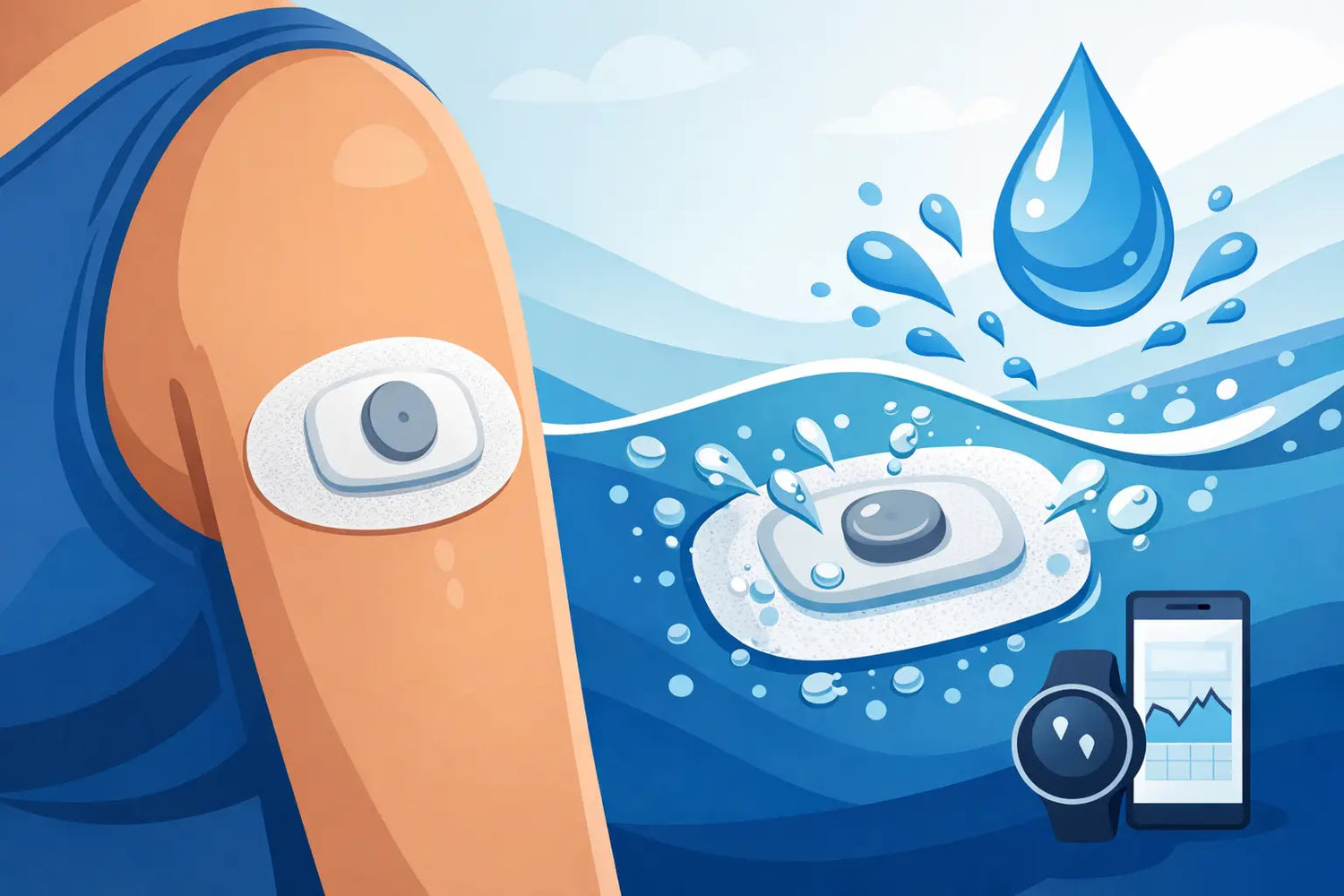
A CGM that starts lifting at the edges after one shower is more than annoying. It can interrupt readings, shorten wear time, and turn a routine device change into an early replacement. That is why choosing a waterproof cgm patch is not just about sticking something over a sensor. It is about getting dependable wear in real conditions - showers, workouts, humidity, sleep, and daily movement.
For most users, the right patch solves two problems at once. It helps keep the sensor secure, and it reduces the low-grade stress of wondering whether your device will hold through the week. But not every patch marketed as waterproof performs the same way. Adhesive quality, fabric design, cutout shape, skin sensitivity, and application technique all matter.
What a waterproof CGM patch should actually do
A good patch does not need to make your sensor indestructible. It needs to maintain secure adhesion through predictable exposure to water and friction while staying comfortable on skin. That sounds simple, but it is where many products fall short.
Some patches hold up in a quick shower but start peeling after sweat or repeated towel drying. Others stay on aggressively but irritate the skin by day three or four. The real standard is balanced performance: strong hold, skin-conscious adhesive, breathable material, and clean removal at the end of the wear cycle.
For CGM users, waterproof usually means shower-safe, sweat-resistant, and able to tolerate normal daily moisture exposure without losing adhesion. It does not always mean extended soaking, heavy chlorine exposure, or repeated hot tub use without any edge lift. Those are different stress tests, and the answer often depends on your skin type, activity level, and how well the patch was applied.
Why waterproof matters more than most people think
CGMs are built for daily life, but daily life is rough on adhesives. Water softens edges. Heat increases sweat. Clothing creates friction. Sleep adds movement and pressure. If you are wearing a sensor for 10 to 14 days, your patch has to perform across all of it.
This is especially true for people who exercise regularly, work outdoors, live in humid climates, or use body lotion and sunscreen. Even careful users can lose adhesion early if the patch material is too stiff, the adhesive is inconsistent, or the skin was not fully prepped before application.
There is also a practical cost issue. A failed patch can mean extra supplies, lost confidence, and in some cases a sensor that gets pulled off before its intended wear period ends. For repeat buyers, reliability matters because this is not a one-time accessory purchase. It is part of the wear cycle.
The key features to look for in a waterproof CGM patch
The first thing to evaluate is adhesive performance. A patch should grip well enough to resist moisture and movement, but it should not feel harsh or brittle on skin. Medical-grade adhesive is not just a marketing phrase when it is backed by real-world wear. The best patches are designed to stay flexible as your skin moves rather than fighting against it.
Material matters just as much. Breathable fabric tends to perform better over multi-day wear than heavy, plastic-feeling materials that trap sweat. A patch can be waterproof in practical terms without feeling sealed off. In fact, breathability often improves comfort and long-term adhesion because sweat has less chance to build underneath.
Shape is another detail that gets overlooked. A well-cut patch distributes tension around the device instead of concentrating stress at the corners or edges. Rounded edges generally resist peeling better than sharp ones. A clean cutout around the sensor or transmitter also helps reduce accidental pressure on the device itself.
If you have sensitive skin, look beyond hold strength alone. Alcohol-heavy prep, harsh adhesive, and rough removal can create a cycle of irritation that makes every new patch harder to tolerate. Skin-conscious design is part of performance.
Waterproof CGM patch fit depends on the device
Not every patch fits every sensor equally well. Dexcom G6, Dexcom G7, Libre 2, Libre 3, Lingo, and Omnipod all have different shapes, profiles, and wear patterns. A patch designed with the wrong dimensions may leave vulnerable edges exposed or place unnecessary tension on the adhesive border.
That is why compatibility should be specific, not approximate. If a product says it works for "most CGMs," that is usually less useful than a patch engineered around a defined device shape. Precision fit tends to improve both comfort and security.
This matters even more with lower-profile sensors, where edge control is critical. A patch that sits flat and follows the contour of the device has a better chance of staying down during showers and workouts than one that bunches or lifts at the perimeter.
Application is half the outcome
Even the best waterproof cgm patch can underperform if it is applied poorly. Skin prep is not glamorous, but it changes results.
Start with clean, dry skin. Any lotion, oil, sunscreen, or leftover residue can compromise adhesion. If you use a prep wipe, make sure it is compatible with your skin and fully dry before applying the patch. Pressing a patch onto damp skin is one of the fastest ways to shorten wear time.
Once applied, firm pressure helps activate the adhesive. Pay attention to the edges, because that is usually where failure starts. After placement, give the patch time to set before exposing it to water or intense sweat. Waiting several hours, when possible, usually improves hold.
Heat and friction after application also matter. A very hot shower right away, aggressive towel rubbing, or changing clothes repeatedly over a fresh patch can weaken the bond before it has fully settled.
Where users run into problems
If a patch keeps failing, the issue is not always the patch itself. Sometimes the problem is placement. Areas with frequent twisting, heavy sweat, or clothing friction are harder on adhesives. In other cases, skin care products are the hidden culprit. Body wash residue, moisturizers, and even some sunscreens can interfere more than people realize.
Skin type changes the equation too. Oily skin may need more careful prep. Dry or reactive skin may do better with gentler adhesives and less aggressive removal. Very active users often need a patch that prioritizes edge security and flexibility over ultra-thin cosmetic feel.
And then there is water itself. A waterproof patch should handle showers and normal swimming well, but repeated long exposure to hot water, saltwater, or chlorine can still test the adhesive. If your routine includes those conditions, you need a patch designed for real retention, not just casual wear.
Comfort is not a minor detail
A patch can stay on perfectly and still be the wrong choice if it feels irritating every day. Long wear requires comfort. That includes how the fabric moves with skin, whether the adhesive pulls at the edges, and how the patch feels overnight.
For many users, the ideal patch is one they stop noticing. It stays secure without feeling bulky, and it removes cleanly when the sensor cycle ends. That is a higher standard than simply sticking.
Brands that approach CGM accessories with a clinical mindset tend to get this right. The goal is not a flashy add-on. It is engineered support for a device you rely on.
How to choose the right waterproof CGM patch for your routine
If your main concern is showering and daily wear, prioritize balanced adhesion and breathable material. If you train hard, sweat heavily, or spend time in the pool, look for stronger retention and a shape designed to resist edge lift. If your skin reacts easily, focus on gentler adhesive systems and careful prep.
There is no single best patch for every person because wear conditions vary. But there is a clear difference between patches designed for occasional use and patches built for repeat, routine performance. OHMRX reflects that practical standard by focusing on compatibility, skin safety, and durable daily wear rather than gimmicks.
A waterproof CGM patch should make your routine easier, not give you one more thing to monitor. If it stays secure, feels comfortable, and holds up through real life, that is the product doing its job. The right patch disappears into your week so you can pay attention to your readings, not your adhesive.



Leave a comment
This site is protected by hCaptcha and the hCaptcha Privacy Policy and Terms of Service apply.