
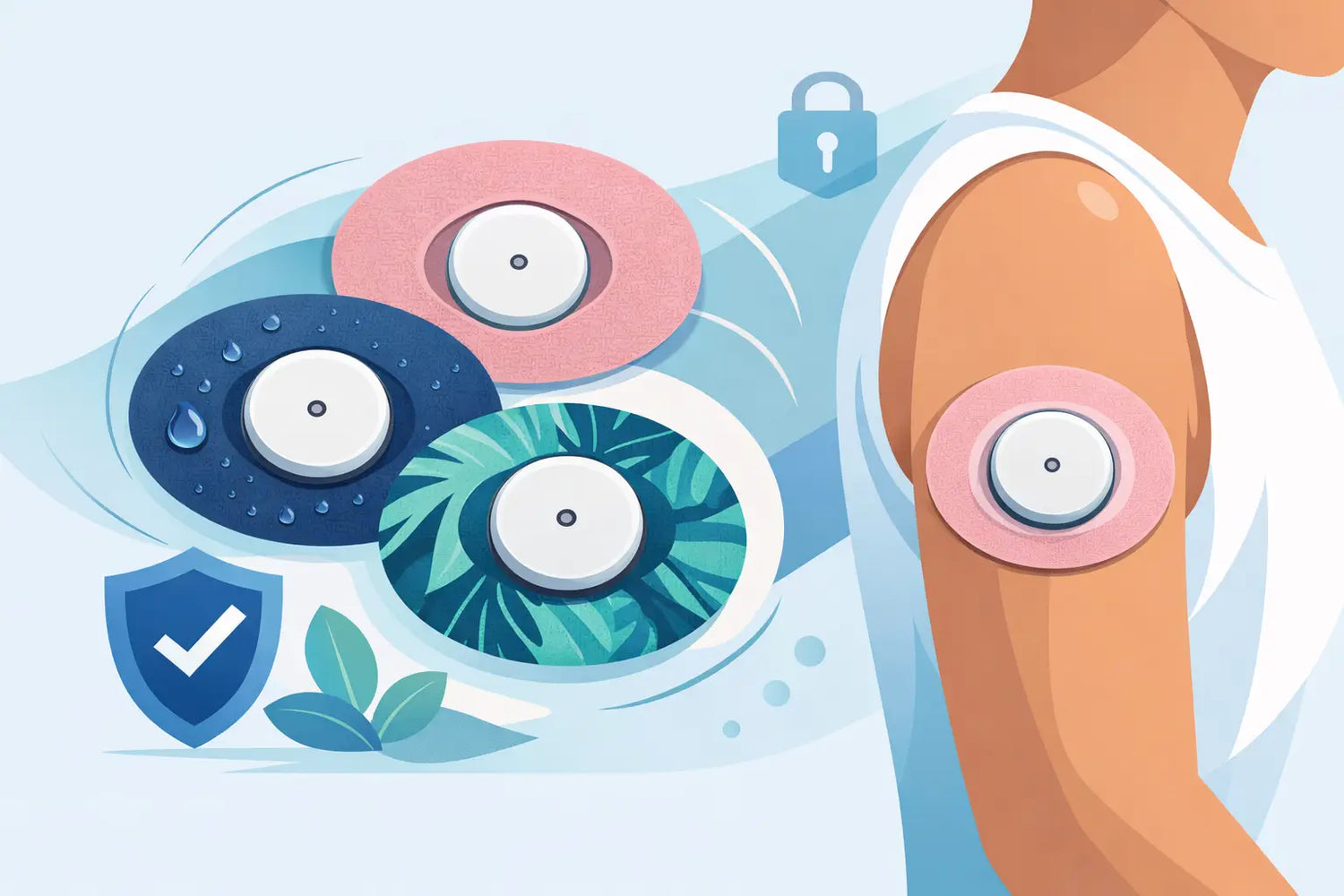
A Libre 2 sensor can be working perfectly while its original adhesive is not. Sweat, showers, clothing friction, workouts, and warm weather can all start lifting the sensor edge before day 14. The best patches for Libre 2 add confidence without turning sensor wear into a daily maintenance task. The right choice is less about the loudest “waterproof” claim and more about fit, adhesive performance, and how your skin responds over repeated sensor cycles.
A good overpatch should feel like part of your routine: apply it once, move through work, exercise, sleep, and bathing as usual, then replace your sensor on schedule. It should secure the device without pulling at vulnerable skin or interfering with the sensor itself.
What Makes the Best Patches for Libre 2?
The best patch is the one that stays in place for your normal 14-day Libre 2 wear period while remaining comfortable enough that you do not dread removal. That standard looks different for someone who works at a desk than it does for a swimmer, runner, parent of young children, or anyone living in hot, humid conditions.
Start with compatibility. A Libre 2 patch needs a shape and center opening designed for the Libre 2 sensor. Libre models are not interchangeable accessories by default. A patch made for a smaller or differently shaped sensor may leave exposed edges, create tension around the device, or sit poorly against the skin. Confirm the product specifically lists Libre 2 compatibility before ordering.
Adhesive strength matters, but maximum stick is not always the best answer. A highly aggressive adhesive may be useful for frequent swimming, heavy sweating, or physically demanding work. For sensitive skin, however, a patch that is too difficult to remove can cause redness, tenderness, or skin stripping. Look for skin-conscious materials and an adhesive designed for extended wear, not simply an industrial-feeling hold.
Water resistance is another practical requirement. A quality patch should help protect the sensor from edge lift during showers, baths, and water-based activity. Still, no overpatch makes a CGM indestructible. Long soaks, repeated chlorine exposure, hot tubs, and rubbing with a towel can challenge any adhesive. The goal is dependable support through normal life, not a promise that no patch can honestly make.
Finally, consider the patch profile. A thin, flexible patch moves with the upper arm and is less likely to catch on sleeves, seat belts, bedding, or gym equipment. A rigid material may feel secure at first but can pull at the edges as your arm bends. Flexible coverage is especially useful when you sleep on your side or train regularly.
The details worth checking before you buy
A dependable Libre 2 overpatch should have a cleanly cut center opening that leaves the sensor area appropriately accessible and avoids placing pressure directly on the device. The material should be breathable enough for extended wear, while still offering a barrier against friction and moisture. Edges should lie flat rather than curl after the first shower.
Patch size also deserves attention. Too little coverage leaves the original sensor adhesive exposed, which defeats the purpose. Too much material can feel bulky and may create more surface area for lint, clothing friction, and edge lift. The best fit covers the sensor perimeter with enough margin to distribute tension across healthy skin.
Color and finish are personal, but they can have a functional role. A low-profile, skin-toned, or neutral patch may be preferable if you want discretion under short sleeves. Others prefer a visible color that makes it easier to notice when an edge begins to lift. Neither is clinically better. Choose the option you will feel comfortable wearing for two weeks at a time.
How to Apply a Libre 2 Patch for Better Hold
Even an excellent patch can fail early if it is applied over lotion, damp skin, or the beginning of a sensor edge lift. Prep is not an extra step for perfectionists. It is what gives the adhesive a fair chance to perform.
Apply the sensor to clean, fully dry skin according to your Libre instructions. Avoid moisturizer, body oil, sunscreen, and residue around the application site. If you use an alcohol wipe, allow the area to air dry completely. Applying a patch to damp skin can trap moisture and shorten wear time.
Once the sensor is secure, center the patch opening around it without stretching the material. Stretching may make the patch look smooth initially, but it creates recoil that can lift the edges later. Press the patch down from the center outward, smoothing the perimeter with clean fingers. Give special attention to the edge closest to where shirts, bra straps, or sleep positions tend to rub.
If your skin is easily irritated, consider an alcohol-free skin prep option that supports adhesion without adding unnecessary sting. Patch performance and skin tolerance have to work together. A routine that keeps a sensor attached but leaves your arm inflamed is not a sustainable routine.
For users who train, swim, or shower soon after a sensor change, timing can help. Apply your new sensor and patch when you have a window to keep the site dry and relatively friction-free. Letting the adhesive settle before a hard workout or a long swim may improve early wear performance.
Choose Adhesion Based on Your Actual Routine
Your activity pattern should guide the patch you choose. If your Libre 2 usually begins lifting after a few days of sweating, prioritize extended-wear adhesion and a flexible, water-resistant material. If your challenge is sensitive skin, focus first on skin-friendly materials, gentler removal, and careful site rotation. Do not assume a patch that works well for a marathon runner is automatically the best option for you.
For many users, the issue is not water but friction. Repeated contact from a sleeve, backpack strap, car seat, or sleeping position can slowly peel the original adhesive. An overpatch works by spreading that stress beyond the sensor edge. In these cases, a smooth, low-profile patch may outperform a thicker option that catches on fabric.
If you reorder patches every sensor cycle, consistency is valuable. Keeping the same reliable fit and application method makes it easier to identify what is causing problems when wear time changes. A practical supply level is enough patches to cover your upcoming sensor changes, plus a few extras for travel or an application mistake. OHMRX patches are designed around this kind of repeat-use reality: secure coverage, daily comfort, and straightforward compatibility rather than unnecessary complexity.
Protect Your Skin Across Repeated Sensor Changes
A patch should support your Libre 2, not make the next site harder to use. Rotate sensor sites within the locations approved in your device instructions, and avoid applying a new sensor over skin that is irritated, bruised, broken, or still recovering from the previous adhesive.
When it is time to remove the patch, go slowly. Warm water or an adhesive-removal product can help loosen the material. Hold the skin down with one hand and peel the patch back low and parallel to the skin rather than pulling upward. This reduces tension and can make removal more comfortable.
Watch for persistent itching, rash, swelling, pain, or skin breakdown. Mild temporary redness can occur with any adhesive, but symptoms that do not improve deserve attention from a healthcare professional. Do not use an overpatch to cover a site that is already irritated in the hope that it will settle underneath.
When a Patch Is Not the Answer
An overpatch can reinforce a secure sensor, but it cannot correct a sensor that is already loose, damaged, or placed on compromised skin. If the sensor is dislodged, cracked, or no longer functioning as intended, follow the device manufacturer’s instructions and contact its support team when appropriate. A patch does not change glucose readings, extend the approved sensor wear period, or replace proper device use.
It is also worth examining the application environment. Excess body lotion, incomplete drying after a shower, or a placement area exposed to constant rubbing can cause repeat failures that no adhesive patch fully solves. Small adjustments to prep and placement often make the largest difference.
The right Libre 2 patch should disappear into your routine while doing a very visible job: helping your sensor stay where it belongs. Choose for your skin, your activity level, and your real schedule, then apply it carefully enough to give every sensor cycle its best chance.

Leave a comment
This site is protected by hCaptcha and the hCaptcha Privacy Policy and Terms of Service apply.