
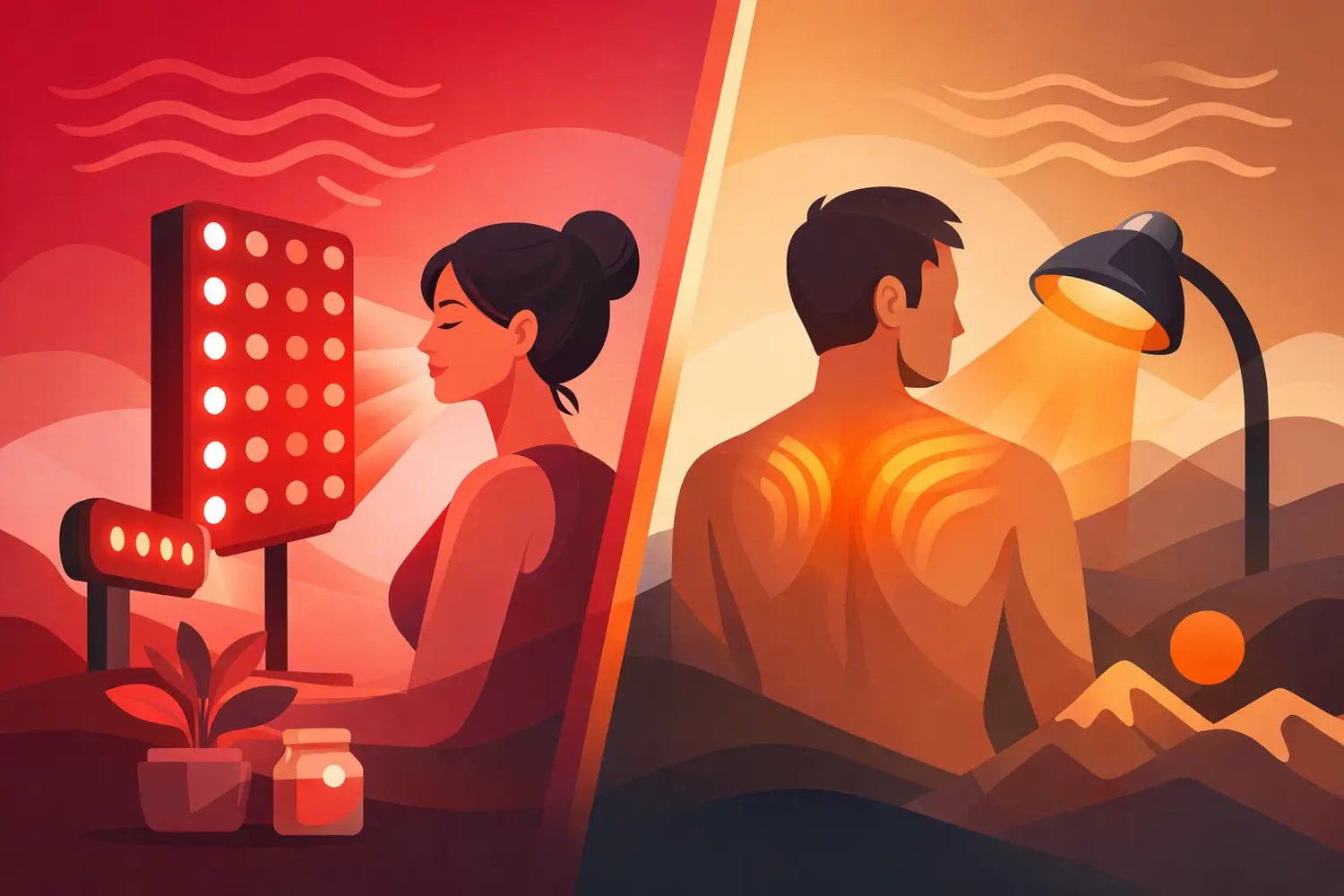
A warm light panel can look straightforward, but the labels on it often are not. In the red light therapy vs infrared conversation, the most useful question is not which one is better. It is which type of light, wavelength range, and device design fits the outcome you want without adding unnecessary complexity to your routine.
Red light and near-infrared light are commonly used together in photobiomodulation devices. Far-infrared products are different. They are primarily designed to create heat. Understanding that distinction helps you compare products on performance instead of marketing language.
Red Light Therapy vs Infrared: The Core Difference
Red light therapy typically uses visible red wavelengths, often in the range of about 600 to 700 nanometers. These wavelengths are visible to the eye and give a device its red glow. They are commonly selected for skin-focused routines and for areas closer to the body surface.
Infrared is a broader term. It describes light beyond what the human eye can see, and it includes near-infrared, mid-infrared, and far-infrared ranges. When a light therapy panel lists 810 nm, 830 nm, or 850 nm, it is using near-infrared light. You cannot see near-infrared light, although the device may still appear red because it also contains visible red LEDs.
Near-infrared light is generally used in photobiomodulation devices alongside red light because it can reach deeper than visible red wavelengths. That makes the combination practical for people building routines around exercise recovery, muscle comfort, joint support, or general performance and wellness goals.
Far-infrared, by contrast, is associated with heat-based products such as infrared saunas, heating wraps, and some lamps. It warms tissue primarily through thermal energy. That can feel good for relaxation or temporary muscle comfort, but it is not the same mechanism as a red and near-infrared LED device.
Why the Word “Infrared” Can Be Misleading
A product marketed simply as “infrared therapy” does not tell you enough. The label could describe a near-infrared LED panel intended for photobiomodulation. It could also describe a heat lamp or far-infrared sauna product designed to make you sweat.
That difference matters because the experience, use case, and safety considerations are not interchangeable. A near-infrared LED device may produce little noticeable heat at an appropriate distance. A far-infrared device is expected to feel warm, sometimes very warm, and should be used with greater attention to temperature tolerance and hydration.
For a useful comparison, look for the wavelength range rather than relying on the word infrared alone. A device that clearly identifies its red and near-infrared wavelengths gives you a more meaningful basis for evaluating its intended function.
Red light: visible and often surface-oriented
Visible red light is commonly included in routines focused on skin appearance and day-to-day skin support. It is also used for general recovery protocols. Because it is visible, users often assume the bright red glow is the only active component. In a combined device, that is not necessarily the case. Near-infrared LEDs may be working at the same time without being visible.
Near-infrared: invisible and typically used for deeper targets
Near-infrared light is often chosen when the goal involves larger muscle groups, joints, or post-training recovery. It can be especially practical in a panel or wrap format where coverage matters. You do not need to feel heat for near-infrared light to be present or for the device to be operating as designed.
Far-infrared: primarily a heat experience
Far-infrared devices are for people who want warmth, relaxation, or a sauna-like session. They may support temporary relief of muscle stiffness through heat, but their effects should not be presented as identical to LED photobiomodulation. If a product makes broad therapeutic claims without stating wavelengths, output, or intended use, treat that as a reason to look closer.
Which Option Fits Your Goal?
For many home users, the right answer is not red light or near-infrared. It is a device that combines both. Red and near-infrared wavelengths are often paired because they serve different practical targets in the same session. A full-size panel can make sense for broader areas such as the back, legs, shoulders, or post-workout muscle groups. A portable device may be the better fit for consistent use on a smaller area or while traveling.
Choose visible red light or a red-forward setting when your priority is a skin-focused routine. Choose a red and near-infrared combination when you want versatile coverage for skin, recovery, and comfort goals. Choose a heat-based infrared product only when warmth itself is the primary benefit you are looking for.
Your available time matters, too. The device with the best specifications is not useful if it stays in a closet. A practical routine is usually short, repeatable, and easy to position around the body. Consistency is more valuable than occasional overly long sessions.
How to Compare Light Therapy Devices
A serious device should give you more than a color description. Look at the specifications that affect real-world use.
First, verify the wavelengths. Red and near-infrared LED devices commonly identify the individual wavelengths used. The exact mix varies by manufacturer, but transparent reporting is a baseline standard.
Next, look at irradiance, which is the intensity of light delivered to a surface, usually listed in milliwatts per square centimeter. Higher output is not automatically better. Distance changes the amount of energy reaching your body, and very high output can reduce the session time you need. Clear treatment-distance guidance is more helpful than a single impressive-looking number.
Also consider treatment area and device format. A compact device can be easier to use regularly for targeted areas. A panel can cover more of the body efficiently, but it requires space and a stable setup. The right format depends on whether you are treating one location repeatedly or building a whole-body routine.
Finally, assess operational details: timer controls, eye-protection guidance, heat management, electrical safety, warranty coverage, and build quality. These are not secondary features. They determine whether a device is practical and dependable over repeated sessions.
Dose Matters More Than “More”
Light therapy is not a case of longer always being better. A session dose depends on irradiance, time, distance, and treatment area. If you move a device farther away, less light reaches the target. If you use a higher-output device at a close distance, you may need less time.
Follow the manufacturer’s instructions for the specific device rather than borrowing a protocol from a different panel, mask, or handheld unit. Starting conservatively is sensible. Keep your first sessions short, observe how your skin responds, and build a routine gradually.
For most people, a realistic schedule is several short sessions per week. The goal is steady use over time, not aggressive use in a single week. Track the outcome that matters to you, whether that is how your skin looks, how a muscle group feels after training, or how easy the routine is to maintain.
Safety Considerations for Home Use
Red and near-infrared light therapy is generally considered well tolerated when devices are used as directed, but home use still deserves clinical common sense. Do not stare directly into high-intensity LEDs. Follow the manufacturer’s eye-safety instructions, especially for devices used near the face.
If you have a photosensitivity condition, take medication that increases sensitivity to light, are pregnant, have an active cancer diagnosis, or are managing a medical condition that affects sensation or circulation, speak with a qualified clinician before starting. This is particularly relevant when using light over an area with reduced sensation, since you may not notice excess heat or irritation as quickly.
Do not use light therapy as a replacement for evaluation of an injury, persistent pain, a changing skin lesion, infection, or another symptom that needs medical attention. A home device can support a wellness routine, but it does not diagnose or treat every underlying cause.
Build a Routine You Can Actually Keep
The most effective setup is usually the one that removes friction. Place a panel where you already stretch, change after a workout, or wind down for the evening. Use a timer. Keep the treatment distance consistent. If you are using a portable device, pair it with a familiar habit rather than waiting for a perfect open block of time.
OHMRX approaches home wellness tools with that same standard: clear specifications, practical formats, and no shortcuts in the details that affect daily use. The goal is not to make light therapy complicated. It is to make informed use easier.
Red light therapy and near-infrared light can work well together when you want a flexible, non-heat-based routine. Far-infrared has a different role, centered on warmth. Choose based on the experience and target you need, then give the routine enough time and consistency to earn a place in real life.

Leave a comment
This site is protected by hCaptcha and the hCaptcha Privacy Policy and Terms of Service apply.