
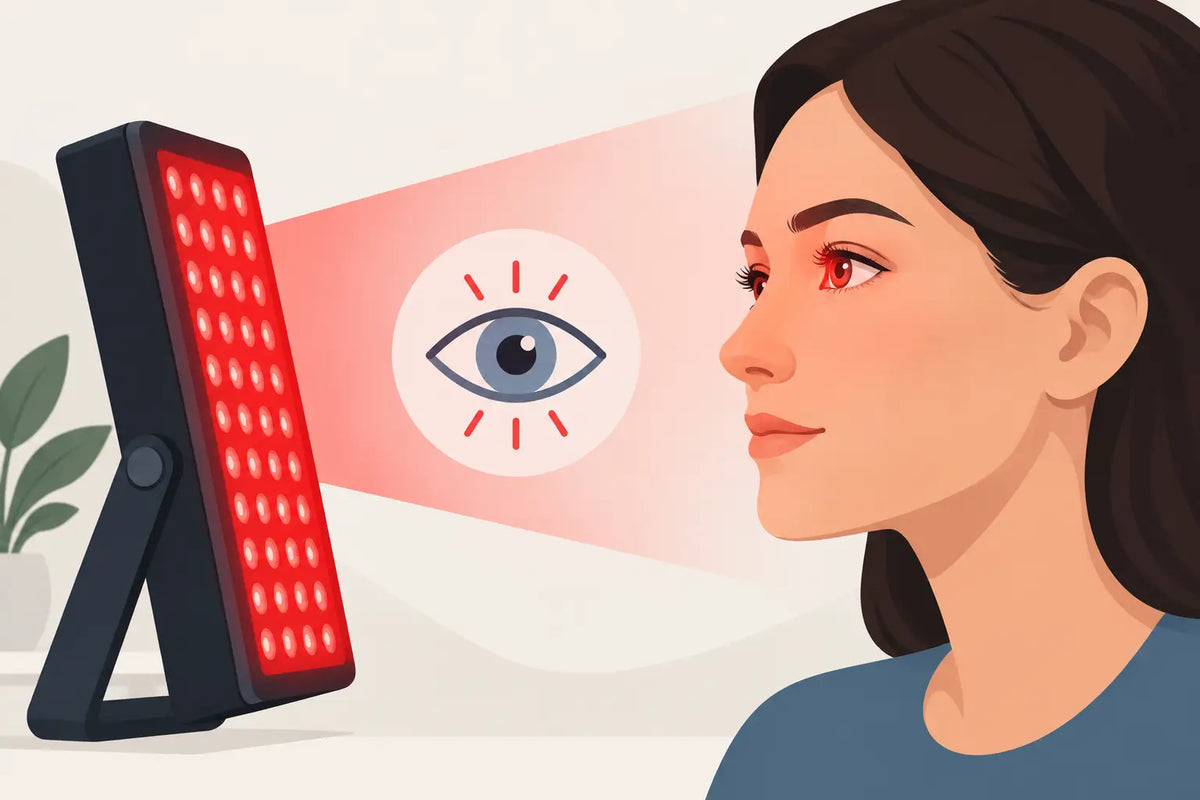
Red light therapy should feel practical, not uncertain. But can red light affect eyes? Yes, it can, and the level of concern depends on the wavelength, output, distance, exposure time, and whether you are using an LED wellness device or a much more concentrated laser source.
For most people using a properly designed at-home LED red light device as directed, brief incidental exposure is not the same as staring into a hazardous beam. Still, the eyes are sensitive tissue. A responsible routine means understanding the limits of your device, using its included eye-protection guidance, and avoiding the assumption that more light always means better results.
Why red light can affect the eyes
Light enters the eye differently depending on its wavelength. Red light commonly used in consumer devices falls around 630 to 660 nanometers, while near-infrared light often falls around 810 to 850 nanometers. Red light is visible. Near-infrared light is largely invisible, yet it can still reach deeper tissues.
The retina, the light-sensitive layer at the back of the eye, is especially relevant. It absorbs light as part of normal vision, which is why intensity and exposure duration matter. Bright sources viewed at close range can cause discomfort, afterimages, glare, or temporary visual disturbance. More concentrated sources can create a greater retinal hazard.
This is also why device type matters. A consumer LED panel or handheld device distributes light over a broader area. A laser concentrates energy into a narrow beam and requires a different level of control. Do not apply safety assumptions from an LED device to lasers, laser pointers, tanning equipment, or other high-intensity light sources.
Can red light therapy damage your eyes?
The answer is not a simple yes or no. Red light therapy may be well tolerated when a quality LED device is used according to its instructions, at the recommended distance and for the recommended treatment time. But direct, prolonged, close-range viewing of a bright light source is not a sensible test of safety.
Risk rises when the light is stronger, the session is longer, the device is held too close, or the user repeatedly looks directly at the LEDs. Near-infrared devices deserve added care because you cannot rely on brightness alone to judge exposure. The absence of visible glare does not prove the absence of exposure.
Research into photobiomodulation, the use of specific light wavelengths to influence biological processes, includes ongoing investigation of eye-related applications. That research does not mean every red or near-infrared device is appropriate for use around the eyes. Wavelength, delivered dose, treatment protocol, and medical oversight all shape whether a particular approach is suitable.
For a home wellness routine, stay within the intended use of the device. If it is designed for skin, recovery, or general body use, do not treat it as an eye-treatment device unless the manufacturer specifically states that use and provides clear safety instructions.
Eye protection depends on the device and treatment area
The right approach starts with the manufacturer’s instructions. Some red light therapy devices recommend protective goggles for all sessions. Others may permit use without goggles at a specified distance, especially when the device is not aimed at the face. Follow the protocol supplied for your exact unit rather than relying on general advice online.
When treating the face or upper body, eye protection is often the cautious choice, particularly if the light feels uncomfortably bright or you will be positioned close to a panel. Proper blackout goggles reduce direct exposure. They should fit securely and be intended for the wavelengths produced by the device.
Closing your eyes can reduce visible light entering them, but it is not a universal substitute for appropriate eyewear. Eyelids are thin, and some light can pass through them. This is particularly relevant with near-infrared wavelengths, which are not visible and can penetrate tissue differently than visible red light.
Avoid looking into individual LEDs to check whether a device is working. A functioning device does not need to be visually inspected at close range. Set it up, position it at the recommended distance, start the timer, and keep your gaze away from the light source.
Practical rules for safer red light use
A consistent routine is safer than improvised use. Keep these controls in place:
- Use the device only for its stated purpose and follow its timing and distance guidance.
- Do not stare directly into LEDs or position a device closer than instructed.
- Use manufacturer-recommended protective eyewear when treating near the face or when advised in the manual.
- Start with shorter sessions if you are new to red light therapy, then assess comfort before changing your routine.
- Stop the session if you experience eye pain, persistent afterimages, headache, blurred vision, or unusual light sensitivity.
Who should check with an eye care professional first?
Extra caution is appropriate if you have a diagnosed eye condition, a history of retinal disease, glaucoma, macular degeneration, diabetic retinopathy, cataract surgery complications, or unexplained changes in vision. People with diabetes should be especially attentive to vision changes and keep up with recommended dilated eye exams. A wellness device should never replace eye care or monitoring for diabetes-related eye health.
You should also ask a clinician or pharmacist about light sensitivity if you take a medication that can increase photosensitivity. This can include certain antibiotics, acne medications, diuretics, anti-inflammatory medicines, and other prescriptions. The specific medication, dose, and your health history matter, so do not stop a prescribed treatment based on a general precaution.
Migraines, seizure disorders triggered by light, and a history of eye surgery are other reasons to get individualized guidance. Red light is not typically discussed in the same terms as rapidly flashing lights, but personal sensitivity still matters. If a device causes discomfort, that is enough reason to pause and reassess.
What about red light masks and facial devices?
Facial masks place LEDs close to the eyes, so their fit and instructions matter more than with a body panel positioned across the room. Some masks use built-in eye shields or are designed to sit around the eye area without directing light straight into the eyes. Others provide separate goggles.
Do not modify a mask to expose more of the eye area, remove built-in shielding, or extend the session beyond the stated treatment time. Comfort is useful feedback, but it is not the only safety measure. A device can feel gentle while still delivering a meaningful amount of light over repeated sessions.
For users who wear contact lenses, remove them if your device instructions recommend it or if the session causes dryness or irritation. Red light therapy is not a substitute for treatment of dry eye, infection, irritation, or visual symptoms.
Choose controlled exposure, not maximum exposure
At-home red light therapy works best as a measured routine. More brightness, more minutes, and less distance are not reliable ways to improve results. They are simply ways to change the dose, sometimes beyond what the device was designed to deliver.
Look for transparent specifications and practical operating instructions. A well-designed device should make it easy to know where to place it, how long to use it, and whether eye protection is recommended. That is the standard OHMRX values: clinically informed tools built for real routines, without shortcuts or gimmicks.
If you experience lasting visual changes, eye pain, or significant sensitivity after a session, stop using the device and contact an eye care professional promptly. Your eyes do not need experimental exposure. They need consistent, informed protection while you build a wellness routine that fits real life.

Leave a comment
This site is protected by hCaptcha and the hCaptcha Privacy Policy and Terms of Service apply.